General Information of Drug Combination (ID: DC0918Q)

Drug Combination Name
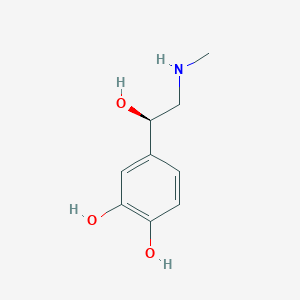
Pomalidomide Epinephrine
Indication
Disease Entry Status REF
Chronic myelogenous leukemia Investigative [1]
Component Drugs Pomalidomide   DMTGBAX Epinephrine   DM3KJBC
Small molecular drug Small molecular drug
2D MOL 2D MOL
3D MOL 3D MOL
High-throughput Screening Result Testing Cell Line: KBM-7
Zero Interaction Potency (ZIP) Score: 6.43
Bliss Independence Score: 6.43
Loewe Additivity Score: 7.96
LHighest Single Agent (HSA) Score: 7.98

Molecular Interaction Atlas of This Drug Combination

Molecular Interaction Atlas (MIA)
Indication(s) of Pomalidomide
Disease Entry ICD 11 Status REF
Plasma cell myeloma 2A83.1 Approved [2]
Systemic sclerosis 4A42 Approved [3]
Pomalidomide Interacts with 1 DTT Molecule(s)
DTT Name DTT ID UniProt ID Mode of Action REF
Angiogenesis/myeloma cell growth (AMCG) TTDIBYJ NOUNIPROTAC Modulator [6]
------------------------------------------------------------------------------------
Pomalidomide Interacts with 1 DTP Molecule(s)
DTP Name DTP ID UniProt ID Mode of Action REF
P-glycoprotein 1 (ABCB1) DTUGYRD MDR1_HUMAN Substrate [7]
------------------------------------------------------------------------------------
Pomalidomide Interacts with 2 DME Molecule(s)
DME Name DME ID UniProt ID Mode of Action REF
Cytochrome P450 3A4 (CYP3A4) DE4LYSA CP3A4_HUMAN Metabolism [8]
Cytochrome P450 1A2 (CYP1A2) DEJGDUW CP1A2_HUMAN Metabolism [9]
------------------------------------------------------------------------------------
Pomalidomide Interacts with 15 DOT Molecule(s)
DOT Name DOT ID UniProt ID Mode of Action REF
C-C motif chemokine 2 (CCL2) OTAD2HEL CCL2_HUMAN Increases Secretion [10]
Erythroid transcription factor (GATA1) OTX1R7O1 GATA1_HUMAN Decreases Expression [10]
Transcription factor JunD (JUND) OTNKACJD JUND_HUMAN Decreases Expression [10]
Transcription factor PU.1 (SPI1) OTVCA1D0 SPI1_HUMAN Increases Expression [10]
Endothelial transcription factor GATA-2 (GATA2) OTBP2QQ2 GATA2_HUMAN Decreases Expression [10]
DNA-binding protein inhibitor ID-1 (ID1) OTKGNZN5 ID1_HUMAN Increases Expression [10]
CCAAT/enhancer-binding protein alpha (CEBPA) OTOM9OE4 CEBPA_HUMAN Increases Expression [10]
CCAAT/enhancer-binding protein delta (CEBPD) OTNBIPMY CEBPD_HUMAN Increases Expression [10]
Krueppel-like factor 1 (KLF1) OT1FK08U KLF1_HUMAN Decreases Expression [10]
CCAAT/enhancer-binding protein epsilon (CEBPE) OTKZA25M CEBPE_HUMAN Increases Expression [10]
Transcription factor NF-E2 45 kDa subunit (NFE2) OTLM94BI NFE2_HUMAN Decreases Expression [10]
Zinc finger protein Gfi-1b (GFI1B) OTRDW8YO GFI1B_HUMAN Decreases Expression [10]
Zinc finger protein Gfi-1 (GFI1) OT9HB9H8 GFI1_HUMAN Increases Expression [10]
Sal-like protein 4 (SALL4) OTC08PR5 SALL4_HUMAN Affects Binding [11]
Cytochrome P450 2C19 (CYP2C19) OTFMJYYE CP2CJ_HUMAN Increases Oxidation [12]
------------------------------------------------------------------------------------
⏷ Show the Full List of 15 DOT(s)
Indication(s) of Epinephrine
Disease Entry ICD 11 Status REF
Acute asthma CA23 Approved [4]
Allergy 4A80-4A85 Approved [5]
Anaphylaxis N.A. Approved [4]
Bronchiectasis CA24 Approved [4]
Bronchitis CA20 Approved [4]
Periodontitis DA0C Approved [4]
Pulmonary emphysema CA21.Z Approved [4]
Severe asthma CA23 Approved [4]
Asthma CA23 Investigative [4]
Epinephrine Interacts with 1 DTT Molecule(s)
DTT Name DTT ID UniProt ID Mode of Action REF
Adrenergic receptor beta-1 (ADRB1) TTR6W5O ADRB1_HUMAN Agonist [13]
------------------------------------------------------------------------------------
Epinephrine Interacts with 2 DTP Molecule(s)
DTP Name DTP ID UniProt ID Mode of Action REF
Organic cation transporter 3 (SLC22A3) DT6201N S22A3_HUMAN Substrate [14]
Organic cation transporter 1 (SLC22A1) DTT79CX S22A1_HUMAN Substrate [15]
------------------------------------------------------------------------------------
Epinephrine Interacts with 5 DME Molecule(s)
DME Name DME ID UniProt ID Mode of Action REF
UDP-glucuronosyltransferase 1A1 (UGT1A1) DEYGVN4 UD11_HUMAN Metabolism [16]
Sulfotransferase 1A1 (SULT1A1) DEYWLRK ST1A1_HUMAN Metabolism [17]
Thiopurine methyltransferase (TPMT) DEFQ8VO TPMT_HUMAN Metabolism [18]
Catechol O-methyltransferase (COMT) DEV3T4A COMT_HUMAN Metabolism [19]
Monoamine oxidase type A (MAO-A) DERE4TU AOFA_HUMAN Metabolism [20]
------------------------------------------------------------------------------------
Epinephrine Interacts with 13 DOT Molecule(s)
DOT Name DOT ID UniProt ID Mode of Action REF
Solute carrier family 22 member 3 (SLC22A3) OTQYGVXX S22A3_HUMAN Increases Uptake [21]
Superoxide dismutase , mitochondrial (SOD2) OTIWXGZ9 SODM_HUMAN Increases Expression [22]
Renin (REN) OT52GZR2 RENI_HUMAN Increases Activity [23]
Beta-2 adrenergic receptor (ADRB2) OTSDOX4Q ADRB2_HUMAN Increases Activity [24]
Poly polymerase 1 (PARP1) OT310QSG PARP1_HUMAN Decreases Cleavage [25]
Alpha-1D adrenergic receptor (ADRA1D) OTW2CD1O ADA1D_HUMAN Increases Activity [26]
Tumor necrosis factor receptor superfamily member 6 (FAS) OTP9XG86 TNR6_HUMAN Increases Expression [27]
Alpha-1A adrenergic receptor (ADRA1A) OTUIWCL5 ADA1A_HUMAN Increases Activity [26]
Alpha-1B adrenergic receptor (ADRA1B) OTSAYAFD ADA1B_HUMAN Increases Activity [26]
Tumor necrosis factor ligand superfamily member 6 (FASLG) OTZARCHH TNFL6_HUMAN Increases Expression [27]
Interleukin-8 (CXCL8) OTS7T5VH IL8_HUMAN Increases ADR [28]
Equilibrative nucleoside transporter 4 (SLC29A4) OTWTZXMX S29A4_HUMAN Increases Uptake [21]
Alpha-2A adrenergic receptor (ADRA2A) OTZFGOTP ADA2A_HUMAN Increases ADR [28]
------------------------------------------------------------------------------------
⏷ Show the Full List of 13 DOT(s)

References

1 CheMBL Affinity Phenotypic Cellular Interaction Assay ID: CHEMBL1125966
2 Pomalidomide FDA Label
3 URL: http://www.guidetopharmacology.org Nucleic Acids Res. 2015 Oct 12. pii: gkv1037. The IUPHAR/BPS Guide to PHARMACOLOGY in 2016: towards curated quantitative interactions between 1300 protein targets and 6000 ligands. (Ligand id: 7348).
4 Epinephrine FDA Label
5 URL: http://www.guidetopharmacology.org Nucleic Acids Res. 2015 Oct 12. pii: gkv1037. The IUPHAR/BPS Guide to PHARMACOLOGY in 2016: towards curated quantitative interactions between 1300 protein targets and 6000 ligands. (Ligand id: 509).
6 Radium 223 dichloride for prostate cancer treatment. Drug Des Devel Ther. 2017 Sep 6;11:2643-2651.
7 DrugBank 5.0: a major update to the DrugBank database for 2018. Nucleic Acids Res. 2018 Jan 4;46(D1):D1074-D1082. (ID: DB08910)
8 Pomalidomide: evaluation of cytochrome P450 and transporter-mediated drug-drug interaction potential in vitro and in healthy subjects. J Clin Pharmacol. 2015 Feb;55(2):168-78.
9 Population pharmacokinetics of pomalidomide. J Clin Pharmacol. 2015 May;55(5):563-72.
10 Immunomodulatory derivative of thalidomide (IMiD CC-4047) induces a shift in lineage commitment by suppressing erythropoiesis and promoting myelopoiesis. Blood. 2005 May 15;105(10):3833-40. doi: 10.1182/blood-2004-03-0828. Epub 2004 Aug 3.
11 Thalidomide promotes degradation of SALL4, a transcription factor implicated in Duane Radial Ray syndrome. Elife. 2018 Aug 1;7:e38430. doi: 10.7554/eLife.38430.
12 Human cytochrome P450 oxidation of 5-hydroxythalidomide and pomalidomide, an amino analogue of thalidomide. Chem Res Toxicol. 2014 Jan 21;27(1):147-56. doi: 10.1021/tx4004215. Epub 2013 Dec 24.
13 Adrenergic activation of electrogenic K+ secretion in guinea pig distal colonic epithelium: involvement of beta1- and beta2-adrenergic receptors. Am J Physiol Gastrointest Liver Physiol. 2009 Aug;297(2):G269-77.
14 Differential pharmacological in vitro properties of organic cation transporters and regional distribution in rat brain. Neuropharmacology. 2006 Jun;50(8):941-52.
15 Human intestinal transporter database: QSAR modeling and virtual profiling of drug uptake, efflux and interactions. Pharm Res. 2013 Apr;30(4):996-1007.
16 Steroid glucuronides: human circulatory levels and formation by LNCaP cells. J Steroid Biochem Mol Biol. 1991;40(4-6):593-8.
17 Crystal structure of human sulfotransferase SULT1A3 in complex with dopamine and 3'-phosphoadenosine 5'-phosphate. Biochem Biophys Res Commun. 2005 Sep 23;335(2):417-23.
18 Adrenal catecholamines and their metabolism in the vitamin A deficient rat. Ann Nutr Metab. 1983;27(3):220-7.
19 Different metabolism of norepinephrine and epinephrine by catechol-O-methyltransferase and monoamine oxidase in rats. J Pharmacol Exp Ther. 1994 Mar;268(3):1242-51.
20 Role of monoamine-oxidase-A-gene variation in the development of glioblastoma in males: a case control study. J Neurooncol. 2019 Nov;145(2):287-294.
21 Selective transport of monoamine neurotransmitters by human plasma membrane monoamine transporter and organic cation transporter 3. J Pharmacol Exp Ther. 2010 Dec;335(3):743-53. doi: 10.1124/jpet.110.170142. Epub 2010 Sep 21.
22 Epinephrine upregulates superoxide dismutase in human coronary artery endothelial cells. Free Radic Biol Med. 2001 Jan 15;30(2):148-53.
23 Hypokalemia from beta2-receptor stimulation by circulating epinephrine. N Engl J Med. 1983 Dec 8;309(23):1414-9. doi: 10.1056/NEJM198312083092303.
24 Myocardial ischaemia and ventricular arrhthymias precipitated by physiological concentrations of adrenaline in patients with coronary artery disease. Br Heart J. 1992 May;67(5):419-20. doi: 10.1136/hrt.67.5.419-b.
25 Epinephrine facilitates the growth of T cell lymphoma by altering cell proliferation, apoptosis, and glucose metabolism. Chem Biol Interact. 2023 Jan 5;369:110278. doi: 10.1016/j.cbi.2022.110278. Epub 2022 Nov 22.
26 Carvedilol selectively inhibits oscillatory intracellular calcium changes evoked by human alpha1D- and alpha1B-adrenergic receptors. Cardiovasc Res. 2004 Sep 1;63(4):662-72. doi: 10.1016/j.cardiores.2004.05.014.
27 Carvedilol prevents epinephrine-induced apoptosis in human coronary artery endothelial cells: modulation of Fas/Fas ligand and caspase-3 pathway. Cardiovasc Res. 2000 Feb;45(3):788-94. doi: 10.1016/s0008-6363(99)00369-7.
28 ADReCS-Target: target profiles for aiding drug safety research and application. Nucleic Acids Res. 2018 Jan 4;46(D1):D911-D917. doi: 10.1093/nar/gkx899.