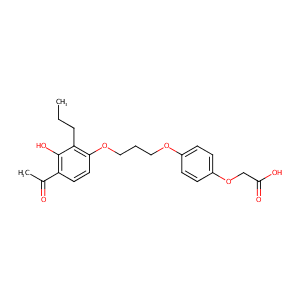
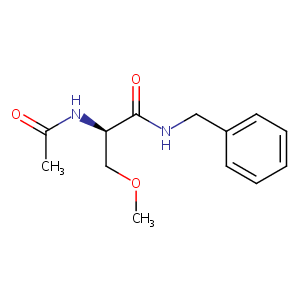
General Information of Drug Combination (ID: DC0Q3CA)

Drug Combination Name
L-165041 Lacosamide
Indication
Disease Entry Status REF
Chronic myelogenous leukemia Investigative [1]
Component Drugs L-165041   DMZP7YM Lacosamide   DMVM6QR
Small molecular drug Small molecular drug
2D MOL 2D MOL
3D MOL is unavailable 3D MOL
High-throughput Screening Result Testing Cell Line: KBM-7
Zero Interaction Potency (ZIP) Score: 8.06
Bliss Independence Score: 8.06
Loewe Additivity Score: 21.91
LHighest Single Agent (HSA) Score: 21.91

Molecular Interaction Atlas of This Drug Combination

Molecular Interaction Atlas (MIA)
Indication(s) of L-165041
Disease Entry ICD 11 Status REF
Discovery agent N.A. Investigative [2]
L-165041 Interacts with 1 DTT Molecule(s)
DTT Name DTT ID UniProt ID Mode of Action REF
Peroxisome proliferator-activated receptor delta (PPARD) TT2JWF6 PPARD_HUMAN Agonist [6]
------------------------------------------------------------------------------------
L-165041 Interacts with 1 DOT Molecule(s)
DOT Name DOT ID UniProt ID Mode of Action REF
Fatty acid-binding protein, adipocyte (FABP4) OT3DKFOU FABP4_HUMAN Increases Expression [7]
------------------------------------------------------------------------------------
Indication(s) of Lacosamide
Disease Entry ICD 11 Status REF
Convulsion 8A68.Z Approved [3]
Epilepsy 8A60-8A68 Approved [4]
Diabetic neuropathy 8C0Z Phase 3 [3]
Lacosamide Interacts with 3 DTT Molecule(s)
DTT Name DTT ID UniProt ID Mode of Action REF
Voltage-gated sodium channel alpha Nav1.9 (SCN11A) TTN9VTF SCNBA_HUMAN Inhibitor [4]
Voltage-gated sodium channel (Nav) TTIG65Q NOUNIPROTAC Inhibitor [4]
Dihydropyrimidinase related protein 2 (DPYSL2) TTZCW3T DPYL2_HUMAN Modulator [8]
------------------------------------------------------------------------------------
Lacosamide Interacts with 2 DME Molecule(s)
DME Name DME ID UniProt ID Mode of Action REF
Cytochrome P450 2C9 (CYP2C9) DE5IED8 CP2C9_HUMAN Metabolism [9]
Mephenytoin 4-hydroxylase (CYP2C19) DEGTFWK CP2CJ_HUMAN Metabolism [10]
------------------------------------------------------------------------------------

References

1 CheMBL Affinity Phenotypic Cellular Interaction Assay ID: CHEMBL1125966
2 URL: http://www.guidetopharmacology.org Nucleic Acids Res. 2015 Oct 12. pii: gkv1037. The IUPHAR/BPS Guide to PHARMACOLOGY in 2016: towards curated quantitative interactions between 1300 protein targets and 6000 ligands. (Ligand id: 2691).
3 URL: http://www.guidetopharmacology.org Nucleic Acids Res. 2015 Oct 12. pii: gkv1037. The IUPHAR/BPS Guide to PHARMACOLOGY in 2016: towards curated quantitative interactions between 1300 protein targets and 6000 ligands. (Ligand id: 7472).
4 Antibodies and venom peptides: new modalities for ion channels. Nat Rev Drug Discov. 2019 May;18(5):339-357.
5 Keratinocyte-derived vascular endothelial growth factor biosynthesis represents a pleiotropic side effect of peroxisome proliferator-activated receptor-gamma agonist troglitazone but not rosiglitazone and involves activation of p38 mitogen-activated protein kinase: implications for diabetes-impaired skin repair. Mol Pharmacol. 2008 Oct;74(4):952-63. doi: 10.1124/mol.108.049395. Epub 2008 Jul 3.
6 Novel peroxisome proliferator-activated receptor (PPAR) gamma and PPARdelta ligands produce distinct biological effects. J Biol Chem. 1999 Mar 5;274(10):6718-25.
7 Human adipocyte fatty acid-binding protein (aP2) gene promoter-driven reporter assay discriminates nonlipogenic peroxisome proliferator-activated receptor gamma ligands. J Pharmacol Exp Ther. 2004 Nov;311(2):467-75. doi: 10.1124/jpet.104.068254. Epub 2004 Jul 23.
8 2008 FDA drug approvals. Nat Rev Drug Discov. 2009 Feb;8(2):93-6.
9 Lacosamide: what can be expected from the next new antiepileptic drug? Epilepsy Curr. 2009 Sep-Oct;9(5):133-4.
10 Lacosamide therapeutic monitoring in patients with epilepsy: effect of concomitant antiepileptic drugs. Ther Drug Monit. 2013 Dec;35(6):849-52.