General Information of Drug Combination (ID: DC1PFFM)

Drug Combination Name
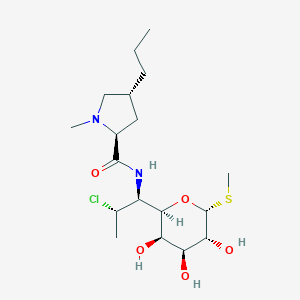
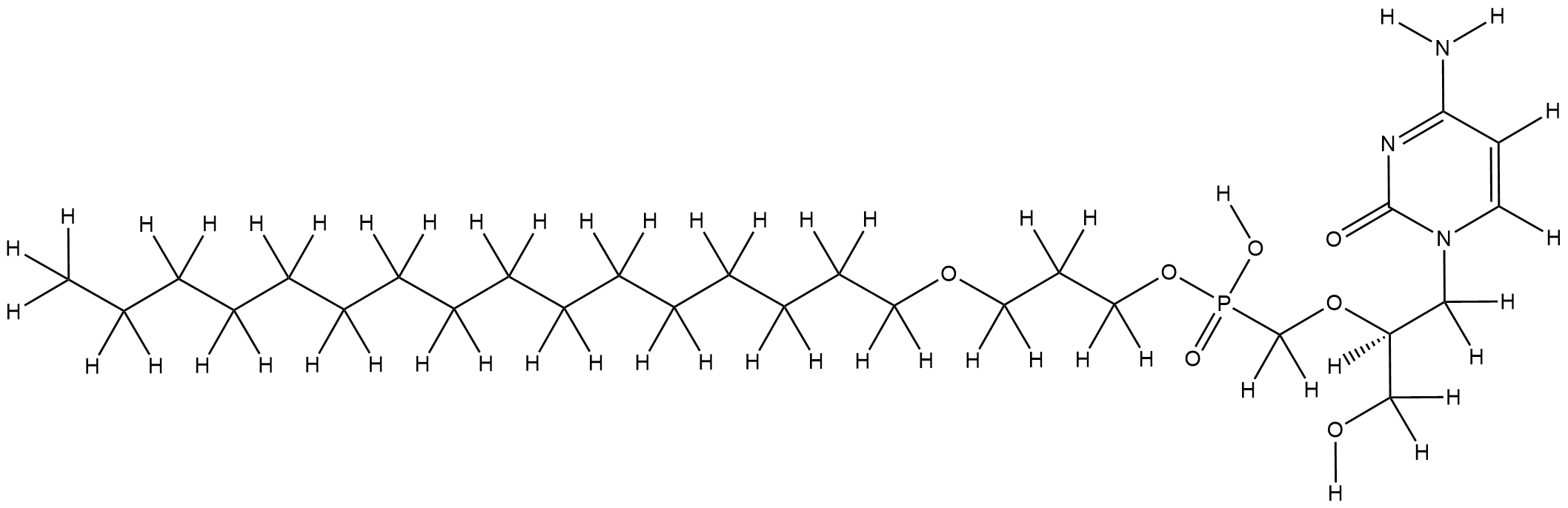
Clindamycin Brincidofovir
Indication
Disease Entry Status REF
Chronic myelogenous leukemia Investigative [1]
Component Drugs Clindamycin   DM15HL8 Brincidofovir   DMS0PND
Small molecular drug Small molecular drug
2D MOL 2D MOL
3D MOL 3D MOL is unavailable
High-throughput Screening Result Testing Cell Line: KBM-7
Zero Interaction Potency (ZIP) Score: 6.52
Bliss Independence Score: 6.52
Loewe Additivity Score: 7.4
LHighest Single Agent (HSA) Score: 7.41

Molecular Interaction Atlas of This Drug Combination

Molecular Interaction Atlas (MIA)
Indication(s) of Clindamycin
Disease Entry ICD 11 Status REF
Acne vulgaris ED80 Approved [2]
Aspiration pneumonia N.A. Approved [3]
Bacteremia 1A73 Approved [3]
Bacterial vaginosis MF3A Approved [3]
Pleural empyema N.A. Approved [3]
Staphylococcal pneumonia N.A. Approved [3]
Staphylococcus aureus infection N.A. Approved [3]
Streptococcal pneumonia N.A. Approved [3]
Pelvic inflammatory disease GA05 Investigative [3]
Clindamycin Interacts with 1 DTT Molecule(s)
DTT Name DTT ID UniProt ID Mode of Action REF
Bacterial 50S ribosomal RNA (Bact 50S rRNA) TTUWYEA NOUNIPROTAC Binder [5]
------------------------------------------------------------------------------------
Clindamycin Interacts with 2 DME Molecule(s)
DME Name DME ID UniProt ID Mode of Action REF
Cytochrome P450 3A4 (CYP3A4) DE4LYSA CP3A4_HUMAN Metabolism [6]
Beta-lactamase (blaB) DEMSNER A4LA84_EDWTA Metabolism [7]
------------------------------------------------------------------------------------
Clindamycin Interacts with 2 DOT Molecule(s)
DOT Name DOT ID UniProt ID Mode of Action REF
HLA class I histocompatibility antigen, alpha chain E (HLA-E) OTX1CTFB HLAE_HUMAN Affects Expression [8]
Collagenase 3 (MMP13) OTY8BZIE MMP13_HUMAN Increases Expression [9]
------------------------------------------------------------------------------------
Indication(s) of Brincidofovir
Disease Entry ICD 11 Status REF
Coronavirus Disease 2019 (COVID-19) 1D6Y Investigative [4]

References

1 CheMBL Affinity Phenotypic Cellular Interaction Assay ID: CHEMBL1125966
2 Drugs@FDA. U.S. Food and Drug Administration. U.S. Department of Health & Human Services. 2015
3 Clindamycin FDA Label
4 A rational roadmap for SARS-CoV-2/COVID-19 pharmacotherapeutic research and development: IUPHAR Review 29. Br J Pharmacol. 2020 May 1;10.1111/bph.15094.
5 Structural basis for the interaction of antibiotics with the peptidyl transferase centre in eubacteria. Nature. 2001 Oct 25;413(6858):814-21.
6 In vitro metabolism of clindamycin in human liver and intestinal microsomes. Drug Metab Dispos. 2003 Jul;31(7):878-87.
7 Comparison of antimicrobial susceptibility, beta-lactamase production, plasmid analysis and serum bactericidal activity in Edwardsiella tarda, E. ictaluri and E. hoshinae. J Med Microbiol. 1993 Oct;39(4):273-81.
8 Systems pharmacological analysis of drugs inducing stevens-johnson syndrome and toxic epidermal necrolysis. Chem Res Toxicol. 2015 May 18;28(5):927-34. doi: 10.1021/tx5005248. Epub 2015 Apr 3.
9 Chloramphenicol causes mitochondrial stress, decreases ATP biosynthesis, induces matrix metalloproteinase-13 expression, and solid-tumor cell invasion. Toxicol Sci. 2010 Jul;116(1):140-50. doi: 10.1093/toxsci/kfq085. Epub 2010 Mar 25.