General Information of Drug Combination (ID: DC2HLXW)

Drug Combination Name
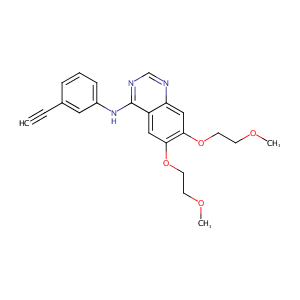
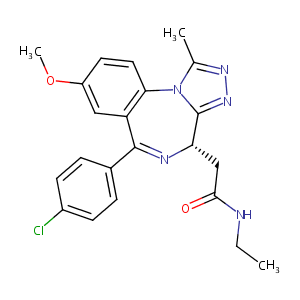
Erlotinib GSK525762
Indication
Disease Entry Status REF
Breast and ovarian cancer syndrome Investigative [1]
Component Drugs Erlotinib   DMCMBHA GSK525762   DMPAWBN
Small molecular drug Small molecular drug
2D MOL 2D MOL
3D MOL 3D MOL is unavailable
High-throughput Screening Result Testing Cell Line: UWB1289+BRCA1
Zero Interaction Potency (ZIP) Score: 3.84
Bliss Independence Score: 4.59
Loewe Additivity Score: 3.71
LHighest Single Agent (HSA) Score: 4.75

Molecular Interaction Atlas of This Drug Combination

Molecular Interaction Atlas (MIA)
Indication(s) of Erlotinib
Disease Entry ICD 11 Status REF
Adrenal gland neoplasm N.A. Approved [2]
Adult hepatocellular carcinoma N.A. Approved [2]
Brain cancer 2A00 Approved [2]
Esophageal disorder N.A. Approved [2]
Lung cancer 2C25.0 Approved [2]
Non-small-cell lung cancer 2C25.Y Approved [3]
Pancreatic adenocarcinoma N.A. Approved [2]
Psoriasis EA90 Approved [2]
Salivary gland squamous cell carcinoma N.A. Approved [2]
Pancreatic cancer 2C10 Phase 3 [3]
Colon cancer 2B90.Z Phase 2 [3]
Ependymoma 2A00.0Y Investigative [2]
Neoplastic meningitis N.A. Investigative [2]
Neuroblastoma 2D11.2 Investigative [2]
Erlotinib Interacts with 1 DTT Molecule(s)
DTT Name DTT ID UniProt ID Mode of Action REF
Epidermal growth factor receptor (EGFR) TTGKNB4 EGFR_HUMAN Inhibitor [6]
------------------------------------------------------------------------------------
Erlotinib Interacts with 2 DTP Molecule(s)
DTP Name DTP ID UniProt ID Mode of Action REF
P-glycoprotein 1 (ABCB1) DTUGYRD MDR1_HUMAN Substrate [7]
Breast cancer resistance protein (ABCG2) DTI7UX6 ABCG2_HUMAN Substrate [8]
------------------------------------------------------------------------------------
Erlotinib Interacts with 4 DME Molecule(s)
DME Name DME ID UniProt ID Mode of Action REF
Cytochrome P450 3A4 (CYP3A4) DE4LYSA CP3A4_HUMAN Metabolism [9]
Cytochrome P450 1A2 (CYP1A2) DEJGDUW CP1A2_HUMAN Metabolism [10]
Cytochrome P450 2D6 (CYP2D6) DECB0K3 CP2D6_HUMAN Metabolism [10]
Cytochrome P450 3A5 (CYP3A5) DEIBDNY CP3A5_HUMAN Metabolism [10]
------------------------------------------------------------------------------------
Indication(s) of GSK525762
Disease Entry ICD 11 Status REF
Haematological malignancy 2B33.Y Phase 1 [4]
Solid tumour/cancer 2A00-2F9Z Phase 1 [5]
GSK525762 Interacts with 2 DTT Molecule(s)
DTT Name DTT ID UniProt ID Mode of Action REF
Bromodomain-containing protein 4 (BRD4) TTRA6BO BRD4_HUMAN Modulator [12]
Bromodomain and extraterminal domain protein (BET) TTE4BSY NOUNIPROTAC Inhibitor [4]
------------------------------------------------------------------------------------
GSK525762 Interacts with 5 DOT Molecule(s)
DOT Name DOT ID UniProt ID Mode of Action REF
Protein-lysine 6-oxidase (LOX) OT1C2HIU LYOX_HUMAN Decreases Expression [11]
Carbonic anhydrase 9 (CA9) OTNA51XT CAH9_HUMAN Decreases Expression [11]
6-phosphofructo-2-kinase/fructose-2,6-bisphosphatase 3 (PFKFB3) OT25JBA3 F263_HUMAN Increases Expression [11]
Protein GREB1 (GREB1) OTU6ZA26 GREB1_HUMAN Decreases Expression [13]
Endothelial PAS domain-containing protein 1 (EPAS1) OTRE3O8U EPAS1_HUMAN Increases Expression [11]
------------------------------------------------------------------------------------

Test Results of This Drug Combination in Other Disease Systems

Indication DrugCom ID Cell Line Status REF
Adenocarcinoma DC3HVR5 NCIH1650 Investigative [14]
Ewing sarcoma-peripheral primitive neuroectodermal tumour DCBYE5C ES2 Investigative [14]
Mesothelioma DCDRG5H MSTO Investigative [14]
Ovarian endometrioid adenocarcinoma DCXCCYV A2780 Investigative [14]
Breast and ovarian cancer syndrome DCUMHWB UWB1289 Investigative [1]
------------------------------------------------------------------------------------

References

1 CheMBL Affinity Phenotypic Cellular Interaction Assay ID: CHEMBL1126165
2 Erlotinib FDA Label
3 URL: http://www.guidetopharmacology.org Nucleic Acids Res. 2015 Oct 12. pii: gkv1037. The IUPHAR/BPS Guide to PHARMACOLOGY in 2016: towards curated quantitative interactions between 1300 protein targets and 6000 ligands. (Ligand id: 4920).
4 Clinical pipeline report, company report or official report of the Pharmaceutical Research and Manufacturers of America (PhRMA)
5 URL: http://www.guidetopharmacology.org Nucleic Acids Res. 2015 Oct 12. pii: gkv1037. The IUPHAR/BPS Guide to PHARMACOLOGY in 2016: towards curated quantitative interactions between 1300 protein targets and 6000 ligands. (Ligand id: 7033).
6 Quantitative prediction of fold resistance for inhibitors of EGFR. Biochemistry. 2009 Sep 8;48(35):8435-48.
7 Effect of the ATP-binding cassette drug transporters ABCB1, ABCG2, and ABCC2 on erlotinib hydrochloride (Tarceva) disposition in in vitro and in vivo pharmacokinetic studies employing Bcrp1-/-/Mdr1a/1b-/- (triple-knockout) and wild-type mice. Mol Cancer Ther. 2008 Aug;7(8):2280-7.
8 Functions of the breast cancer resistance protein (BCRP/ABCG2) in chemotherapy. Adv Drug Deliv Rev. 2009 Jan 31;61(1):26-33.
9 In vitro assessment of time-dependent inhibitory effects on CYP2C8 and CYP3A activity by fourteen protein kinase inhibitors. Drug Metab Dispos. 2014 Jul;42(7):1202-9.
10 Clinical pharmacokinetics of tyrosine kinase inhibitors. Cancer Treat Rev. 2009 Dec;35(8):692-706.
11 The BET inhibitor JQ1 selectively impairs tumour response to hypoxia and downregulates CA9 and angiogenesis in triple negative breast cancer. Oncogene. 2017 Jan 5;36(1):122-132. doi: 10.1038/onc.2016.184. Epub 2016 Jun 13.
12 Targeting bromodomains: epigenetic readers of lysine acetylation.Nat Rev Drug Discov.2014 May;13(5):337-56.
13 An epigenomic approach to therapy for tamoxifen-resistant breast cancer. Cell Res. 2014 Jul;24(7):809-19. doi: 10.1038/cr.2014.71. Epub 2014 May 30.
14 CheMBL Affinity Phenotypic Cellular Interaction Assay ID: CHEMBL1125966