| 1 |
CheMBL Affinity Phenotypic Cellular Interaction Assay ID: CHEMBL1125966
|
| 2 |
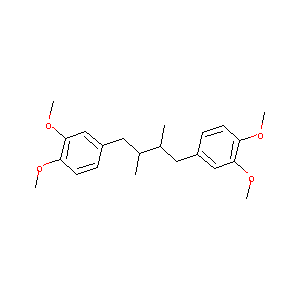
Terameprocol, a novel site-specific transcription inhibitor with anticancer activity. IDrugs. 2008 Mar;11(3):204-14.
|
| 3 |
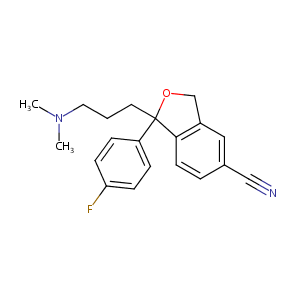
Citalopram FDA Label
|
| 4 |
URL: http://www.guidetopharmacology.org Nucleic Acids Res. 2015 Oct 12. pii: gkv1037. The IUPHAR/BPS Guide to PHARMACOLOGY in 2016: towards curated quantitative interactions between 1300 protein targets and 6000 ligands. (Ligand id: 7547).
|
| 5 |
Drugs@FDA. U.S. Food and Drug Administration. U.S. Department of Health & Human Services.
|
| 6 |
MRP1 polymorphisms associated with citalopram response in patients with major depression. J Clin Psychopharmacol. 2010 Apr;30(2):116-25.
|
| 7 |
ABCB1 gene polymorphisms are associated with fatal intoxications involving venlafaxine but not citalopram. Int J Legal Med. 2013 May;127(3):579-86.
|
| 8 |
Organic cation transporters and their pharmacokinetic and pharmacodynamic consequences. Drug Metab Pharmacokinet. 2008;23(4):243-53.
|
| 9 |
PharmGKB summary: citalopram pharmacokinetics pathway. Pharmacogenet Genomics. 2011 Nov;21(11):769-72.
|
| 10 |
Pharmacokinetic-pharmacodynamic relationship of the selective serotonin reuptake inhibitors. Clin Pharmacokinet. 1996 Dec;31(6):444-69.
|
| 11 |
Antidepressant drugs in the elderly--role of the cytochrome P450 2D6. World J Biol Psychiatry. 2003 Apr;4(2):74-80.
|
| 12 |
Citalopram and desmethylcitalopram in vitro: human cytochromes mediating transformation, and cytochrome inhibitory effects. Biol Psychiatry. 1999 Sep 15;46(6):839-49.
|
| 13 |
Pharmacokinetics of citalopram in relation to genetic polymorphism of CYP2C19. Drug Metab Dispos. 2003 Oct;31(10):1255-9. doi: 10.1124/dmd.31.10.1255.
|
| 14 |
ABCB1 (MDR1) gene polymorphisms are associated with the clinical response to paroxetine in patients with major depressive disorder. Prog Neuropsychopharmacol Biol Psychiatry. 2008 Feb 15;32(2):398-404. doi: 10.1016/j.pnpbp.2007.09.003. Epub 2007 Sep 15.
|
| 15 |
In vitro detection of drug-induced phospholipidosis using gene expression and fluorescent phospholipid based methodologies. Toxicol Sci. 2007 Sep;99(1):162-73.
|
| 16 |
Inverse agonist and neutral antagonist actions of antidepressants at recombinant and native 5-hydroxytryptamine2C receptors: differential modulatio... Mol Pharmacol. 2008 Mar;73(3):748-57.
|
| 17 |
Antidepressant drugs activate SREBP and up-regulate cholesterol and fatty acid biosynthesis in human glial cells. Neurosci Lett. 2006 Mar 13;395(3):185-90. doi: 10.1016/j.neulet.2005.10.096. Epub 2005 Dec 1.
|
| 18 |
Neuroendocrine effects of citalopram, a selective serotonin re-uptake inhibitor, during lifespan in humans. J Endocrinol Invest. 2010 Oct;33(9):657-62. doi: 10.1007/BF03346666. Epub 2010 Apr 22.
|
| 19 |
The antidepressants imipramine, clomipramine, and citalopram induce apoptosis in human acute myeloid leukemia HL-60 cells via caspase-3 activation. J Biochem Mol Toxicol. 1999;13(6):338-47. doi: 10.1002/(sici)1099-0461(1999)13:6<338::aid-jbt8>3.0.co;2-7.
|
| 20 |
Differential effects of psychoactive substances on human wildtype and polymorphic T356M dopamine transporters (DAT). Toxicology. 2019 Jun 15;422:69-75. doi: 10.1016/j.tox.2019.04.012. Epub 2019 Apr 19.
|
| 21 |
5-HTTLPR polymorphism of the serotonin transporter gene predicts non-remission in major depression patients treated with citalopram in a 12-weeks follow up study. J Clin Psychopharmacol. 2003 Dec;23(6):563-7. doi: 10.1097/01.jcp.0000095350.32154.73.
|
| 22 |
Genetic and clinical predictors of sexual dysfunction in citalopram-treated depressed patients. Neuropsychopharmacology. 2009 Jun;34(7):1819-28. doi: 10.1038/npp.2009.4. Epub 2009 Mar 18.
|
| 23 |
Variation in the gene encoding the serotonin 2A receptor is associated with outcome of antidepressant treatment. Am J Hum Genet. 2006 May;78(5):804-814. doi: 10.1086/503820. Epub 2006 Mar 20.
|
|
|
|
|
|
|