General Information of Drug Combination (ID: DC4J8UD)

Drug Combination Name
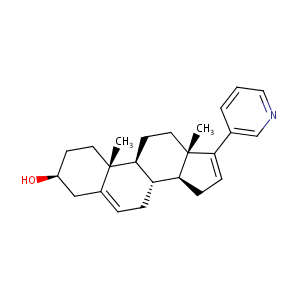
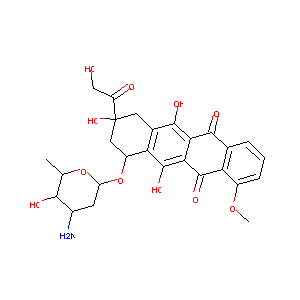
ABIRATERONE Epirubicin
Indication
Disease Entry Status REF
Ovarian serous cystadenocarcinoma Investigative [1]
Component Drugs ABIRATERONE   DM8V75C Epirubicin   DMPDW6T
Small molecular drug Small molecular drug
2D MOL 2D MOL
3D MOL 3D MOL
High-throughput Screening Result Testing Cell Line: SK-OV-3
Zero Interaction Potency (ZIP) Score: 0.78
Bliss Independence Score: 4.37
Loewe Additivity Score: 1.04
LHighest Single Agent (HSA) Score: 2.26

Molecular Interaction Atlas of This Drug Combination

Molecular Interaction Atlas (MIA)
Indication(s) of ABIRATERONE
Disease Entry ICD 11 Status REF
Prostate cancer 2C82.0 Approved [2]
ABIRATERONE Interacts with 1 DTT Molecule(s)
DTT Name DTT ID UniProt ID Mode of Action REF
Steroid 17-alpha-monooxygenase (S17AH) TTRA5BZ CP17A_HUMAN Modulator [4]
------------------------------------------------------------------------------------
Indication(s) of Epirubicin
Disease Entry ICD 11 Status REF
Solid tumour/cancer 2A00-2F9Z Approved [3]
Epirubicin Interacts with 1 DTT Molecule(s)
DTT Name DTT ID UniProt ID Mode of Action REF
DNA topoisomerase II (TOP2) TT0IHXV TOP2A_HUMAN; TOP2B_HUMAN Modulator [5]
------------------------------------------------------------------------------------
Epirubicin Interacts with 4 DTP Molecule(s)
DTP Name DTP ID UniProt ID Mode of Action REF
Multidrug resistance-associated protein 1 (ABCC1) DTSYQGK MRP1_HUMAN Substrate [6]
Multidrug resistance-associated protein 2 (ABCC2) DTFI42L MRP2_HUMAN Substrate [7]
P-glycoprotein 1 (ABCB1) DTUGYRD MDR1_HUMAN Substrate [7]
Breast cancer resistance protein (ABCG2) DTI7UX6 ABCG2_HUMAN Substrate [7]
------------------------------------------------------------------------------------
Epirubicin Interacts with 1 DME Molecule(s)
DME Name DME ID UniProt ID Mode of Action REF
UDP-glucuronosyltransferase 2B7 (UGT2B7) DEB3CV1 UD2B7_HUMAN Metabolism [8]
------------------------------------------------------------------------------------
Epirubicin Interacts with 19 DOT Molecule(s)
DOT Name DOT ID UniProt ID Mode of Action REF
ATP-dependent translocase ABCB1 (ABCB1) OTEJROBO MDR1_HUMAN Increases Expression [9]
Broad substrate specificity ATP-binding cassette transporter ABCG2 (ABCG2) OTW8V2V1 ABCG2_HUMAN Decreases Response To Substance [10]
Natriuretic peptides A (NPPA) OTMQNTNX ANF_HUMAN Increases Expression [11]
Interleukin-6 receptor subunit alpha (IL6R) OTCQL07Z IL6RA_HUMAN Increases Expression [12]
Mitogen-activated protein kinase 3 (MAPK3) OTCYKGKO MK03_HUMAN Increases Phosphorylation [13]
Mitogen-activated protein kinase 1 (MAPK1) OTH85PI5 MK01_HUMAN Increases Phosphorylation [13]
Protein PML (PML) OT6SM2GD PML_HUMAN Affects Mutagenesis [14]
FK506-binding protein-like (FKBPL) OTR9ND6K FKBPL_HUMAN Increases Expression [15]
Tumor necrosis factor receptor superfamily member 1A (TNFRSF1A) OT2D9DOV TNR1A_HUMAN Increases ADR [16]
MARVEL domain-containing protein 1 (MARVELD1) OT5CPOJE MALD1_HUMAN Increases Response To Substance [17]
Phospholysine phosphohistidine inorganic pyrophosphate phosphatase (LHPP) OT9AGAIJ LHPP_HUMAN Increases ADR [16]
Alpha-protein kinase 1 (ALPK1) OTBW6SGD ALPK1_HUMAN Increases ADR [18]
Baculoviral IAP repeat-containing protein 6 (BIRC6) OTCQJAB0 BIRC6_HUMAN Decreases Response To Substance [19]
Baculoviral IAP repeat-containing protein 5 (BIRC5) OTILXZYL BIRC5_HUMAN Decreases Response To Substance [20]
Superoxide dismutase , mitochondrial (SOD2) OTIWXGZ9 SODM_HUMAN Affects Response To Substance [21]
Protein S100-P (S100P) OTJCXNJG S100P_HUMAN Increases Response To Substance [22]
Pleckstrin homology-like domain family A member 2 (PHLDA2) OTMV9DPP PHLA2_HUMAN Increases Response To Substance [23]
Little elongation complex subunit 1 (ICE1) OTOXTBUH ICE1_HUMAN Increases ADR [16]
Microcephalin (MCPH1) OTYT3TT5 MCPH1_HUMAN Increases ADR [18]
------------------------------------------------------------------------------------
⏷ Show the Full List of 19 DOT(s)

Test Results of This Drug Combination in Other Disease Systems

Indication DrugCom ID Cell Line Status REF
Astrocytoma DCOZMKA U251 Investigative [24]
Clear cell renal cell carcinoma DCLYZ88 A498 Investigative [24]
Clear cell renal cell carcinoma DCHAZZT TK-10 Investigative [24]
Clear cell renal cell carcinoma DCO0OVH CAKI-1 Investigative [24]
Glioma DCSQ42T SF-539 Investigative [24]
Papillary renal cell carcinoma DC35RMN ACHN Investigative [24]
Renal cell carcinoma DC8WV02 UO-31 Investigative [24]
Colon adenocarcinoma DCMUSL3 COLO 205 Investigative [25]
Invasive ductal carcinoma DC7YNTK BT-549 Investigative [25]
Adenocarcinoma DCRHR4Z DU-145 Investigative [1]
Adenocarcinoma DCYCF1L A549 Investigative [1]
Adenocarcinoma DCAVXZV NCIH23 Investigative [1]
Cutaneous melanoma DCYSTSD SK-MEL-5 Investigative [1]
High grade ovarian serous adenocarcinoma DC9K1UM OVCAR-8 Investigative [1]
Lung adenocarcinoma DCLG7D4 HOP-62 Investigative [1]
Lung adenocarcinoma DC8ULBU EKVX Investigative [1]
Malignant melanoma DCBDAKJ LOX IMVI Investigative [1]
Malignant melanoma DCRNCUL UACC62 Investigative [1]
Melanoma DCKH16Q UACC-257 Investigative [1]
Melanoma DC99MB4 SK-MEL-2 Investigative [1]
Minimally invasive lung adenocarcinoma DC8TFT4 NCI-H322M Investigative [1]
------------------------------------------------------------------------------------
⏷ Show the Full List of 21 DrugCom(s)

References

1 CheMBL Affinity Phenotypic Cellular Interaction Assay ID: CHEMBL1125976
2 URL: http://www.guidetopharmacology.org Nucleic Acids Res. 2015 Oct 12. pii: gkv1037. The IUPHAR/BPS Guide to PHARMACOLOGY in 2016: towards curated quantitative interactions between 1300 protein targets and 6000 ligands. (Ligand id: 6745).
3 New drugs for the treatment of cancer, 1990-2001. Isr Med Assoc J. 2002 Dec;4(12):1124-31.
4 2011 FDA drug approvals. Nat Rev Drug Discov. 2012 Feb 1;11(2):91-4.
5 Drugs@FDA. U.S. Food and Drug Administration. U.S. Department of Health & Human Services.
6 Sulindac sulfide selectively increases sensitivity of ABCC1 expressing tumor cells to doxorubicin and glutathione depletion. J Biomed Res. 2016 Mar;30(2):120-133.
7 Mammalian drug efflux transporters of the ATP binding cassette (ABC) family in multidrug resistance: A review of the past decade. Cancer Lett. 2016 Jan 1;370(1):153-64.
8 Epirubicin glucuronidation and UGT2B7 developmental expression. Drug Metab Dispos. 2006 Dec;34(12):2097-101.
9 Co-encapsulation of chrysophsin-1 and epirubicin in PEGylated liposomes circumvents multidrug resistance in HeLa cells. Chem Biol Interact. 2015 Dec 5;242:13-23. doi: 10.1016/j.cbi.2015.08.023. Epub 2015 Sep 1.
10 Camptothecin resistance: role of the ATP-binding cassette (ABC), mitoxantrone-resistance half-transporter (MXR), and potential for glucuronidation in MXR-expressing cells. Cancer Res. 1999 Dec 1;59(23):5938-46.
11 Preliminary study on behaviour of atrial natriuretic factor in anthracycline-related cardiac toxicity. Int J Clin Pharmacol Res. 1991;11(2):75-81.
12 Persistence, up to 18 months of follow-up, of epirubicin-induced myocardial dysfunction detected early by serial tissue Doppler echocardiography: correlation with inflammatory and oxidative stress markers. Oncologist. 2008 Dec;13(12):1296-305. doi: 10.1634/theoncologist.2008-0151. Epub 2008 Dec 5.
13 (-)-Gossypol enhances the anticancer activity of epirubicin via downregulating survivin in hepatocellular carcinoma. Chem Biol Interact. 2022 Sep 1;364:110060. doi: 10.1016/j.cbi.2022.110060. Epub 2022 Jul 22.
14 Evidence for direct involvement of epirubicin in the formation of chromosomal translocations in t(15;17) therapy-related acute promyelocytic leukemia. Blood. 2010 Jan 14;115(2):326-30. doi: 10.1182/blood-2009-07-235051. Epub 2009 Nov 2.
15 The differential effects of cyclophosphamide, epirubicin and 5-fluorouracil on apoptotic marker (CPP-32), pro-apoptotic protein (p21(WAF-1)) and anti-apoptotic protein (bcl-2) in breast cancer cells. Breast Cancer Res Treat. 2003 Aug;80(3):239-44. doi: 10.1023/A:1024995202135.
16 Genome-wide association study of chemotherapeutic agent-induced severe neutropenia/leucopenia for patients in Biobank Japan. Cancer Sci. 2013 Aug;104(8):1074-82. doi: 10.1111/cas.12186. Epub 2013 Jun 10.
17 MARVELD1 attenuates arsenic trioxide-induced apoptosis in liver cancer cells by inhibiting reactive oxygen species production. Ann Transl Med. 2019 May;7(9):200. doi: 10.21037/atm.2019.04.38.
18 Genome-wide association study of epirubicin-induced leukopenia in Japanese patients. Pharmacogenet Genomics. 2011 Sep;21(9):552-8. doi: 10.1097/FPC.0b013e328348e48f.
19 [Knock-down of apollon gene by antisense oligodeoxynucleotide inhibits the proliferation of Lovo cells and enhances chemo-sensitivity]. Yao Xue Xue Bao. 2011 Feb;46(2):138-45.
20 [Antisense oligonucleotide targeting survivin induces apoptosis of renal clear-cell carcinoma cells and enhances their sensitivity to epirubicin in vitro]. Zhonghua Zhong Liu Za Zhi. 2005 Aug;27(8):468-70.
21 Endogenous antioxidant enzymes and glutathione S-transferase in protection of mesothelioma cells against hydrogen peroxide and epirubicin toxicity. Br J Cancer. 1998 Apr;77(7):1097-102. doi: 10.1038/bjc.1998.182.
22 S100P contributes to chemosensitivity of human ovarian cancer cell line OVCAR3. Oncol Rep. 2008 Aug;20(2):325-32.
23 TSSC3 overexpression associates with growth inhibition, apoptosis induction and enhances chemotherapeutic effects in human osteosarcoma. Carcinogenesis. 2012 Jan;33(1):30-40. doi: 10.1093/carcin/bgr232. Epub 2011 Oct 21.
24 CheMBL Affinity Phenotypic Cellular Interaction Assay ID: CHEMBL1125966
25 CheMBL Affinity Phenotypic Cellular Interaction Assay ID: CHEMBL1126165