| 1 |
CheMBL Affinity Phenotypic Cellular Interaction Assay ID: CHEMBL1125966
|
| 2 |
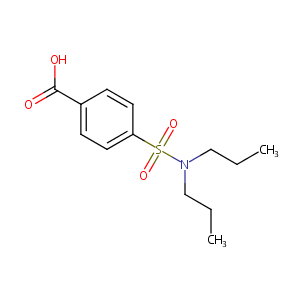
Probenecid FDA Label
|
| 3 |
URL: http://www.guidetopharmacology.org Nucleic Acids Res. 2015 Oct 12. pii: gkv1037. The IUPHAR/BPS Guide to PHARMACOLOGY in 2016: towards curated quantitative interactions between 1300 protein targets and 6000 ligands. (Ligand id: 4357).
|
| 4 |
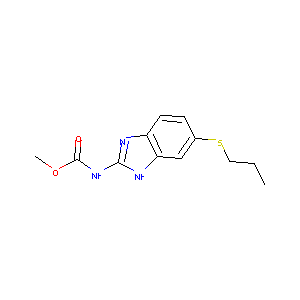
Albendazole FDA Label
|
| 5 |
Opportunities and challenges in antiparasitic drug discovery. Nat Rev Drug Discov. 2005 Sep;4(9):727-40.
|
| 6 |
Carboxylic acid drug-induced DNA nicking in HEK293 cells expressing human UDP-glucuronosyltransferases: role of acyl glucuronide metabolites and glycation pathways. Chem Res Toxicol. 2007 Oct;20(10):1520-7. doi: 10.1021/tx700188x. Epub 2007 Sep 20.
|
| 7 |
Transport of organic anions across the basolateral membrane of proximal tubule cells. Rev Physiol Biochem Pharmacol. 2003;146:95-158.
|
| 8 |
MRP2 (ABCC2) transports taxanes and confers paclitaxel resistance and both processes are stimulated by probenecid. Int J Cancer. 2005 Sep 20;116(5):824-9.
|
| 9 |
Characterization of the efflux transport of 17beta-estradiol-D-17beta-glucuronide from the brain across the blood-brain barrier. J Pharmacol Exp Ther. 2001 Jul;298(1):316-22.
|
| 10 |
Quercetin, Morin, Luteolin, and Phloretin Are Dietary Flavonoid Inhibitors of Monocarboxylate Transporter 6. Mol Pharm. 2017 Sep 5;14(9):2930-2936.
|
| 11 |
Modulation of 3'-azido-3'-deoxythymidine catabolism by probenecid and acetaminophen in freshly isolated rat hepatocytes. Biochem Pharmacol. 1991 Sep 12;42(7):1475-80.
|
| 12 |
Probenecid inhibits the human bitter taste receptor TAS2R16 and suppresses bitter perception of salicin. PLoS One. 2011;6(5):e20123.
|
| 13 |
Inhibition of organic anion transporter (OAT) activity by cigarette smoke condensate. Toxicol In Vitro. 2017 Oct;44:27-35.
|
| 14 |
Evaluation and mechanistic analysis of the cytotoxicity of the acyl glucuronide of nonsteroidal anti-inflammatory drugs. Drug Metab Dispos. 2014 Jan;42(1):1-8. doi: 10.1124/dmd.113.054478. Epub 2013 Oct 8.
|
| 15 |
Targeting organic anion transporter 3 with probenecid as a novel anti-influenza a virus strategy. Antimicrob Agents Chemother. 2013 Jan;57(1):475-83. doi: 10.1128/AAC.01532-12. Epub 2012 Nov 5.
|
| 16 |
Clinical and molecular analysis of patients with renal hypouricemia in Japan-influence of URAT1 gene on urinary urate excretion. J Am Soc Nephrol. 2004 Jan;15(1):164-73. doi: 10.1097/01.asn.0000105320.04395.d0.
|
| 17 |
Neonicotinoid pesticides poorly interact with human drug transporters. J Biochem Mol Toxicol. 2019 Oct;33(10):e22379. doi: 10.1002/jbt.22379. Epub 2019 Jul 31.
|
| 18 |
Cell-based and cytokine-directed chemical screen to identify potential anti-multiple myeloma agents. Leuk Res. 2010 Jul;34(7):917-24. doi: 10.1016/j.leukres.2009.12.002. Epub 2010 Feb 8.
|
| 19 |
Flubendazole interferes with a wide spectrum of cell homeostatic mechanisms in Echinococcus granulosus protoscoleces. Parasitol Int. 2009 Sep;58(3):270-7.
|
| 20 |
The anthelminthic agent albendazole does not interact with p-glycoprotein. Drug Metab Dispos. 2002 Apr;30(4):365-9.
|
| 21 |
Identification of human cytochrome P(450)s that metabolise anti-parasitic drugs and predictions of in vivo drug hepatic clearance from in vitro data. Eur J Clin Pharmacol. 2003 Sep;59(5-6):429-42.
|
| 22 |
Cytochrome P450 1A1/2 induction by antiparasitic drugs: dose-dependent increase in ethoxyresorufin O-deethylase activity and mRNA caused by quinine, primaquine and albendazole in HepG2 cells. Eur J Clin Pharmacol. 2002 Nov;58(8):537-42.
|
| 23 |
Danazol inhibits cytochrome P450 2J2 activity in a substrate-independent manner. Drug Metab Dispos. 2015 Aug;43(8):1250-3.
|
| 24 |
Systems pharmacological analysis of drugs inducing stevens-johnson syndrome and toxic epidermal necrolysis. Chem Res Toxicol. 2015 May 18;28(5):927-34. doi: 10.1021/tx5005248. Epub 2015 Apr 3.
|
| 25 |
A Gene Expression Biomarker Predicts Heat Shock Factor 1 Activation in a Gene Expression Compendium. Chem Res Toxicol. 2021 Jul 19;34(7):1721-1737. doi: 10.1021/acs.chemrestox.0c00510. Epub 2021 Jun 25.
|
|
|
|
|
|
|