| 1 |
CheMBL Affinity Phenotypic Cellular Interaction Assay ID: CHEMBL1125966
|
| 2 |
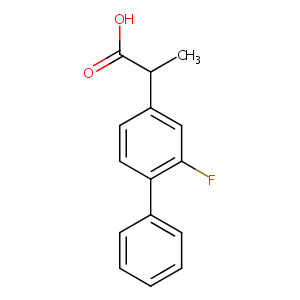
Flurbiprofen FDA Label
|
| 3 |
URL: http://www.guidetopharmacology.org Nucleic Acids Res. 2015 Oct 12. pii: gkv1037. The IUPHAR/BPS Guide to PHARMACOLOGY in 2016: towards curated quantitative interactions between 1300 protein targets and 6000 ligands. (Ligand id: 4194).
|
| 4 |
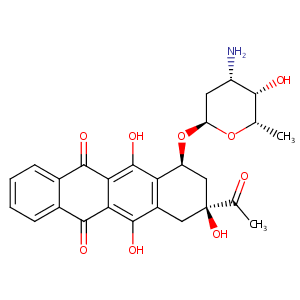
Idarubicin FDA Label
|
| 5 |
URL: http://www.guidetopharmacology.org Nucleic Acids Res. 2015 Oct 12. pii: gkv1037. The IUPHAR/BPS Guide to PHARMACOLOGY in 2016: towards curated quantitative interactions between 1300 protein targets and 6000 ligands. (Ligand id: 7083).
|
| 6 |
Glucuronidation of nonsteroidal anti-inflammatory drugs: identifying the enzymes responsible in human liver microsomes. Drug Metab Dispos. 2005 Jul;33(7):1027-35.
|
| 7 |
Gastrointestinally distributed UDP-glucuronosyltransferase 1A10, which metabolizes estrogens and nonsteroidal anti-inflammatory drugs, depends upon phosphorylation. J Biol Chem. 2004 Jul 2;279(27):28320-9. doi: 10.1074/jbc.M401396200. Epub 2004 Apr 26.
|
| 8 |
Flurbiprofen, a cyclooxygenase inhibitor, protects mice from hepatic ischemia/reperfusion injury by inhibiting GSK-3 signaling and mitochondrial permeability transition.Mol Med.2012 Sep 25;18:1128-35.
|
| 9 |
Predominant contribution of UDP-glucuronosyltransferase 2B7 in the glucuronidation of racemic flurbiprofen in the human liver. Drug Metab Dispos. 2007 Jul;35(7):1182-7.
|
| 10 |
Effect of CYP2C9 genetic polymorphism on the metabolism of flurbiprofen in vitro. Drug Dev Ind Pharm. 2015;41(8):1363-7.
|
| 11 |
Substrates, inducers, inhibitors and structure-activity relationships of human Cytochrome P450 2C9 and implications in drug development. Curr Med Chem. 2009;16(27):3480-675.
|
| 12 |
In vitro and in vivo profiling of CHF5022 and CHF5074 Two beta-amyloid1-42 lowering agents. Pharmacol Res. 2007 Apr;55(4):318-28.
|
| 13 |
Type 5 17beta-hydroxysteroid dehydrogenase/prostaglandin F synthase (AKR1C3): role in breast cancer and inhibition by non-steroidal anti-inflammatory drug analogs. Chem Biol Interact. 2009 Mar 16;178(1-3):221-7.
|
| 14 |
15-Hydroxyprostaglandin dehydrogenase (15-PGDH) is up-regulated by flurbiprofen and other non-steroidal anti-inflammatory drugs in human colon cancer HT29 cells. Arch Biochem Biophys. 2009 Jul 15;487(2):139-45. doi: 10.1016/j.abb.2009.05.017. Epub 2009 Jun 6.
|
| 15 |
Serum protein binding of nonsteroidal antiinflammatory drugs: a comparative study. J Pharmacokinet Biopharm. 1997 Feb;25(1):63-77. doi: 10.1023/a:1025719827072.
|
| 16 |
The p38 MAPK pathway mediates aryl propionic acid induced messenger rna stability of p75 NTR in prostate cancer cells. Cancer Res. 2007 Dec 1;67(23):11402-10. doi: 10.1158/0008-5472.CAN-07-1792.
|
| 17 |
A comparison of the effectiveness of selected non-steroidal anti-inflammatory drugs and their derivatives against cancer cells in vitro. Cancer Chemother Pharmacol. 2008 Feb;61(2):203-14. doi: 10.1007/s00280-007-0462-3. Epub 2007 Apr 20.
|
| 18 |
Effects of acidic non-steroidal anti-inflammatory drugs on human cytochrome P450 4A11 activity: Roles of carboxylic acid and a sulfur atom in potent inhibition by sulindac sulfide. Chem Biol Interact. 2023 Sep 1;382:110644. doi: 10.1016/j.cbi.2023.110644. Epub 2023 Jul 25.
|
| 19 |
Quantitative high-throughput profiling of environmental chemicals and drugs that modulate farnesoid X receptor. Sci Rep. 2014 Sep 26;4:6437. doi: 10.1038/srep06437.
|
| 20 |
Drugs@FDA. U.S. Food and Drug Administration. U.S. Department of Health & Human Services.
|
| 21 |
Human intestinal transporter database: QSAR modeling and virtual profiling of drug uptake, efflux and interactions. Pharm Res. 2013 Apr;30(4):996-1007.
|
| 22 |
Amonafide L-malate is not a substrate for multidrug resistance proteins in secondary acute myeloid leukemia. Leukemia. 2008 Nov;22(11):2110-5.
|
| 23 |
In vitro evaluation of cytochrome P450-mediated drug interactions between cytarabine, idarubicin, itraconazole and caspofungin. Hematology. 2004 Jun;9(3):217-21.
|
| 24 |
The use of biochemical markers in cardiotoxicity monitoring in patients treated for leukemia. Neoplasma. 2005;52(5):430-4.
|
|
|
|
|
|
|