General Information of Drug Combination (ID: DC7BT4F)

Drug Combination Name
L-165041 Armodafinil
Indication
Disease Entry Status REF
Chronic myelogenous leukemia Investigative [1]
Component Drugs L-165041   DMZP7YM Armodafinil   DMGB035
Small molecular drug Small molecular drug
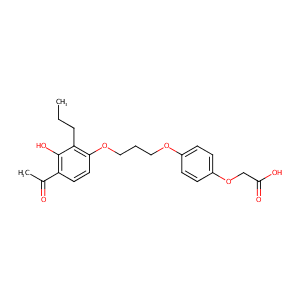
2D MOL 2D MOL
3D MOL is unavailable 3D MOL
High-throughput Screening Result Testing Cell Line: KBM-7
Zero Interaction Potency (ZIP) Score: 20.74
Bliss Independence Score: 20.74
Loewe Additivity Score: 34.74
LHighest Single Agent (HSA) Score: 34.75

Molecular Interaction Atlas of This Drug Combination

Molecular Interaction Atlas (MIA)
Indication(s) of L-165041
Disease Entry ICD 11 Status REF
Discovery agent N.A. Investigative [2]
L-165041 Interacts with 1 DTT Molecule(s)
DTT Name DTT ID UniProt ID Mode of Action REF
Peroxisome proliferator-activated receptor delta (PPARD) TT2JWF6 PPARD_HUMAN Agonist [6]
------------------------------------------------------------------------------------
L-165041 Interacts with 1 DOT Molecule(s)
DOT Name DOT ID UniProt ID Mode of Action REF
Fatty acid-binding protein, adipocyte (FABP4) OT3DKFOU FABP4_HUMAN Increases Expression [7]
------------------------------------------------------------------------------------
Indication(s) of Armodafinil
Disease Entry ICD 11 Status REF
Malignant glioma 2A00.0 Approved [3]
Methamphetamine dependence 6C46.2 Approved [3]
Narcolepsy 7A20 Approved [3]
Pain MG30-MG3Z Approved [3]
Pediatric cancer 2A00-2F9Z Approved [4]
Postpoliomyelitis syndrome N.A. Approved [3]
Traumatic brain injury NA07.Z Approved [3]
Armodafinil Interacts with 1 DTT Molecule(s)
DTT Name DTT ID UniProt ID Mode of Action REF
Adrenergic receptor alpha-1D (ADRA1D) TT34BHT ADA1D_HUMAN Agonist [8]
------------------------------------------------------------------------------------
Armodafinil Interacts with 2 DME Molecule(s)
DME Name DME ID UniProt ID Mode of Action REF
Cytochrome P450 3A4 (CYP3A4) DE4LYSA CP3A4_HUMAN Metabolism [9]
Cytochrome P450 3A5 (CYP3A5) DEIBDNY CP3A5_HUMAN Metabolism [10]
------------------------------------------------------------------------------------

References

1 CheMBL Affinity Phenotypic Cellular Interaction Assay ID: CHEMBL1125966
2 URL: http://www.guidetopharmacology.org Nucleic Acids Res. 2015 Oct 12. pii: gkv1037. The IUPHAR/BPS Guide to PHARMACOLOGY in 2016: towards curated quantitative interactions between 1300 protein targets and 6000 ligands. (Ligand id: 2691).
3 Armodafinil FDA Label
4 Drugs@FDA. U.S. Food and Drug Administration. U.S. Department of Health & Human Services. 2015
5 Keratinocyte-derived vascular endothelial growth factor biosynthesis represents a pleiotropic side effect of peroxisome proliferator-activated receptor-gamma agonist troglitazone but not rosiglitazone and involves activation of p38 mitogen-activated protein kinase: implications for diabetes-impaired skin repair. Mol Pharmacol. 2008 Oct;74(4):952-63. doi: 10.1124/mol.108.049395. Epub 2008 Jul 3.
6 Novel peroxisome proliferator-activated receptor (PPAR) gamma and PPARdelta ligands produce distinct biological effects. J Biol Chem. 1999 Mar 5;274(10):6718-25.
7 Human adipocyte fatty acid-binding protein (aP2) gene promoter-driven reporter assay discriminates nonlipogenic peroxisome proliferator-activated receptor gamma ligands. J Pharmacol Exp Ther. 2004 Nov;311(2):467-75. doi: 10.1124/jpet.104.068254. Epub 2004 Jul 23.
8 Mechanisms of modafinil: A review of current research. Neuropsychiatr Dis Treat. 2007 June; 3(3): 349-364.
9 Interaction profile of armodafinil with medications metabolized by cytochrome P450 enzymes 1A2, 3A4 and 2C19 in healthy subjects. Clin Pharmacokinet. 2008;47(1):61-74.
10 Clinical pharmacokinetic profile of modafinil. Clin Pharmacokinet. 2003;42(2):123-37.