General Information of Drug Combination (ID: DCB6X93)

Drug Combination Name
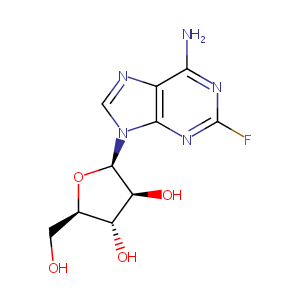
Fludarabine Busulfan
Indication
Disease Entry Status REF
Anaplastic large cell lymphoma Investigative [1]
Component Drugs Fludarabine   DMVRLT7 Busulfan   DMXYJ9C
Small molecular drug Small molecular drug
2D MOL 2D MOL
3D MOL 3D MOL
High-throughput Screening Result Testing Cell Line: SR
Zero Interaction Potency (ZIP) Score: 5.37
Bliss Independence Score: 5.05
Loewe Additivity Score: 1.16
LHighest Single Agent (HSA) Score: 5.32

Molecular Interaction Atlas of This Drug Combination

Molecular Interaction Atlas (MIA)
Indication(s) of Fludarabine
Disease Entry ICD 11 Status REF
Acute myelogenous leukaemia 2A41 Approved [2]
Cutaneous melanoma 2C30 Approved [2]
Haematological malignancy 2B33.Y Approved [3]
Hematologic disease 3C0Z Approved [2]
Hepatosplenic T-cell lymphoma N.A. Approved [2]
Immunodeficiency 4A00-4A85 Approved [2]
Large granular lymphocytic leukemia 2A90.1 Approved [2]
Lung cancer 2C25.0 Approved [2]
MALT lymphoma N.A. Approved [2]
Multiple sclerosis 8A40 Approved [2]
Myeloproliferative neoplasm 2A20 Approved [2]
Nodal marginal zone lymphoma 2A85.0 Approved [2]
Primary cutaneous peripheral T-cell lymphoma not otherwise specified N.A. Approved [2]
Recurrent adult burkitt lymphoma 2A85.6 Approved [2]
Small intestine lymphoma N.A. Approved [2]
Splenic marginal zone lymphoma N.A. Approved [2]
Systemic lupus erythematosus 4A40.0 Approved [2]
Systemic sclerosis 4A42 Approved [2]
Testicular lymphoma N.A. Approved [2]
Classic Hodgkin lymphoma N.A. Investigative [2]
Colon cancer 2B90.Z Investigative [2]
Gastric cancer 2B72 Investigative [2]
Neuroblastoma 2D11.2 Investigative [2]
Fludarabine Interacts with 1 DTT Molecule(s)
DTT Name DTT ID UniProt ID Mode of Action REF
Adenosine deaminase (ADA) TTLP57V ADA_HUMAN Inhibitor [9]
------------------------------------------------------------------------------------
Fludarabine Interacts with 10 DOT Molecule(s)
DOT Name DOT ID UniProt ID Mode of Action REF
Tumor necrosis factor receptor superfamily member 10A (TNFRSF10A) OTBPCU2O TR10A_HUMAN Affects Expression [10]
Tumor necrosis factor receptor superfamily member 10B (TNFRSF10B) OTA1CPBV TR10B_HUMAN Increases Expression [11]
Histone H2AX (H2AX) OT18UX57 H2AX_HUMAN Increases Expression [6]
Tumor necrosis factor receptor superfamily member 6 (FAS) OTP9XG86 TNR6_HUMAN Increases Expression [12]
Mitogen-activated protein kinase 3 (MAPK3) OTCYKGKO MK03_HUMAN Decreases Phosphorylation [7]
Mitogen-activated protein kinase 1 (MAPK1) OTH85PI5 MK01_HUMAN Decreases Phosphorylation [7]
Cyclin-dependent kinase inhibitor 1 (CDKN1A) OTQWHCZE CDN1A_HUMAN Increases Expression [13]
Phosphatidylinositol 3,4,5-trisphosphate 3-phosphatase and dual-specificity protein phosphatase PTEN (PTEN) OTOWDUNT PTEN_HUMAN Increases Expression [14]
Bcl-2-like protein 1 (BCL2L1) OTRC5K9O B2CL1_HUMAN Decreases Expression [15]
Bcl-2-binding component 3, isoforms 3/4 (BBC3) OTUAXDAY BBC3B_HUMAN Increases Expression [8]
------------------------------------------------------------------------------------
⏷ Show the Full List of 10 DOT(s)
Indication(s) of Busulfan
Disease Entry ICD 11 Status REF
Chronic myelogenous leukaemia 2A20.0 Approved [4]
Hematologic disease 3C0Z Approved [4]
Immunodeficiency 4A00-4A85 Approved [4]
Leukemia N.A. Approved [4]
Myeloproliferative syndrome 2A22 Approved [5]
Systemic lupus erythematosus 4A40.0 Approved [4]
Systemic sclerosis 4A42 Approved [4]
Neuroblastoma 2D11.2 Investigative [4]
Retinoblastoma 2D02.2 Investigative [4]
Busulfan Interacts with 1 DTT Molecule(s)
DTT Name DTT ID UniProt ID Mode of Action REF
Human Deoxyribonucleic acid (hDNA) TTUTN1I NOUNIPROTAC Modulator [17]
------------------------------------------------------------------------------------
Busulfan Interacts with 6 DME Molecule(s)
DME Name DME ID UniProt ID Mode of Action REF
Cytochrome P450 3A4 (CYP3A4) DE4LYSA CP3A4_HUMAN Metabolism [18]
Glutathione S-transferase alpha-1 (GSTA1) DE4ZHS1 GSTA1_HUMAN Metabolism [19]
Glutathione S-transferase alpha-2 (GSTA2) DEH49YS GSTA2_HUMAN Metabolism [20]
Glutathione S-transferase pi (GSTP1) DEK6079 GSTP1_HUMAN Metabolism [21]
Microsomal glutathione S-transferase 2 (MGST2) DE31KMQ MGST2_HUMAN Metabolism [22]
Glutathione S-transferase mu-1 (GSTM1) DEYZEJA GSTM1_HUMAN Metabolism [21]
------------------------------------------------------------------------------------
⏷ Show the Full List of 6 DME(s)
Busulfan Interacts with 15 DOT Molecule(s)
DOT Name DOT ID UniProt ID Mode of Action REF
Serotransferrin (TF) OT41PEMS TRFE_HUMAN Increases Expression [23]
Antithrombin-III (SERPINC1) OTDFATG0 ANT3_HUMAN Affects Expression [24]
Transforming growth factor beta-1 proprotein (TGFB1) OTV5XHVH TGFB1_HUMAN Increases Expression [25]
Plasminogen activator inhibitor 1 (SERPINE1) OTT0MPQ3 PAI1_HUMAN Increases Expression [25]
Poly polymerase 1 (PARP1) OT310QSG PARP1_HUMAN Increases Cleavage [26]
Histone H2AX (H2AX) OT18UX57 H2AX_HUMAN Increases Phosphorylation [26]
Cyclic AMP-dependent transcription factor ATF-4 (ATF4) OTRFV19J ATF4_HUMAN Increases Expression [16]
Nuclear factor NF-kappa-B p105 subunit (NFKB1) OTNRRD8I NFKB1_HUMAN Increases Expression [16]
Mitogen-activated protein kinase 3 (MAPK3) OTCYKGKO MK03_HUMAN Increases Activity [27]
Mitogen-activated protein kinase 1 (MAPK1) OTH85PI5 MK01_HUMAN Increases Activity [27]
Cyclin-dependent kinase inhibitor 1 (CDKN1A) OTQWHCZE CDN1A_HUMAN Increases Expression [27]
Signal transducer and activator of transcription 2 (STAT2) OTO9G2RZ STAT2_HUMAN Decreases Expression [16]
Pseudouridylate synthase 7 homolog (PUS7) OTE5AQHJ PUS7_HUMAN Increases Expression [28]
DNA repair nuclease/redox regulator APEX1 (APEX1) OT53OI14 APEX1_HUMAN Increases Response To Substance [29]
Rho GDP-dissociation inhibitor 1 (ARHGDIA) OTEXWJDO GDIR1_HUMAN Affects Response To Substance [30]
------------------------------------------------------------------------------------
⏷ Show the Full List of 15 DOT(s)

Test Results of This Drug Combination in Other Disease Systems

Indication DrugCom ID Cell Line Status REF
Diamond-Blackfan Anemia DCMXG0T N. A. Phase 1 [31]
Adult T acute lymphoblastic leukemia DCZQXKC MOLT-4 Investigative [1]
Carcinoma DCVM8AY MCF7 Investigative [32]
------------------------------------------------------------------------------------

References

1 CheMBL Affinity Phenotypic Cellular Interaction Assay ID: CHEMBL1125966
2 Fludarabine FDA Label
3 URL: http://www.guidetopharmacology.org Nucleic Acids Res. 2015 Oct 12. pii: gkv1037. The IUPHAR/BPS Guide to PHARMACOLOGY in 2016: towards curated quantitative interactions between 1300 protein targets and 6000 ligands. (Ligand id: 4802).
4 Busulfan FDA Label
5 URL: http://www.guidetopharmacology.org Nucleic Acids Res. 2015 Oct 12. pii: gkv1037. The IUPHAR/BPS Guide to PHARMACOLOGY in 2016: towards curated quantitative interactions between 1300 protein targets and 6000 ligands. (Ligand id: 7136).
6 Role of histone deacetylase inhibitor-induced reactive oxygen species and DNA damage in LAQ-824/fludarabine antileukemic interactions. Mol Cancer Ther. 2008 Oct;7(10):3285-97. doi: 10.1158/1535-7163.MCT-08-0385.
7 9-beta-D-arabinofuranosyl-2-fluoroadenine inhibits expression of vascular endothelial growth factor through hypoxia-inducible factor-1 in human ovarian cancer cells. Mol Pharmacol. 2004 Jul;66(1):178-86. doi: 10.1124/mol.66.1.178.
8 MDM2 antagonists activate p53 and synergize with genotoxic drugs in B-cell chronic lymphocytic leukemia cells. Blood. 2006 May 15;107(10):4109-14. doi: 10.1182/blood-2005-08-3273. Epub 2006 Jan 26.
9 Purine nucleoside analogs in indolent non-Hodgkin's lymphoma. Oncology (Williston Park). 2000 Jun;14(6 Suppl 2):13-5.
10 Role of the TRAIL/APO2-L death receptors in chlorambucil- and fludarabine-induced apoptosis in chronic lymphocytic leukemia. Oncogene. 2003 Nov 13;22(51):8356-69. doi: 10.1038/sj.onc.1207004.
11 Differential effects of chemotherapeutic drugs versus the MDM-2 antagonist nutlin-3 on cell cycle progression and induction of apoptosis in SKW6.4 lymphoblastoid B-cells. J Cell Biochem. 2008 May 15;104(2):595-605. doi: 10.1002/jcb.21649.
12 Caspase 8 activation independent of Fas (CD95/APO-1) signaling may mediate killing of B-chronic lymphocytic leukemia cells by cytotoxic drugs or gamma radiation. Blood. 2001 Nov 1;98(9):2800-7. doi: 10.1182/blood.v98.9.2800.
13 Functional integrity of the p53-mediated apoptotic pathway induced by the nongenotoxic agent nutlin-3 in B-cell chronic lymphocytic leukemia (B-CLL). Blood. 2006 May 15;107(10):4122-9. doi: 10.1182/blood-2005-11-4465. Epub 2006 Jan 26.
14 Comparative effects of retinoic acid, vitamin D and resveratrol alone and in combination with adenosine analogues on methylation and expression of phosphatase and tensin homologue tumour suppressor gene in breast cancer cells. Br J Nutr. 2012 Mar;107(6):781-90. doi: 10.1017/S0007114511003631. Epub 2011 Aug 1.
15 Matrix metalloproteinase-9 is involved in chronic lymphocytic leukemia cell response to fludarabine and arsenic trioxide. PLoS One. 2014 Jun 23;9(6):e99993. doi: 10.1371/journal.pone.0099993. eCollection 2014.
16 Direct transcriptomic comparison of xenobiotic metabolism and toxicity pathway induction of airway epithelium models at an air-liquid interface generated from induced pluripotent stem cells and primary bronchial epithelial cells. Cell Biol Toxicol. 2023 Feb;39(1):1-18. doi: 10.1007/s10565-022-09726-0. Epub 2022 May 31.
17 DNA intrastrand cross-link at the 5'-GA-3' sequence formed by busulfan and its role in the cytotoxic effect. Cancer Sci. 2004 May;95(5):454-8.
18 Update: clinically significant cytochrome P-450 drug interactions. Pharmacotherapy. 1998 Jan-Feb;18(1):84-112.
19 Glutathione S-transferase M1 polymorphism: a risk factor for hepatic venoocclusive disease in bone marrow transplantation. Blood. 2004 Sep 1;104(5):1574-7.
20 Endothelial cells do not express GSTA1: potential relevance to busulfan-mediated endothelial damage during haematopoietic stem cell transplantation. Eur J Haematol. 2008 Apr;80(4):299-302.
21 Busulfan conjugation by glutathione S-transferases alpha, mu, and pi. Drug Metab Dispos. 1996 Sep;24(9):1015-9.
22 Overexpression of glutathione-S-transferase, MGSTII, confers resistance to busulfan and melphalan. Cancer Invest. 2005;23(1):19-25.
23 Busulfan induces activin A expression in vitro and in vivo: a possible link to venous occlusive disease. Clin Pharmacol Ther. 2003 Sep;74(3):264-74.
24 Decreased incidence of hepatic veno-occlusive disease and fewer hemostatic derangements associated with intravenous busulfan vs oral busulfan in adults conditioned with busulfan + cyclophosphamide for allogeneic bone marrow transplantation. Ann Hematol. 2005 May;84(5):321-30. doi: 10.1007/s00277-004-0982-4. Epub 2004 Dec 4.
25 Antineoplastic agent busulfan regulates a network of genes related to coagulation and fibrinolysis. Eur J Clin Pharmacol. 2012 Jun;68(6):923-35. doi: 10.1007/s00228-011-1209-y.
26 Altered gene expression in busulfan-resistant human myeloid leukemia. Leuk Res. 2008 Nov;32(11):1684-97. doi: 10.1016/j.leukres.2008.01.016. Epub 2008 Mar 12.
27 Busulfan selectively induces cellular senescence but not apoptosis in WI38 fibroblasts via a p53-independent but extracellular signal-regulated kinase-p38 mitogen-activated protein kinase-dependent mechanism. J Pharmacol Exp Ther. 2006 Nov;319(2):551-60. doi: 10.1124/jpet.106.107771. Epub 2006 Aug 1.
28 CD34+ derived macrophage and dendritic cells display differential responses to paraquat. Toxicol In Vitro. 2021 Sep;75:105198. doi: 10.1016/j.tiv.2021.105198. Epub 2021 Jun 9.
29 Impairment of APE1 function enhances cellular sensitivity to clinically relevant alkylators and antimetabolites. Mol Cancer Res. 2009 Jun;7(6):897-906. doi: 10.1158/1541-7786.MCR-08-0519. Epub 2009 May 26.
30 Reduced expression of Rho guanine nucleotide dissociation inhibitor-alpha modulates the cytotoxic effect of busulfan in HEK293 cells. Anticancer Drugs. 2007 Mar;18(3):333-40. doi: 10.1097/CAD.0b013e328011fd7f.
31 ClinicalTrials.gov (NCT00176878) Stem Cell Transplant for Bone Marrow Failure Syndromes
32 CheMBL Affinity Phenotypic Cellular Interaction Assay ID: CHEMBL1126165