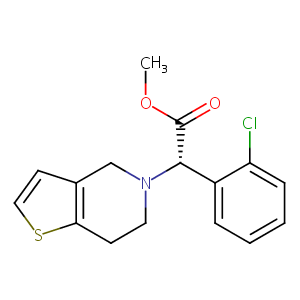
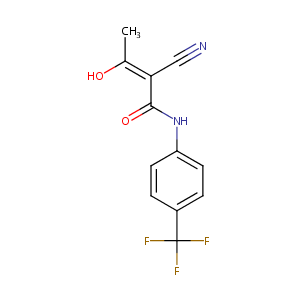
General Information of Drug Combination (ID: DCE0095)

Drug Combination Name
Clopidogrel Teriflunomide
Indication
Disease Entry Status REF
Chronic myelogenous leukemia Investigative [1]
Component Drugs Clopidogrel   DMOL54H Teriflunomide   DMQ2FKJ
Small molecular drug Small molecular drug
2D MOL 2D MOL
3D MOL 3D MOL
High-throughput Screening Result Testing Cell Line: KBM-7
Zero Interaction Potency (ZIP) Score: 1.55
Bliss Independence Score: 1.55
Loewe Additivity Score: 15.51
LHighest Single Agent (HSA) Score: 15.51

Molecular Interaction Atlas of This Drug Combination

Molecular Interaction Atlas (MIA)
Indication(s) of Clopidogrel
Disease Entry ICD 11 Status REF
Acute coronary syndrome BA41 Approved [2]
Atherosclerosis BD40 Approved [2]
Myocardial infarction BA41-BA43 Approved [2]
Thrombosis DB61-GB90 Approved [3]
Coronavirus Disease 2019 (COVID-19) 1D6Y Phase 2 [4]
Intracranial embolism 8B22.1 Investigative [2]
Clopidogrel Interacts with 1 DTT Molecule(s)
DTT Name DTT ID UniProt ID Mode of Action REF
P2Y purinoceptor 12 (P2RY12) TTZ1DT0 P2Y12_HUMAN Antagonist [8]
------------------------------------------------------------------------------------
Clopidogrel Interacts with 1 DTP Molecule(s)
DTP Name DTP ID UniProt ID Mode of Action REF
P-glycoprotein 1 (ABCB1) DTUGYRD MDR1_HUMAN Substrate [9]
------------------------------------------------------------------------------------
Clopidogrel Interacts with 6 DME Molecule(s)
DME Name DME ID UniProt ID Mode of Action REF
Cytochrome P450 3A4 (CYP3A4) DE4LYSA CP3A4_HUMAN Metabolism [10]
Cytochrome P450 1A2 (CYP1A2) DEJGDUW CP1A2_HUMAN Metabolism [11]
Cytochrome P450 3A5 (CYP3A5) DEIBDNY CP3A5_HUMAN Metabolism [12]
Cytochrome P450 2C9 (CYP2C9) DE5IED8 CP2C9_HUMAN Metabolism [12]
Cytochrome P450 2B6 (CYP2B6) DEPKLMQ CP2B6_HUMAN Metabolism [13]
Mephenytoin 4-hydroxylase (CYP2C19) DEGTFWK CP2CJ_HUMAN Metabolism [14]
------------------------------------------------------------------------------------
⏷ Show the Full List of 6 DME(s)
Clopidogrel Interacts with 11 DOT Molecule(s)
DOT Name DOT ID UniProt ID Mode of Action REF
ATP-dependent translocase ABCB1 (ABCB1) OTEJROBO MDR1_HUMAN Decreases Expression [9]
Cytochrome P450 2C19 (CYP2C19) OTFMJYYE CP2CJ_HUMAN Increases ADR [15]
Stearoyl-CoA desaturase (SCD) OTB1073G SCD_HUMAN Decreases Expression [16]
C-C motif chemokine 4 (CCL4) OT6B8P25 CCL4_HUMAN Increases Expression [17]
C-C motif chemokine 5 (CCL5) OTSCA5CK CCL5_HUMAN Increases Expression [17]
Phosphoenolpyruvate carboxykinase, cytosolic (PCK1) OTNWEJ5Y PCKGC_HUMAN Increases Expression [16]
Glucose-6-phosphatase catalytic subunit 1 (G6PC1) OTJ6FM9F G6PC1_HUMAN Decreases Expression [16]
Tight junction protein ZO-1 (TJP1) OTBDCUPK ZO1_HUMAN Decreases Expression [18]
Nuclear receptor subfamily 1 group I member 3 (NR1I3) OTS3SGH7 NR1I3_HUMAN Affects Localization [16]
Occludin (OCLN) OTSUTVWL OCLN_HUMAN Decreases Expression [18]
Thyroid hormone-inducible hepatic protein (THRSP) OTKYE01L THRSP_HUMAN Increases Expression [16]
------------------------------------------------------------------------------------
⏷ Show the Full List of 11 DOT(s)
Indication(s) of Teriflunomide
Disease Entry ICD 11 Status REF
Hyperlipidaemia 5C80 Approved [5]
Lupus nephritis 4A40.0Y Approved [6]
Multiple sclerosis 8A40 Approved [7]
Psoriatic arthritis FA21 Approved [6]
Rheumatoid arthritis FA20 Phase 3 [7]
Hepatitis B virus infection 1E51.0 Phase 1 [5]
Teriflunomide Interacts with 3 DTT Molecule(s)
DTT Name DTT ID UniProt ID Mode of Action REF
Plasmodium Dihydroorotate dehydrogenase (Malaria DHOdehase) TT3PQ2Y PYRD_PLAF7 Inhibitor [19]
HMG-CoA reductase (HMGCR) TTPADOQ HMDH_HUMAN Inhibitor [5]
Dihydroorotate dehydrogenase (DHODH) TTLVP78 PYRD_HUMAN Modulator [20]
------------------------------------------------------------------------------------
Teriflunomide Interacts with 1 DTP Molecule(s)
DTP Name DTP ID UniProt ID Mode of Action REF
Breast cancer resistance protein (ABCG2) DTI7UX6 ABCG2_HUMAN Substrate [21]
------------------------------------------------------------------------------------
Teriflunomide Interacts with 20 DOT Molecule(s)
DOT Name DOT ID UniProt ID Mode of Action REF
Ornithine aminotransferase, mitochondrial (OAT) OTEKO8CT OAT_HUMAN Increases Expression [22]
Heat shock 70 kDa protein 1-like (HSPA1L) OTC2V1K6 HS71L_HUMAN Decreases Expression [22]
Bcl-2-like protein 1 (BCL2L1) OTRC5K9O B2CL1_HUMAN Decreases Expression [22]
1,25-dihydroxyvitamin D(3) 24-hydroxylase, mitochondrial (CYP24A1) OTG2T749 CP24A_HUMAN Decreases Expression [22]
BCL2/adenovirus E1B 19 kDa protein-interacting protein 3 (BNIP3) OT4SO7J4 BNIP3_HUMAN Increases Expression [22]
Mitochondrial adenyl nucleotide antiporter SLC25A25 (SLC25A25) OTMNPSNY SCMC2_HUMAN Increases Expression [22]
Mitochondrial fission regulator 2 (MTFR2) OTLOR68D MTFR2_HUMAN Decreases Expression [22]
Choline dehydrogenase, mitochondrial (CHDH) OTO2DPGL CHDH_HUMAN Decreases Expression [22]
Dimethyladenosine transferase 1, mitochondrial (TFB1M) OTFCUSAZ TFB1M_HUMAN Decreases Expression [22]
Probable ATP-dependent RNA helicase DDX28 (DDX28) OTIIHNYN DDX28_HUMAN Decreases Expression [22]
Phosphoenolpyruvate carboxykinase, cytosolic (PCK1) OTNWEJ5Y PCKGC_HUMAN Increases Expression [23]
Glucose-6-phosphatase catalytic subunit 1 (G6PC1) OTJ6FM9F G6PC1_HUMAN Increases Expression [23]
Nuclear receptor subfamily 1 group I member 3 (NR1I3) OTS3SGH7 NR1I3_HUMAN Increases Expression [23]
Glycophorin-A (GYPA) OTABU4YV GLPA_HUMAN Increases Expression [24]
Retinoblastoma-associated protein (RB1) OTQJUJMZ RB_HUMAN Decreases Expression [25]
G1/S-specific cyclin-D2 (CCND2) OTDULQF9 CCND2_HUMAN Decreases Expression [25]
M-phase inducer phosphatase 1 (CDC25A) OTSLKKCO MPIP1_HUMAN Decreases Expression [25]
Cyclin-dependent kinase inhibitor 1 (CDKN1A) OTQWHCZE CDN1A_HUMAN Increases Expression [24]
Heat shock factor protein 1 (HSF1) OTYNJ4KP HSF1_HUMAN Increases Activity [26]
Interleukin-10 receptor subunit alpha (IL10RA) OTOX3D1D I10R1_HUMAN Increases Expression [27]
------------------------------------------------------------------------------------
⏷ Show the Full List of 20 DOT(s)

References

1 CheMBL Affinity Phenotypic Cellular Interaction Assay ID: CHEMBL1125966
2 Clopidogrel FDA Label
3 URL: http://www.guidetopharmacology.org Nucleic Acids Res. 2015 Oct 12. pii: gkv1037. The IUPHAR/BPS Guide to PHARMACOLOGY in 2016: towards curated quantitative interactions between 1300 protein targets and 6000 ligands. (Ligand id: 7150).
4 Preventing Cardiac Complication of COVID-19 Disease With Early Acute Coronary Syndrome Therapy: A Randomised Controlled Trial. (C-19-ACS)
5 Emerging drugs in peripheral arterial disease. Expert Opin Emerg Drugs. 2006 Mar;11(1):75-90.
6 Teriflunomide FDA Label
7 URL: http://www.guidetopharmacology.org Nucleic Acids Res. 2015 Oct 12. pii: gkv1037. The IUPHAR/BPS Guide to PHARMACOLOGY in 2016: towards curated quantitative interactions between 1300 protein targets and 6000 ligands. (Ligand id: 6844).
8 P2Y12, a new platelet ADP receptor, target of clopidogrel. Semin Vasc Med. 2003 May;3(2):113-22.
9 Impact of P-glycoprotein on clopidogrel absorption. Clin Pharmacol Ther. 2006 Nov;80(5):486-501.
10 Substrates, inducers, inhibitors and structure-activity relationships of human Cytochrome P450 2C9 and implications in drug development. Curr Med Chem. 2009;16(27):3480-675.
11 Clinical pharmacokinetics and pharmacodynamics of clopidogrel. Clin Pharmacokinet. 2015 Feb;54(2):147-66.
12 Cytochrome P450 3A inhibition by ketoconazole affects prasugrel and clopidogrel pharmacokinetics and pharmacodynamics differently. Clin Pharmacol Ther. 2007 May;81(5):735-41.
13 Clopidogrel pathway. Pharmacogenet Genomics. 2010 Jul;20(7):463-5.
14 Impact of the CYP2C19 gene polymorphism on clopidogrel personalized drug regimen and the clinical outcomes. Clin Lab. 2016 Sep 1;62(9):1773-1780.
15 Clinical Pharmacogenetics Implementation Consortium guidelines for CYP2C19 genotype and clopidogrel therapy: 2013 update. Clin Pharmacol Ther. 2013 Sep;94(3):317-23. doi: 10.1038/clpt.2013.105. Epub 2013 May 22.
16 Identification of novel agonists by high-throughput screening and molecular modelling of human constitutive androstane receptor isoform 3. Arch Toxicol. 2019 Aug;93(8):2247-2264. doi: 10.1007/s00204-019-02495-6. Epub 2019 Jul 16.
17 Clopidogrel increases expression of chemokines in peripheral blood mononuclear cells in patients with coronary artery disease: results of a double-blind placebo-controlled study. J Thromb Haemost. 2006 Oct;4(10):2140-7. doi: 10.1111/j.1538-7836.2006.02131.x. Epub 2006 Jul 17.
18 Attenuated expression of the tight junction proteins is involved in clopidogrel-induced gastric injury through p38 MAPK activation. Toxicology. 2013 Feb 8;304:41-8. doi: 10.1016/j.tox.2012.11.020. Epub 2012 Dec 7.
19 Expression and characterization of E. coli-produced soluble, functional human dihydroorotate dehydrogenase: a potential target for immunosuppression. J Mol Microbiol Biotechnol. 1999 Aug;1(1):183-8.
20 Nat Rev Drug Discov. 2013 Feb;12(2):87-90.
21 MDR-ABC transporters: biomarkers in rheumatoid arthritis. Clin Exp Rheumatol. 2013 Sep-Oct;31(5):779-87.
22 Mitochondrial dysfunction induced by leflunomide and its active metabolite. Toxicology. 2018 Mar 1;396-397:33-45.
23 Teriflunomide is an indirect human constitutive androstane receptor (CAR) activator interacting with epidermal growth factor (EGF) signaling. Front Pharmacol. 2018 Oct 11;9:993.
24 A77 1726 induces differentiation of human myeloid leukemia K562 cells by depletion of intracellular CTP pools. Mol Pharmacol. 2002 Sep;62(3):463-72. doi: 10.1124/mol.62.3.463.
25 Dihydroorotate dehydrogenase inhibitor A771726 (leflunomide) induces apoptosis and diminishes proliferation of multiple myeloma cells. Mol Cancer Ther. 2009 Feb;8(2):366-75. doi: 10.1158/1535-7163.MCT-08-0664. Epub 2009 Jan 27.
26 A Gene Expression Biomarker Predicts Heat Shock Factor 1 Activation in a Gene Expression Compendium. Chem Res Toxicol. 2021 Jul 19;34(7):1721-1737. doi: 10.1021/acs.chemrestox.0c00510. Epub 2021 Jun 25.
27 Differential modulation of pro- and anti-inflammatory cytokine receptors by N-(4-trifluoromethylphenyl)-2-cyano-3-hydroxy-crotonic acid amide (A77 1726), the physiologically active metabolite of the novel immunomodulator leflunomide. Biochem Pharmacol. 1998 May 1;55(9):1523-9. doi: 10.1016/s0006-2952(97)00677-1.