General Information of Drug Combination (ID: DCNCLE9)

Drug Combination Name
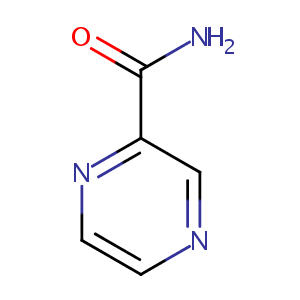
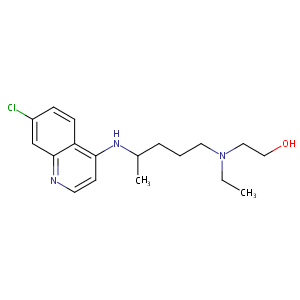
Pyrazinamide Hydroxychloroquine
Indication
Disease Entry Status REF
Chronic myelogenous leukemia Investigative [1]
Component Drugs Pyrazinamide   DM4IF32 Hydroxychloroquine   DMSIVND
Small molecular drug Small molecular drug
2D MOL 2D MOL
3D MOL 3D MOL
High-throughput Screening Result Testing Cell Line: KBM-7
Zero Interaction Potency (ZIP) Score: 36.33
Bliss Independence Score: 36.33
Loewe Additivity Score: 51.02
LHighest Single Agent (HSA) Score: 51.03

Molecular Interaction Atlas of This Drug Combination

Molecular Interaction Atlas (MIA)
Indication(s) of Pyrazinamide
Disease Entry ICD 11 Status REF
Meningeal tuberculosis N.A. Approved [2]
Mycobacterium infection 1B10-1B21 Approved [3]
Pulmonary tuberculosis 1B10.Z Approved [2]
Pyrazinamide Interacts with 1 DTT Molecule(s)
DTT Name DTT ID UniProt ID Mode of Action REF
Bacterial Fatty acid synthetase I (Bact inhA) TTVTX4N INHA_MYCTU Inhibitor [8]
------------------------------------------------------------------------------------
Pyrazinamide Interacts with 3 DME Molecule(s)
DME Name DME ID UniProt ID Mode of Action REF
Cytochrome P450 3A4 (CYP3A4) DE4LYSA CP3A4_HUMAN Metabolism [9]
Cytochrome P450 1A2 (CYP1A2) DEJGDUW CP1A2_HUMAN Metabolism [9]
Nicotinamidase (pncA) DERQS6E B0VA03_ACIBY Metabolism [10]
------------------------------------------------------------------------------------
Pyrazinamide Interacts with 7 DOT Molecule(s)
DOT Name DOT ID UniProt ID Mode of Action REF
Serine/threonine-protein kinase/endoribonuclease IRE1 (ERN1) OTY9R6FZ ERN1_HUMAN Increases Expression [7]
Eukaryotic translation initiation factor 2 subunit 1 (EIF2S1) OTM0GDTP IF2A_HUMAN Increases Phosphorylation [7]
Cyclic AMP-dependent transcription factor ATF-4 (ATF4) OTRFV19J ATF4_HUMAN Increases Expression [7]
Cyclic AMP-dependent transcription factor ATF-6 alpha (ATF6) OTAFHAVI ATF6A_HUMAN Increases Expression [7]
DNA damage-inducible transcript 3 protein (DDIT3) OTI8YKKE DDIT3_HUMAN Increases Expression [7]
Solute carrier family 22 member 12 (SLC22A12) OT72ZAWS S22AC_HUMAN Affects Activity [11]
Eukaryotic translation initiation factor 2-alpha kinase 3 (EIF2AK3) OT0DZGY4 E2AK3_HUMAN Increases Phosphorylation [7]
------------------------------------------------------------------------------------
⏷ Show the Full List of 7 DOT(s)
Indication(s) of Hydroxychloroquine
Disease Entry ICD 11 Status REF
Chronic renal failure GB61.Z Approved [4]
Malaria 1F40-1F45 Approved [5]
Plasmodium falciparum malaria 1F40 Approved [4]
Plasmodium malariae malaria N.A. Approved [4]
Plasmodium ovale malaria N.A. Approved [4]
Systemic lupus erythematosus 4A40.0 Approved [4]
Coronavirus Disease 2019 (COVID-19) 1D6Y Phase 3 [6]
Colon cancer 2B90.Z Investigative [4]
Hydroxychloroquine Interacts with 4 DTT Molecule(s)
DTT Name DTT ID UniProt ID Mode of Action REF
HUMAN pH-dependent viral fusion/replication (pH-DVF/R) TTD16BI N.A. Inhibitor [12]
HUMAN glycosylation of host receptor (GHR) TTZGK1R N.A. Inhibitor [12]
Toll-like receptor 7 (TLR7) TTRJ1K4 TLR7_HUMAN Antagonist [13]
HUMAN toll-like receptor 7/9 signalling pathway (TLR7/9 pathway) TT3A1EZ N.A. Inhibitor [14]
------------------------------------------------------------------------------------
Hydroxychloroquine Interacts with 1 DTP Molecule(s)
DTP Name DTP ID UniProt ID Mode of Action REF
Breast cancer resistance protein (ABCG2) DTI7UX6 ABCG2_HUMAN Substrate [15]
------------------------------------------------------------------------------------
Hydroxychloroquine Interacts with 1 DME Molecule(s)
DME Name DME ID UniProt ID Mode of Action REF
Cytochrome P450 3A4 (CYP3A4) DE4LYSA CP3A4_HUMAN Metabolism [16]
------------------------------------------------------------------------------------
Hydroxychloroquine Interacts with 17 DOT Molecule(s)
DOT Name DOT ID UniProt ID Mode of Action REF
Interferon-induced protein with tetratricopeptide repeats 3 (IFIT3) OTPGHZB9 IFIT3_HUMAN Increases Expression [17]
CASP8 and FADD-like apoptosis regulator (CFLAR) OTX14BAS CFLAR_HUMAN Decreases Expression [18]
Serine/threonine-protein kinase/endoribonuclease IRE1 (ERN1) OTY9R6FZ ERN1_HUMAN Increases Expression [17]
Nuclear factor of activated T-cells, cytoplasmic 1 (NFATC1) OT4TMERS NFAC1_HUMAN Affects Expression [19]
Claudin-1 (CLDN1) OT27KV99 CLD1_HUMAN Increases Expression [20]
Transcription factor Jun (JUN) OTCYBO6X JUN_HUMAN Increases Phosphorylation [17]
Interleukin-8 (CXCL8) OTS7T5VH IL8_HUMAN Increases Expression [21]
C-C motif chemokine 2 (CCL2) OTAD2HEL CCL2_HUMAN Increases Expression [21]
CD40 ligand (CD40LG) OT75Z6A6 CD40L_HUMAN Decreases Expression [19]
Transcription factor p65 (RELA) OTUJP9CN TF65_HUMAN Increases Expression [17]
TNF receptor-associated factor 3 (TRAF3) OT5TQBGV TRAF3_HUMAN Increases Expression [17]
Nuclear factor of activated T-cells, cytoplasmic 2 (NFATC2) OTK5T6HZ NFAC2_HUMAN Affects Localization [19]
Occludin (OCLN) OTSUTVWL OCLN_HUMAN Increases Expression [20]
Mitochondrial antiviral-signaling protein (MAVS) OTTQ0J64 MAVS_HUMAN Increases Expression [17]
S-adenosylmethionine-dependent nucleotide dehydratase RSAD2 (RSAD2) OTCA9WCM RSAD2_HUMAN Increases Expression [17]
Interferon-induced helicase C domain-containing protein 1 (IFIH1) OTZA2AHA IFIH1_HUMAN Increases Expression [17]
7-dehydrocholesterol reductase (DHCR7) OTLILBUI DHCR7_HUMAN Affects Expression [22]
------------------------------------------------------------------------------------
⏷ Show the Full List of 17 DOT(s)

References

1 CheMBL Affinity Phenotypic Cellular Interaction Assay ID: CHEMBL1125966
2 Pyrazinamide FDA Label
3 URL: http://www.guidetopharmacology.org Nucleic Acids Res. 2015 Oct 12. pii: gkv1037. The IUPHAR/BPS Guide to PHARMACOLOGY in 2016: towards curated quantitative interactions between 1300 protein targets and 6000 ligands. (Ligand id: 7287).
4 Hydroxychloroquine FDA Label
5 URL: http://www.guidetopharmacology.org Nucleic Acids Res. 2015 Oct 12. pii: gkv1037. The IUPHAR/BPS Guide to PHARMACOLOGY in 2016: towards curated quantitative interactions between 1300 protein targets and 6000 ligands. (Ligand id: 7198).
6 ClinicalTrials.gov (NCT04341727) Hydroxychloroquine,Hydroxychloroquine,Azithromycin in the Treatment of SARS CoV-2 Infection (WU352). U.S. National Institutes of Health.
7 Pyrazinamide-induced hepatotoxicity is alleviated by 4-PBA via inhibition of the PERK-eIF2-ATF4-CHOP pathway. Toxicology. 2017 Mar 1;378:65-75. doi: 10.1016/j.tox.2017.01.002. Epub 2017 Jan 4.
8 Pyrazinamide inhibits the eukaryotic-like fatty acid synthetase I (FASI) of Mycobacterium tuberculosis. Nat Med. 2000 Sep;6(9):1043-7.
9 The metabolism of pyrazoloacridine (NSC 366140) by cytochromes p450 and flavin monooxygenase in human liver microsomes. Clin Cancer Res. 2004 Feb 15;10(4):1471-80.
10 Specificity and mechanism of Acinetobacter baumanii nicotinamidase: implications for activation of the front-line tuberculosis drug pyrazinamide. Angew Chem Int Ed Engl. 2009;48(48):9176-9.
11 Clinical and molecular analysis of patients with renal hypouricemia in Japan-influence of URAT1 gene on urinary urate excretion. J Am Soc Nephrol. 2004 Jan;15(1):164-73. doi: 10.1097/01.asn.0000105320.04395.d0.
12 Remdesivir and chloroquine effectively inhibit the recently emerged novel coronavirus (2019-nCoV) in vitro. Cell Res. 2020 Mar;30(3):269-271.
13 TLR7/9 antagonists as therapeutics for immune-mediated inflammatory disorders. Inflamm Allergy Drug Targets. 2007 Dec;6(4):223-35.
14 Mechanisms of action of hydroxychloroquine and chloroquine: implications for rheumatology. Nat Rev Rheumatol. 2020 Mar;16(3):155-166.
15 MDR-ABC transporters: biomarkers in rheumatoid arthritis. Clin Exp Rheumatol. 2013 Sep-Oct;31(5):779-87.
16 Hydroxychloroquine: a physiologically-based pharmacokinetic model in the context of cancer-related autophagy modulation. J Pharmacol Exp Ther. 2018 Jun;365(3):447-459.
17 Hydroxychloroquine-inhibited dengue virus is associated with host defense machinery. J Interferon Cytokine Res. 2015 Mar;35(3):143-56. doi: 10.1089/jir.2014.0038. Epub 2014 Oct 16.
18 Hydroxychloroquine potentiates Fas-mediated apoptosis of rheumatoid synoviocytes. Clin Exp Immunol. 2006 Jun;144(3):503-11. doi: 10.1111/j.1365-2249.2006.03070.x.
19 Hydroxychloroquine inhibits CD154 expression in CD4(+) T lymphocytes of systemic lupus erythematosus through NFAT, but not STAT5, signaling. Arthritis Res Ther. 2017 Aug 9;19(1):183. doi: 10.1186/s13075-017-1393-y.
20 Chloroquine and Hydroxychloroquine Increase Retinal Pigment Epithelial Layer Permeability. J Biochem Mol Toxicol. 2015 Jul;29(7):299-304. doi: 10.1002/jbt.21696. Epub 2015 Mar 9.
21 Reactive oxygen species mediate chloroquine-induced expression of chemokines by human astroglial cells. Glia. 2004 Jul;47(1):9-20. doi: 10.1002/glia.20017.
22 Hydroxychloroquine decreases human MSC-derived osteoblast differentiation and mineralization in vitro. J Cell Mol Med. 2018 Feb;22(2):873-882. doi: 10.1111/jcmm.13373. Epub 2017 Oct 3.