General Information of Drug Combination (ID: DCQJZBE)

Drug Combination Name
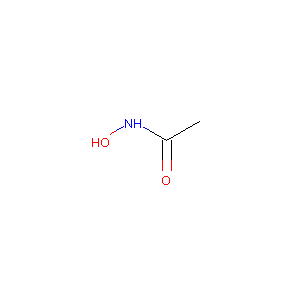
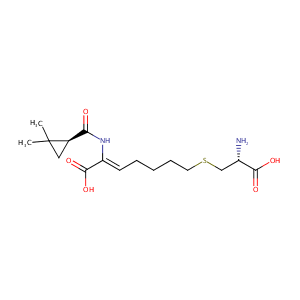
Acetohydroxamic Acid Cilastatin
Indication
Disease Entry Status REF
Chronic myelogenous leukemia Investigative [1]
Component Drugs Acetohydroxamic Acid   DMYX7NI Cilastatin   DME2H5T
Small molecular drug Small molecular drug
2D MOL 2D MOL
3D MOL 3D MOL
High-throughput Screening Result Testing Cell Line: KBM-7
Zero Interaction Potency (ZIP) Score: 15.66
Bliss Independence Score: 15.66
Loewe Additivity Score: 27.02
LHighest Single Agent (HSA) Score: 27.02

Molecular Interaction Atlas of This Drug Combination

Molecular Interaction Atlas (MIA)
Indication(s) of Acetohydroxamic Acid
Disease Entry ICD 11 Status REF
Urinary tract infection GC08 Approved [2]
Acetohydroxamic Acid Interacts with 1 DTT Molecule(s)
DTT Name DTT ID UniProt ID Mode of Action REF
Bacterial Urease (Bact ureC) TTAS2UO URE1_KLEAE Inhibitor [5]
------------------------------------------------------------------------------------
Indication(s) of Cilastatin
Disease Entry ICD 11 Status REF
Bacteremia 1A73 Approved [3]
Bacterial infection 1A00-1C4Z Approved [4]
Endometritis N.A. Approved [3]
Peritonitis N.A. Approved [3]
Pelvic inflammatory disease GA05 Investigative [3]
Cilastatin Interacts with 1 DTT Molecule(s)
DTT Name DTT ID UniProt ID Mode of Action REF
Dehydropeptidase I (DPEP1) TTYUENF DPEP1_HUMAN Inhibitor [6]
------------------------------------------------------------------------------------

References

1 CheMBL Affinity Phenotypic Cellular Interaction Assay ID: CHEMBL1125966
2 FDA Approved Drug Products from FDA Official Website. 2009. Application Number: (NDA) 018749.
3 Cilastatin FDA Label
4 URL: http://www.guidetopharmacology.org Nucleic Acids Res. 2015 Oct 12. pii: gkv1037. The IUPHAR/BPS Guide to PHARMACOLOGY in 2016: towards curated quantitative interactions between 1300 protein targets and 6000 ligands. (Ligand id: 5166).
5 Enzymatic, immunological and phylogenetic characterization of Brucella suis urease. BMC Microbiol. 2008 Jul 19;8:121.
6 Pharmacokinetic study of pleural fluid penetration of carbapenem antibiotic agents in chemical pleurisy. Respir Med. 2006 Feb;100(2):324-31.