General Information of Drug Combination (ID: DCU8EJL)

Drug Combination Name
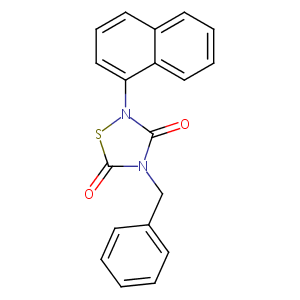
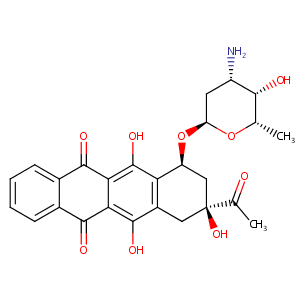
Tideglusib Idarubicin
Indication
Disease Entry Status REF
Glioblastoma? Investigative [1]
Component Drugs Tideglusib   DME4LA1 Idarubicin   DMM0XGL
Small molecular drug Small molecular drug
2D MOL 2D MOL
3D MOL 3D MOL
High-throughput Screening Result Testing Cell Line: T98G
Zero Interaction Potency (ZIP) Score: 7.23
Bliss Independence Score: 7.23
Loewe Additivity Score: 2.44
LHighest Single Agent (HSA) Score: 2.44

Molecular Interaction Atlas of This Drug Combination

Molecular Interaction Atlas (MIA)
Indication(s) of Tideglusib
Disease Entry ICD 11 Status REF
Alzheimer disease 8A20 Phase 2 [2]
Osteosarcoma 2B51 Phase 2 [3]
Coronavirus Disease 2019 (COVID-19) 1D6Y Investigative [4]
Tideglusib Interacts with 2 DTT Molecule(s)
DTT Name DTT ID UniProt ID Mode of Action REF
Glycogen synthase kinase-3 beta (GSK-3B) TTRSMW9 GSK3B_HUMAN Inhibitor [3]
COVID-19 papain-like proteinase (PL-PRO) TTNHMO8 R1AB_SARS2 (819-2763) Inhibitor [4]
------------------------------------------------------------------------------------
Indication(s) of Idarubicin
Disease Entry ICD 11 Status REF
Acute myelogenous leukaemia 2A41 Approved [5]
Acute myeloid leukaemia 2A60 Approved [6]
Adult acute monocytic leukemia N.A. Approved [5]
Childhood acute megakaryoblastic leukemia N.A. Approved [5]
Leukemia N.A. Approved [5]
Idarubicin Interacts with 1 DTT Molecule(s)
DTT Name DTT ID UniProt ID Mode of Action REF
DNA topoisomerase II (TOP2) TT0IHXV TOP2A_HUMAN; TOP2B_HUMAN Modulator [8]
------------------------------------------------------------------------------------
Idarubicin Interacts with 3 DTP Molecule(s)
DTP Name DTP ID UniProt ID Mode of Action REF
Multidrug resistance-associated protein 1 (ABCC1) DTSYQGK MRP1_HUMAN Substrate [9]
P-glycoprotein 1 (ABCB1) DTUGYRD MDR1_HUMAN Substrate [10]
Breast cancer resistance protein (ABCG2) DTI7UX6 ABCG2_HUMAN Substrate [10]
------------------------------------------------------------------------------------
Idarubicin Interacts with 2 DME Molecule(s)
DME Name DME ID UniProt ID Mode of Action REF
Cytochrome P450 2D6 (CYP2D6) DECB0K3 CP2D6_HUMAN Metabolism [11]
Cytochrome P450 2C9 (CYP2C9) DE5IED8 CP2C9_HUMAN Metabolism [11]
------------------------------------------------------------------------------------
Idarubicin Interacts with 2 DOT Molecule(s)
DOT Name DOT ID UniProt ID Mode of Action REF
Natriuretic peptides B (NPPB) OTSN2IPY ANFB_HUMAN Increases Expression [12]
Bile acid receptor (NR1H4) OTWZLPTB NR1H4_HUMAN Decreases Activity [7]
------------------------------------------------------------------------------------

References

1 CheMBL Affinity Phenotypic Cellular Interaction Assay ID: CHEMBL1125966
2 A Phase II Trial of Tideglusib in Alzheimer's Disease. J Alzheimers Dis. 2015;45(1):75-88.
3 Evidence for irreversible inhibition of glycogen synthase kinase-3beta by tideglusib. J Biol Chem. 2012 Jan 6;287(2):893-904.
4 Structure of Mpro from COVID-19 virus and discovery of its inhibitors. Nature. 2020 Apr 9.
5 Idarubicin FDA Label
6 URL: http://www.guidetopharmacology.org Nucleic Acids Res. 2015 Oct 12. pii: gkv1037. The IUPHAR/BPS Guide to PHARMACOLOGY in 2016: towards curated quantitative interactions between 1300 protein targets and 6000 ligands. (Ligand id: 7083).
7 Quantitative high-throughput profiling of environmental chemicals and drugs that modulate farnesoid X receptor. Sci Rep. 2014 Sep 26;4:6437. doi: 10.1038/srep06437.
8 Drugs@FDA. U.S. Food and Drug Administration. U.S. Department of Health & Human Services.
9 Human intestinal transporter database: QSAR modeling and virtual profiling of drug uptake, efflux and interactions. Pharm Res. 2013 Apr;30(4):996-1007.
10 Amonafide L-malate is not a substrate for multidrug resistance proteins in secondary acute myeloid leukemia. Leukemia. 2008 Nov;22(11):2110-5.
11 In vitro evaluation of cytochrome P450-mediated drug interactions between cytarabine, idarubicin, itraconazole and caspofungin. Hematology. 2004 Jun;9(3):217-21.
12 The use of biochemical markers in cardiotoxicity monitoring in patients treated for leukemia. Neoplasma. 2005;52(5):430-4.