General Information of Drug Combination (ID: DCUDYJ7)

Drug Combination Name
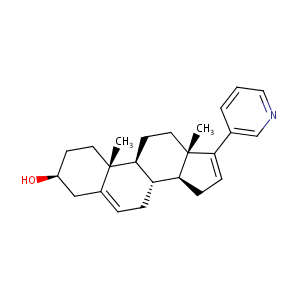
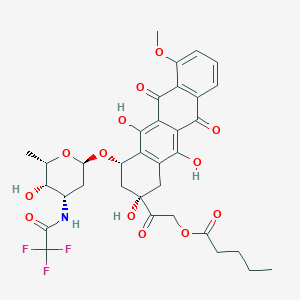
ABIRATERONE Valrubicin
Indication
Disease Entry Status REF
Breast adenocarcinoma Investigative [1]
Component Drugs ABIRATERONE   DM8V75C Valrubicin   DMOYJFK
Small molecular drug Small molecular drug
2D MOL 2D MOL
3D MOL 3D MOL is unavailable
High-throughput Screening Result Testing Cell Line: MDA-MB-468
Zero Interaction Potency (ZIP) Score: 5.44
Bliss Independence Score: 5.53
Loewe Additivity Score: 5.64
LHighest Single Agent (HSA) Score: 6.09

Molecular Interaction Atlas of This Drug Combination

Molecular Interaction Atlas (MIA)
Indication(s) of ABIRATERONE
Disease Entry ICD 11 Status REF
Prostate cancer 2C82.0 Approved [2]
ABIRATERONE Interacts with 1 DTT Molecule(s)
DTT Name DTT ID UniProt ID Mode of Action REF
Steroid 17-alpha-monooxygenase (S17AH) TTRA5BZ CP17A_HUMAN Modulator [6]
------------------------------------------------------------------------------------
Indication(s) of Valrubicin
Disease Entry ICD 11 Status REF
Bladder cancer 2C94 Approved [3]
In situ carcinoma N.A. Approved [4]
Urinary bladder cancer N.A. Approved [4]
Psoriasis vulgaris EA90 Phase 2 [5]
Valrubicin Interacts with 1 DTT Molecule(s)
DTT Name DTT ID UniProt ID Mode of Action REF
DNA topoisomerase II (TOP2) TT0IHXV TOP2A_HUMAN; TOP2B_HUMAN Inhibitor [7]
------------------------------------------------------------------------------------
Valrubicin Interacts with 1 DOT Molecule(s)
DOT Name DOT ID UniProt ID Mode of Action REF
Bile salt export pump (ABCB11) OTRU7THO ABCBB_HUMAN Decreases Activity [8]
------------------------------------------------------------------------------------

Test Results of This Drug Combination in Other Disease Systems

Indication DrugCom ID Cell Line Status REF
Adult acute myeloid leukemia DCUPUSV HL-60(TB) Investigative [9]
Anaplastic large cell lymphoma DCYC2Y8 SR Investigative [9]
Plasma cell myeloma DCIGDOY RPMI-8226 Investigative [9]
Renal cell carcinoma DCDC5K0 UO-31 Investigative [9]
Colon adenocarcinoma DC3NJB8 COLO 205 Investigative [1]
Invasive ductal carcinoma DCSDPPQ HS 578T Investigative [1]
Invasive ductal carcinoma DCFECD2 BT-549 Investigative [1]
Adenocarcinoma DCS4PZB HCT-15 Investigative [10]
Cutaneous melanoma DC5C4QB SK-MEL-28 Investigative [10]
High grade ovarian serous adenocarcinoma DCJFLO7 OVCAR-8 Investigative [10]
Malignant melanoma DC9KBDJ LOX IMVI Investigative [10]
Melanoma DCUZ63L SK-MEL-2 Investigative [10]
------------------------------------------------------------------------------------
⏷ Show the Full List of 12 DrugCom(s)

References

1 CheMBL Affinity Phenotypic Cellular Interaction Assay ID: CHEMBL1126165
2 URL: http://www.guidetopharmacology.org Nucleic Acids Res. 2015 Oct 12. pii: gkv1037. The IUPHAR/BPS Guide to PHARMACOLOGY in 2016: towards curated quantitative interactions between 1300 protein targets and 6000 ligands. (Ligand id: 6745).
3 Natural products as sources of new drugs over the last 25 years. J Nat Prod. 2007 Mar;70(3):461-77.
4 Valrubicin FDA Label
5 Drugs@FDA. U.S. Food and Drug Administration. U.S. Department of Health & Human Services. 2015
6 2011 FDA drug approvals. Nat Rev Drug Discov. 2012 Feb 1;11(2):91-4.
7 Metabolic activation of N-acylanthracyclines precedes their interaction with DNA topoisomerase II. NCI Monogr. 1987;(4):111-5.
8 A multifactorial approach to hepatobiliary transporter assessment enables improved therapeutic compound development. Toxicol Sci. 2013 Nov;136(1):216-41.
9 CheMBL Affinity Phenotypic Cellular Interaction Assay ID: CHEMBL1125966
10 CheMBL Affinity Phenotypic Cellular Interaction Assay ID: CHEMBL1125976