General Information of Drug Combination (ID: DCYAU4B)

Drug Combination Name
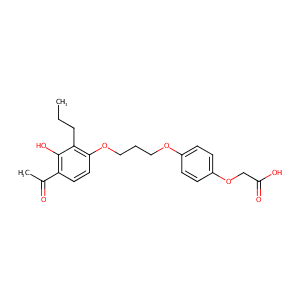
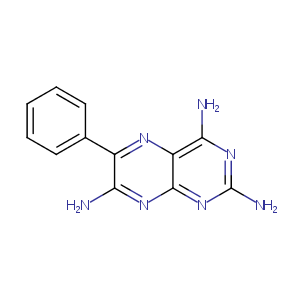
L-165041 Triamterene
Indication
Disease Entry Status REF
Chronic myelogenous leukemia Investigative [1]
Component Drugs L-165041   DMZP7YM Triamterene   DM2HU9I
Small molecular drug Small molecular drug
2D MOL 2D MOL
3D MOL is unavailable 3D MOL
High-throughput Screening Result Testing Cell Line: KBM-7
Zero Interaction Potency (ZIP) Score: 21.21
Bliss Independence Score: 21.21
Loewe Additivity Score: 35.41
LHighest Single Agent (HSA) Score: 35.42

Molecular Interaction Atlas of This Drug Combination

Molecular Interaction Atlas (MIA)
Indication(s) of L-165041
Disease Entry ICD 11 Status REF
Discovery agent N.A. Investigative [2]
L-165041 Interacts with 1 DTT Molecule(s)
DTT Name DTT ID UniProt ID Mode of Action REF
Peroxisome proliferator-activated receptor delta (PPARD) TT2JWF6 PPARD_HUMAN Agonist [6]
------------------------------------------------------------------------------------
L-165041 Interacts with 1 DOT Molecule(s)
DOT Name DOT ID UniProt ID Mode of Action REF
Fatty acid-binding protein, adipocyte (FABP4) OT3DKFOU FABP4_HUMAN Increases Expression [7]
------------------------------------------------------------------------------------
Indication(s) of Triamterene
Disease Entry ICD 11 Status REF
Congestive heart failure BD10 Approved [3]
Edema MG29 Approved [3]
Hypertension BA00-BA04 Approved [3]
High blood pressure BA00 Investigative [4]
Triamterene Interacts with 1 DTT Molecule(s)
DTT Name DTT ID UniProt ID Mode of Action REF
Amiloride-sensitive sodium channel (ENaC) TTQM7TE SCNNA_HUMAN; SCNNB_HUMAN; SCNNG_HUMAN; SCNND_HUMAN Blocker [8]
------------------------------------------------------------------------------------
Triamterene Interacts with 1 DTP Molecule(s)
DTP Name DTP ID UniProt ID Mode of Action REF
Organic cation transporter 1 (SLC22A1) DTT79CX S22A1_HUMAN Substrate [9]
------------------------------------------------------------------------------------
Triamterene Interacts with 1 DME Molecule(s)
DME Name DME ID UniProt ID Mode of Action REF
Cytochrome P450 1A2 (CYP1A2) DEJGDUW CP1A2_HUMAN Metabolism [10]
------------------------------------------------------------------------------------

References

1 CheMBL Affinity Phenotypic Cellular Interaction Assay ID: CHEMBL1125966
2 URL: http://www.guidetopharmacology.org Nucleic Acids Res. 2015 Oct 12. pii: gkv1037. The IUPHAR/BPS Guide to PHARMACOLOGY in 2016: towards curated quantitative interactions between 1300 protein targets and 6000 ligands. (Ligand id: 2691).
3 URL: http://www.guidetopharmacology.org Nucleic Acids Res. 2015 Oct 12. pii: gkv1037. The IUPHAR/BPS Guide to PHARMACOLOGY in 2016: towards curated quantitative interactions between 1300 protein targets and 6000 ligands. (Ligand id: 4329).
4 Triamterene FDA Label
5 Keratinocyte-derived vascular endothelial growth factor biosynthesis represents a pleiotropic side effect of peroxisome proliferator-activated receptor-gamma agonist troglitazone but not rosiglitazone and involves activation of p38 mitogen-activated protein kinase: implications for diabetes-impaired skin repair. Mol Pharmacol. 2008 Oct;74(4):952-63. doi: 10.1124/mol.108.049395. Epub 2008 Jul 3.
6 Novel peroxisome proliferator-activated receptor (PPAR) gamma and PPARdelta ligands produce distinct biological effects. J Biol Chem. 1999 Mar 5;274(10):6718-25.
7 Human adipocyte fatty acid-binding protein (aP2) gene promoter-driven reporter assay discriminates nonlipogenic peroxisome proliferator-activated receptor gamma ligands. J Pharmacol Exp Ther. 2004 Nov;311(2):467-75. doi: 10.1124/jpet.104.068254. Epub 2004 Jul 23.
8 Effects of the serine/threonine kinase SGK1 on the epithelial Na(+) channel (ENaC) and CFTR: implications for cystic fibrosis. Cell Physiol Biochem. 2001;11(4):209-18.
9 Identification of novel substrates and structure-activity relationship of cellular uptake mediated by human organic cation transporters 1 and 2. J Med Chem. 2013 Sep 26;56(18):7232-42.
10 Rate-limiting biotransformation of triamterene is mediated by CYP1A2. Int J Clin Pharmacol Ther. 2005 Jul;43(7):327-34.