| 1 |
CheMBL Affinity Phenotypic Cellular Interaction Assay ID: CHEMBL1125966
|
| 2 |
URL: http://www.guidetopharmacology.org Nucleic Acids Res. 2015 Oct 12. pii: gkv1037. The IUPHAR/BPS Guide to PHARMACOLOGY in 2016: towards curated quantitative interactions between 1300 protein targets and 6000 ligands. (Ligand id: 6841).
|
| 3 |
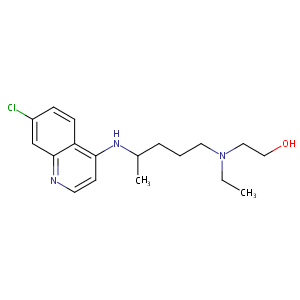
Hydroxychloroquine FDA Label
|
| 4 |
URL: http://www.guidetopharmacology.org Nucleic Acids Res. 2015 Oct 12. pii: gkv1037. The IUPHAR/BPS Guide to PHARMACOLOGY in 2016: towards curated quantitative interactions between 1300 protein targets and 6000 ligands. (Ligand id: 7198).
|
| 5 |
ClinicalTrials.gov (NCT04341727) Hydroxychloroquine,Hydroxychloroquine,Azithromycin in the Treatment of SARS CoV-2 Infection (WU352). U.S. National Institutes of Health.
|
| 6 |
Metformin/Repaglinide (PrandiMet) for type 2 diabetes. Med Lett Drugs Ther. 2009 Jun 1;51(1313):41-3.
|
| 7 |
Disease-Associated Changes in Drug Transporters May Impact the Pharmacokinetics and/or Toxicity of Drugs: A White Paper From the International Transporter Consortium. Clin Pharmacol Ther. 2018 Nov;104(5):900-915.
|
| 8 |
Drug-drug and food-drug pharmacokinetic interactions with new insulinotropic agents repaglinide and nateglinide. Clin Pharmacokinet. 2007;46(2):93-108.
|
| 9 |
Repaglinide-gemfibrozil drug interaction: inhibition of repaglinide glucuronidation as a potential additional contributing mechanism. Br J Clin Pharmacol. 2010 Dec;70(6):870-80.
|
| 10 |
Polymorphic organic anion transporting polypeptide 1B1 is a major determinant of repaglinide pharmacokinetics. Clin Pharmacol Ther. 2005 Jun;77(6):468-78. doi: 10.1016/j.clpt.2005.01.018.
|
| 11 |
A multifactorial approach to hepatobiliary transporter assessment enables improved therapeutic compound development. Toxicol Sci. 2013 Nov;136(1):216-41.
|
| 12 |
Toxicological evaluation of acyl glucuronides utilizing half-lives, peptide adducts, and immunostimulation assays. Toxicol In Vitro. 2015 Dec 25;30(1 Pt B):241-9.
|
| 13 |
Systems pharmacological analysis of drugs inducing stevens-johnson syndrome and toxic epidermal necrolysis. Chem Res Toxicol. 2015 May 18;28(5):927-34. doi: 10.1021/tx5005248. Epub 2015 Apr 3.
|
| 14 |
Remdesivir and chloroquine effectively inhibit the recently emerged novel coronavirus (2019-nCoV) in vitro. Cell Res. 2020 Mar;30(3):269-271.
|
| 15 |
TLR7/9 antagonists as therapeutics for immune-mediated inflammatory disorders. Inflamm Allergy Drug Targets. 2007 Dec;6(4):223-35.
|
| 16 |
Mechanisms of action of hydroxychloroquine and chloroquine: implications for rheumatology. Nat Rev Rheumatol. 2020 Mar;16(3):155-166.
|
| 17 |
MDR-ABC transporters: biomarkers in rheumatoid arthritis. Clin Exp Rheumatol. 2013 Sep-Oct;31(5):779-87.
|
| 18 |
Hydroxychloroquine: a physiologically-based pharmacokinetic model in the context of cancer-related autophagy modulation. J Pharmacol Exp Ther. 2018 Jun;365(3):447-459.
|
| 19 |
Hydroxychloroquine-inhibited dengue virus is associated with host defense machinery. J Interferon Cytokine Res. 2015 Mar;35(3):143-56. doi: 10.1089/jir.2014.0038. Epub 2014 Oct 16.
|
| 20 |
Hydroxychloroquine potentiates Fas-mediated apoptosis of rheumatoid synoviocytes. Clin Exp Immunol. 2006 Jun;144(3):503-11. doi: 10.1111/j.1365-2249.2006.03070.x.
|
| 21 |
Hydroxychloroquine inhibits CD154 expression in CD4(+) T lymphocytes of systemic lupus erythematosus through NFAT, but not STAT5, signaling. Arthritis Res Ther. 2017 Aug 9;19(1):183. doi: 10.1186/s13075-017-1393-y.
|
| 22 |
Chloroquine and Hydroxychloroquine Increase Retinal Pigment Epithelial Layer Permeability. J Biochem Mol Toxicol. 2015 Jul;29(7):299-304. doi: 10.1002/jbt.21696. Epub 2015 Mar 9.
|
| 23 |
Reactive oxygen species mediate chloroquine-induced expression of chemokines by human astroglial cells. Glia. 2004 Jul;47(1):9-20. doi: 10.1002/glia.20017.
|
| 24 |
Hydroxychloroquine decreases human MSC-derived osteoblast differentiation and mineralization in vitro. J Cell Mol Med. 2018 Feb;22(2):873-882. doi: 10.1111/jcmm.13373. Epub 2017 Oct 3.
|
|
|
|
|
|
|