General Information of Drug Combination (ID: DCYW6TR)

Drug Combination Name
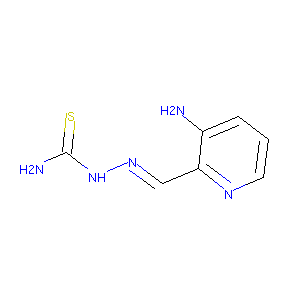
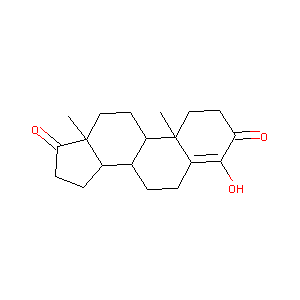
Triapine FORMESTANE
Indication
Disease Entry Status REF
Astrocytoma Investigative [1]
Component Drugs Triapine   DM7XZY5 FORMESTANE   DMWIDJK
Small molecular drug Small molecular drug
2D MOL 2D MOL
3D MOL 3D MOL
High-throughput Screening Result Testing Cell Line: U251
Zero Interaction Potency (ZIP) Score: 3.03
Bliss Independence Score: 4.55
Loewe Additivity Score: 0.78
LHighest Single Agent (HSA) Score: 0.73

Molecular Interaction Atlas of This Drug Combination

Molecular Interaction Atlas (MIA)
Indication(s) of Triapine
Disease Entry ICD 11 Status REF
Nerve injury ND56.4 Phase 2 [2]
Triapine Interacts with 1 DTT Molecule(s)
DTT Name DTT ID UniProt ID Mode of Action REF
Ribonucleoside-diphosphate reductase M2 (RRM2) TTBWDI0 RIR2_HUMAN Modulator [2]
------------------------------------------------------------------------------------
Triapine Interacts with 2 DOT Molecule(s)
DOT Name DOT ID UniProt ID Mode of Action REF
Histone H2AX (H2AX) OT18UX57 H2AX_HUMAN Increases Expression [5]
Thioredoxin-dependent peroxide reductase, mitochondrial (PRDX3) OTLB2WEU PRDX3_HUMAN Increases Oxidation [4]
------------------------------------------------------------------------------------
Indication(s) of FORMESTANE
Disease Entry ICD 11 Status REF
Breast cancer 2C60-2C65 Withdrawn from market [3]
FORMESTANE Interacts with 1 DTT Molecule(s)
DTT Name DTT ID UniProt ID Mode of Action REF
Aromatase (CYP19A1) TTSZLWK CP19A_HUMAN Inhibitor [6]
------------------------------------------------------------------------------------
FORMESTANE Interacts with 2 DOT Molecule(s)
DOT Name DOT ID UniProt ID Mode of Action REF
Adenylate kinase isoenzyme 1 (AK1) OT614AR3 KAD1_HUMAN Increases ADR [7]
17-beta-hydroxysteroid dehydrogenase type 1 (HSD17B1) OT6EBDHM DHB1_HUMAN Decreases Activity [8]
------------------------------------------------------------------------------------

Test Results of This Drug Combination in Other Disease Systems

Indication DrugCom ID Cell Line Status REF
Colon carcinoma DC9W1C0 KM12 Investigative [9]
Invasive ductal carcinoma DCZ4GDU HS 578T Investigative [9]
Adenocarcinoma DCGOZV9 DU-145 Investigative [1]
Adenocarcinoma DCH7Y6J OVCAR3 Investigative [1]
Adenocarcinoma DCGT1Q5 HCT116 Investigative [1]
Anaplastic large cell lymphoma DC27BAA SR Investigative [1]
Chronic myelogenous leukemia DCW8FPY K-562 Investigative [1]
Clear cell renal cell carcinoma DCYY2SG CAKI-1 Investigative [1]
Glioblastoma DCOKGQ2 SNB-75 Investigative [1]
Minimally invasive lung adenocarcinoma DC3RCR1 NCI-H322M Investigative [1]
------------------------------------------------------------------------------------
⏷ Show the Full List of 10 DrugCom(s)

References

1 CheMBL Affinity Phenotypic Cellular Interaction Assay ID: CHEMBL1125976
2 PAN-811 inhibits oxidative stress-induced cell death of human Alzheimer's disease-derived and age-matched olfactory neuroepithelial cells via suppression of intracellular reactive oxygen species. J Alzheimers Dis. 2009;17(3):611-9.
3 Drugs@FDA. U.S. Food and Drug Administration. U.S. Department of Health & Human Services. 2015
4 The iron-chelating drug triapine causes pronounced mitochondrial thiol redox stress. Toxicol Lett. 2011 Mar 5;201(2):130-6. doi: 10.1016/j.toxlet.2010.12.017. Epub 2010 Dec 31.
5 Distinct mechanisms of cell-kill by triapine and its terminally dimethylated derivative Dp44mT due to a loss or gain of activity of their copper(II) complexes. Biochem Pharmacol. 2014 Oct 1;91(3):312-22. doi: 10.1016/j.bcp.2014.08.006. Epub 2014 Aug 15.
6 The taiwaniaquinoids: a review. J Nat Prod. 2010 Feb 26;73(2):284-98.
7 ADReCS-Target: target profiles for aiding drug safety research and application. Nucleic Acids Res. 2018 Jan 4;46(D1):D911-D917. doi: 10.1093/nar/gkx899.
8 Mammalian lignans and genistein decrease the activities of aromatase and 17beta-hydroxysteroid dehydrogenase in MCF-7 cells. J Steroid Biochem Mol Biol. 2005 Apr;94(5):461-7.
9 CheMBL Affinity Phenotypic Cellular Interaction Assay ID: CHEMBL1126165