General Information of Drug Combination (ID: DCZWSB9)

Drug Combination Name
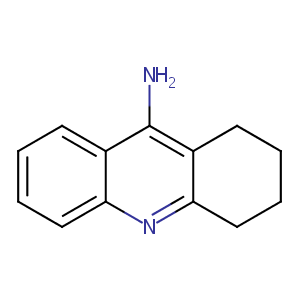
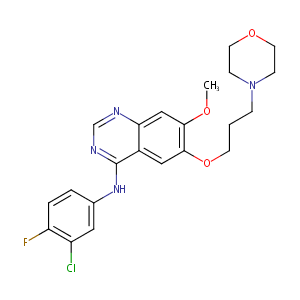
Tacrine Gefitinib
Indication
Disease Entry Status REF
Chronic myelogenous leukemia Investigative [1]
Component Drugs Tacrine   DM51FY6 Gefitinib   DM15F0X
Small molecular drug Small molecular drug
2D MOL 2D MOL
3D MOL 3D MOL
High-throughput Screening Result Testing Cell Line: KBM-7
Zero Interaction Potency (ZIP) Score: 7.92
Bliss Independence Score: 7.92
Loewe Additivity Score: 11.38
LHighest Single Agent (HSA) Score: 11.39

Molecular Interaction Atlas of This Drug Combination

Molecular Interaction Atlas (MIA)
Indication(s) of Tacrine
Disease Entry ICD 11 Status REF
Alzheimer disease 8A20 Approved [2]
Tacrine Interacts with 1 DTT Molecule(s)
DTT Name DTT ID UniProt ID Mode of Action REF
Acetylcholinesterase (AChE) TT1RS9F ACES_HUMAN Inhibitor [5]
------------------------------------------------------------------------------------
Tacrine Interacts with 1 DTP Molecule(s)
DTP Name DTP ID UniProt ID Mode of Action REF
P-glycoprotein 1 (ABCB1) DTUGYRD MDR1_HUMAN Substrate [6]
------------------------------------------------------------------------------------
Tacrine Interacts with 2 DME Molecule(s)
DME Name DME ID UniProt ID Mode of Action REF
Cytochrome P450 1A2 (CYP1A2) DEJGDUW CP1A2_HUMAN Metabolism [7]
Glutathione S-transferase alpha-1 (GSTA1) DE4ZHS1 GSTA1_HUMAN Metabolism [8]
------------------------------------------------------------------------------------
Tacrine Interacts with 4 DOT Molecule(s)
DOT Name DOT ID UniProt ID Mode of Action REF
Cocaine esterase (CES2) OTC647SQ EST2_HUMAN Decreases Activity [9]
Phosphatidylcholine translocator ABCB4 (ABCB4) OTE6PY83 MDR3_HUMAN Decreases Activity [10]
DNA damage-inducible transcript 3 protein (DDIT3) OTI8YKKE DDIT3_HUMAN Increases Expression [11]
Cyclin-dependent kinase inhibitor 1 (CDKN1A) OTQWHCZE CDN1A_HUMAN Increases Expression [11]
------------------------------------------------------------------------------------
Indication(s) of Gefitinib
Disease Entry ICD 11 Status REF
Colon adenocarcinoma N.A. Approved [3]
Glioblastoma 2A00 Approved [3]
Lung cancer 2C25.0 Approved [3]
Non-small-cell lung cancer 2C25.Y Approved [3]
Rectal adenocarcinoma 2B92 Approved [3]
Rectum mucinous adenocarcinoma N.A. Approved [3]
Solid tumour/cancer 2A00-2F9Z Approved [4]
Head and neck cancer 2D42 Phase 3 [4]
Urethral cancer 2C93 Phase 2 [4]
Colon cancer 2B90.Z Investigative [3]
Colon mucinous adenocarcinoma N.A. Investigative [3]
Gefitinib Interacts with 1 DTT Molecule(s)
DTT Name DTT ID UniProt ID Mode of Action REF
Epidermal growth factor receptor (EGFR) TTGKNB4 EGFR_HUMAN Inhibitor [17]
------------------------------------------------------------------------------------
Gefitinib Interacts with 4 DTP Molecule(s)
DTP Name DTP ID UniProt ID Mode of Action REF
P-glycoprotein 1 (ABCB1) DTUGYRD MDR1_HUMAN Substrate [18]
Breast cancer resistance protein (ABCG2) DTI7UX6 ABCG2_HUMAN Substrate [19]
Organic anion transporting polypeptide 1B1 (SLCO1B1) DT3D8F0 SO1B1_HUMAN Substrate [20]
Organic anion transporting polypeptide 1B3 (SLCO1B3) DT9C1TS SO1B3_HUMAN Substrate [20]
------------------------------------------------------------------------------------
Gefitinib Interacts with 3 DME Molecule(s)
DME Name DME ID UniProt ID Mode of Action REF
Cytochrome P450 3A4 (CYP3A4) DE4LYSA CP3A4_HUMAN Metabolism [21]
Cytochrome P450 2D6 (CYP2D6) DECB0K3 CP2D6_HUMAN Metabolism [22]
Cytochrome P450 3A5 (CYP3A5) DEIBDNY CP3A5_HUMAN Metabolism [21]
------------------------------------------------------------------------------------
Gefitinib Interacts with 64 DOT Molecule(s)
DOT Name DOT ID UniProt ID Mode of Action REF
Broad substrate specificity ATP-binding cassette transporter ABCG2 (ABCG2) OTW8V2V1 ABCG2_HUMAN Increases ADR [23]
Sulfhydryl oxidase 1 (QSOX1) OT4ZPK4P QSOX1_HUMAN Increases Expression [24]
Growth arrest and DNA damage-inducible protein GADD45 gamma (GADD45G) OT8V1J4M GA45G_HUMAN Decreases Expression [24]
Interferon alpha-inducible protein 6 (IFI6) OTWOOAM4 IFI6_HUMAN Decreases Expression [24]
Fibroblast growth factor 6 (FGF6) OTRJ679P FGF6_HUMAN Increases Expression [24]
Ski oncogene (SKI) OT4KJ8F6 SKI_HUMAN Increases Expression [24]
Nuclear factor NF-kappa-B p105 subunit (NFKB1) OTNRRD8I NFKB1_HUMAN Decreases Expression [24]
Tumor necrosis factor receptor superfamily member 1B (TNFRSF1B) OTDS2EAR TNR1B_HUMAN Decreases Expression [24]
Growth arrest and DNA damage-inducible protein GADD45 alpha (GADD45A) OTDRV63V GA45A_HUMAN Increases Expression [24]
Replication protein A 70 kDa DNA-binding subunit (RPA1) OT76POLP RFA1_HUMAN Increases Expression [24]
Adenosine receptor A1 (ADORA1) OTI7X39E AA1R_HUMAN Decreases Expression [24]
14-3-3 protein sigma (SFN) OTLJCZ1U 1433S_HUMAN Decreases Expression [24]
Glycine--tRNA ligase (GARS1) OT5B6R9Y GARS_HUMAN Increases Expression [24]
Epidermal growth factor receptor substrate 15 (EPS15) OT7NPP8U EPS15_HUMAN Increases Expression [24]
Neural retina-specific leucine zipper protein (NRL) OT65MFKQ NRL_HUMAN Decreases Expression [24]
Guanine nucleotide-binding protein G(I)/G(S)/G(T) subunit beta-2 (GNB2) OT3JPRCQ GBB2_HUMAN Decreases Expression [24]
Retinal guanylyl cyclase 1 (GUCY2D) OT81UJI0 GUC2D_HUMAN Decreases Expression [24]
Cell growth regulator with RING finger domain protein 1 (CGRRF1) OTLMNRCL CGRF1_HUMAN Increases Expression [24]
Dual specificity protein phosphatase 9 (DUSP9) OTZZWEQL DUS9_HUMAN Decreases Expression [24]
Bile salt export pump (ABCB11) OTRU7THO ABCBB_HUMAN Decreases Activity [25]
Retinoblastoma-associated protein (RB1) OTQJUJMZ RB_HUMAN Decreases Expression [26]
Baculoviral IAP repeat-containing protein 5 (BIRC5) OTILXZYL BIRC5_HUMAN Decreases Expression [27]
Ubiquitin-like modifier-activating enzyme ATG7 (ATG7) OTVT4YA1 ATG7_HUMAN Increases Expression [28]
Myc proto-oncogene protein (MYC) OTPV5LUK MYC_HUMAN Decreases Expression [29]
Receptor tyrosine-protein kinase erbB-2 (ERBB2) OTOAUNCK ERBB2_HUMAN Decreases Phosphorylation [30]
HLA class II histocompatibility antigen, DO alpha chain (HLA-DOA) OTZE5Q7R DOA_HUMAN Affects Expression [31]
Heat shock protein HSP 90-alpha (HSP90AA1) OTLG1WPK HS90A_HUMAN Increases Secretion [32]
Poly polymerase 1 (PARP1) OT310QSG PARP1_HUMAN Increases Cleavage [33]
C-C motif chemokine 2 (CCL2) OTAD2HEL CCL2_HUMAN Increases Secretion [34]
DnaJ homolog subfamily B member 1 (DNAJB1) OTCOSEVH DNJB1_HUMAN Increases Secretion [32]
Mitogen-activated protein kinase 3 (MAPK3) OTCYKGKO MK03_HUMAN Decreases Expression [35]
Mitogen-activated protein kinase 1 (MAPK1) OTH85PI5 MK01_HUMAN Decreases Expression [35]
G1/S-specific cyclin-D3 (CCND3) OTNKPQ22 CCND3_HUMAN Decreases Expression [36]
HLA class I histocompatibility antigen, alpha chain F (HLA-F) OT76CM19 HLAF_HUMAN Affects Expression [31]
Cyclin-dependent kinase inhibitor 1 (CDKN1A) OTQWHCZE CDN1A_HUMAN Decreases Expression [27]
Cyclin-dependent kinase 4 inhibitor B (CDKN2B) OTAG24N1 CDN2B_HUMAN Increases Expression [29]
Mitogen-activated protein kinase 8 (MAPK8) OTEREYS5 MK08_HUMAN Decreases Phosphorylation [13]
Cyclin-dependent kinase inhibitor 1B (CDKN1B) OTNY5LLZ CDN1B_HUMAN Increases Expression [36]
Tumor necrosis factor ligand superfamily member 6 (FASLG) OTZARCHH TNFL6_HUMAN Increases Response To Substance [37]
Cytochrome c (CYCS) OTBFALJD CYC_HUMAN Affects Localization [33]
Transcription factor E2F1 (E2F1) OTLKYBBC E2F1_HUMAN Decreases Expression [38]
Kelch-like ECH-associated protein 1 (KEAP1) OTFHOD0C KEAP1_HUMAN Increases Expression [39]
MHC class I polypeptide-related sequence B (MICB) OTS2DVDW MICB_HUMAN Increases Expression [40]
MHC class I polypeptide-related sequence A (MICA) OTPEIEAR MICA_HUMAN Increases Expression [40]
Major histocompatibility complex class I-related gene protein (MR1) OTZU3XX7 HMR1_HUMAN Affects Expression [31]
Autophagy protein 5 (ATG5) OT4T5SMS ATG5_HUMAN Increases Expression [28]
Transcription factor SOX-17 (SOX17) OT9H4WWE SOX17_HUMAN Decreases Localization [41]
MARVEL domain-containing protein 1 (MARVELD1) OT5CPOJE MALD1_HUMAN Decreases Response To Substance [42]
Zinc finger protein SNAI2 (SNAI2) OT7Y8EJ2 SNAI2_HUMAN Affects Response To Substance [43]
Membrane-associated progesterone receptor component 1 (PGRMC1) OTBE6WAC PGRC1_HUMAN Decreases Response To Substance [44]
RNA-binding protein 7 (RBM7) OTFIWTMF RBM7_HUMAN Affects Response To Substance [45]
Cell death regulator Aven (AVEN) OTGIN5YK AVEN_HUMAN Affects Response To Substance [45]
Forkhead box protein O3 (FOXO3) OTHXQG4P FOXO3_HUMAN Increases Response To Substance [46]
Phospholipase B-like 1 (PLBD1) OTHYEB4W PLBL1_HUMAN Affects Response To Substance [45]
Securin (PTTG1) OTIMYS4W PTTG1_HUMAN Decreases Response To Substance [33]
Pleckstrin homology-like domain family A member 2 (PHLDA2) OTMV9DPP PHLA2_HUMAN Affects Response To Substance [45]
DNA excision repair protein ERCC-1 (ERCC1) OTNPYQHI ERCC1_HUMAN Affects Response To Substance [16]
Bcl-2-like protein 11 (BCL2L11) OTNQQWFJ B2L11_HUMAN Increases Response To Substance [47]
Ceramide transfer protein (CERT1) OTNUCNHX CERT_HUMAN Affects Response To Substance [45]
Dual specificity protein phosphatase 3 (DUSP3) OTPJX9B4 DUS3_HUMAN Affects Response To Substance [45]
Transcription factor p65 (RELA) OTUJP9CN TF65_HUMAN Decreases Response To Substance [48]
Pericentrin (PCNT) OTW4Z65J PCNT_HUMAN Decreases Response To Substance [44]
Coronin-1C (CORO1C) OTXDF9T3 COR1C_HUMAN Affects Response To Substance [45]
Ribonucleoside-diphosphate reductase large subunit (RRM1) OTXGQOR9 RIR1_HUMAN Affects Response To Substance [16]
------------------------------------------------------------------------------------
⏷ Show the Full List of 64 DOT(s)

References

1 CheMBL Affinity Phenotypic Cellular Interaction Assay ID: CHEMBL1125966
2 URL: http://www.guidetopharmacology.org Nucleic Acids Res. 2015 Oct 12. pii: gkv1037. The IUPHAR/BPS Guide to PHARMACOLOGY in 2016: towards curated quantitative interactions between 1300 protein targets and 6000 ligands. (Ligand id: 6687).
3 Gefitinib FDA Label
4 URL: http://www.guidetopharmacology.org Nucleic Acids Res. 2015 Oct 12. pii: gkv1037. The IUPHAR/BPS Guide to PHARMACOLOGY in 2016: towards curated quantitative interactions between 1300 protein targets and 6000 ligands. (Ligand id: 4941).
5 Evidence that the clinical effects of cholinesterase inhibitors are related to potency and targeting of action. Int J Clin Pract Suppl. 2002 Jun;(127):6-19.
6 Tacrine sinusoidal uptake and biliary excretion in sandwich-cultured primary rat hepatocytes. J Pharm Pharm Sci. 2014;17(3):427-38.
7 Synthetic and natural compounds that interact with human cytochrome P450 1A2 and implications in drug development. Curr Med Chem. 2009;16(31):4066-218.
8 Combined glutathione-S-transferase M1 and T1 genetic polymorphism and tacrine hepatotoxicity. Clin Pharmacol Ther. 2000 Apr;67(4):432-7.
9 Inhibition of human carboxylesterases hCE1 and hiCE by cholinesterase inhibitors. Chem Biol Interact. 2013 Mar 25;203(1):226-30.
10 Evaluating the Role of Multidrug Resistance Protein 3 (MDR3) Inhibition in Predicting Drug-Induced Liver Injury Using 125 Pharmaceuticals. Chem Res Toxicol. 2017 May 15;30(5):1219-1229. doi: 10.1021/acs.chemrestox.7b00048. Epub 2017 May 4.
11 High-content imaging-based BAC-GFP toxicity pathway reporters to assess chemical adversity liabilities. Arch Toxicol. 2017 Mar;91(3):1367-1383. doi: 10.1007/s00204-016-1781-0. Epub 2016 Jun 29.
12 Synergistic antitumor effect of S-1 and the epidermal growth factor receptor inhibitor gefitinib in non-small cell lung cancer cell lines: role of gefitinib-induced down-regulation of thymidylate synthase. Mol Cancer Ther. 2008 Mar;7(3):599-606.
13 Frankincense myrrh attenuates hepatocellular carcinoma by regulating tumor blood vessel development through multiple epidermal growth factor receptor-mediated signaling pathways. World J Gastrointest Oncol. 2022 Feb 15;14(2):450-477. doi: 10.4251/wjgo.v14.i2.450.
14 EGFR inhibitors enhanced the susceptibility to NK cell-mediated lysis of lung cancer cells. J Immunother. 2011 May;34(4):372-81. doi: 10.1097/CJI.0b013e31821b724a.
15 Overcoming acquired resistance of gefitinib in lung cancer cells without T790M by AZD9291 or Twist1 knockdown in vitro and in vivo. Arch Toxicol. 2019 Jun;93(6):1555-1571. doi: 10.1007/s00204-019-02453-2. Epub 2019 Apr 16.
16 DNA repair gene polymorphisms and benefit from gefitinib in never-smokers with lung adenocarcinoma. Cancer. 2011 Jul 15;117(14):3201-8. doi: 10.1002/cncr.25863. Epub 2011 Jan 24.
17 Gefitinib ('Iressa', ZD1839) and new epidermal growth factor receptor inhibitors. Br J Cancer. 2004 Feb 9;90(3):566-72.
18 Gefitinib-phenytoin interaction is not correlated with the C-erythromycin breath test in healthy male volunteers. Br J Clin Pharmacol. 2009 Aug;68(2):226-37.
19 Mammalian drug efflux transporters of the ATP binding cassette (ABC) family in multidrug resistance: A review of the past decade. Cancer Lett. 2016 Jan 1;370(1):153-64.
20 Contribution of OATP1B1 and OATP1B3 to the disposition of sorafenib and sorafenib-glucuronide. Clin Cancer Res. 2013 Mar 15;19(6):1458-66.
21 Differential metabolism of gefitinib and erlotinib by human cytochrome P450 enzymes. Clin Cancer Res. 2007 Jun 15;13(12):3731-7.
22 Pharmacokinetic drug interactions of gefitinib with rifampicin, itraconazole and metoprolol. Clin Pharmacokinet. 2005;44(10):1067-81.
23 Pharmacogenetics of ABCG2 and adverse reactions to gefitinib. J Natl Cancer Inst. 2006 Dec 6;98(23):1739-42.
24 Identification of genes linked to gefitinib treatment in prostate cancer cell lines with or without resistance to androgen: a clue to application of gefitinib to hormone-resistant prostate cancer. Oncol Rep. 2006 Jun;15(6):1453-60.
25 Interference with bile salt export pump function is a susceptibility factor for human liver injury in drug development. Toxicol Sci. 2010 Dec; 118(2):485-500.
26 Effects and mechanisms of betulinic acid on improving EGFR TKI-resistance of lung cancer cells. Environ Toxicol. 2018 Nov;33(11):1153-1159.
27 Leptomycin B reduces primary and acquired resistance of gefitinib in lung cancer cells. Toxicol Appl Pharmacol. 2017 Nov 15;335:16-27. doi: 10.1016/j.taap.2017.09.017. Epub 2017 Sep 21.
28 EGFR tyrosine kinase inhibitors activate autophagy as a cytoprotective response in human lung cancer cells. PLoS One. 2011;6(6):e18691. doi: 10.1371/journal.pone.0018691. Epub 2011 Jun 2.
29 ZD1839 induces p15INK4b and causes G1 arrest by inhibiting the mitogen-activated protein kinase/extracellular signal-regulated kinase pathway. Mol Cancer Ther. 2007 May;6(5):1579-87. doi: 10.1158/1535-7163.MCT-06-0814.
30 Epidermal growth factor receptor activity determines response of colorectal cancer cells to gefitinib alone and in combination with chemotherapy. Clin Cancer Res. 2005 Oct 15;11(20):7480-9. doi: 10.1158/1078-0432.CCR-05-0328.
31 Systems pharmacological analysis of drugs inducing stevens-johnson syndrome and toxic epidermal necrolysis. Chem Res Toxicol. 2015 May 18;28(5):927-34. doi: 10.1021/tx5005248. Epub 2015 Apr 3.
32 Reactive metabolite of gefitinib activates inflammasomes: implications for gefitinib-induced idiosyncratic reaction. J Toxicol Sci. 2020;45(11):673-680. doi: 10.2131/jts.45.673.
33 Evidence of securin-mediated resistance to gefitinib-induced apoptosis in human cancer cells. Chem Biol Interact. 2013 Apr 25;203(2):412-22. doi: 10.1016/j.cbi.2013.03.011. Epub 2013 Mar 22.
34 Crosstalk between alveolar macrophages and alveolar epithelial cells/fibroblasts contributes to the pulmonary toxicity of gefitinib. Toxicol Lett. 2021 Mar 1;338:1-9. doi: 10.1016/j.toxlet.2020.11.011. Epub 2020 Nov 25.
35 Growth of hormone-dependent MCF-7 breast cancer cells is promoted by constitutive caveolin-1 whose expression is lost in an EGF-R-mediated manner during development of tamoxifen resistance. Breast Cancer Res Treat. 2010 Feb;119(3):575-91. doi: 10.1007/s10549-009-0355-8. Epub 2009 Mar 15.
36 Dasatinib (BMS-354825) selectively induces apoptosis in lung cancer cells dependent on epidermal growth factor receptor signaling for survival. Cancer Res. 2006 Jun 1;66(11):5542-8. doi: 10.1158/0008-5472.CAN-05-4620.
37 The anti-cancer drug gefitinib accelerates Fas-mediated apoptosis by enhancing caspase-8 activation in cancer cells. J Toxicol Sci. 2019;44(6):435-440. doi: 10.2131/jts.44.435.
38 Antiproliferative effects of gefitinib are associated with suppression of E2F-1 expression and telomerase activity. Anticancer Res. 2006 Sep-Oct;26(5A):3387-91.
39 Nrf2 but not autophagy inhibition is associated with the survival of wild-type epidermal growth factor receptor non-small cell lung cancer cells. Toxicol Appl Pharmacol. 2016 Nov 1;310:140-149. doi: 10.1016/j.taap.2016.09.010. Epub 2016 Sep 14.
40 Susceptibility to natural killer cell-mediated lysis of colon cancer cells is enhanced by treatment with epidermal growth factor receptor inhibitors through UL16-binding protein-1 induction. Cancer Sci. 2012 Jan;103(1):7-16. doi: 10.1111/j.1349-7006.2011.02109.x. Epub 2011 Nov 15.
41 A high-throughput screen for teratogens using human pluripotent stem cells. Toxicol Sci. 2014 Jan;137(1):76-90. doi: 10.1093/toxsci/kft239. Epub 2013 Oct 23.
42 Inhibition of SREBP increases gefitinib sensitivity in non-small cell lung cancer cells. Oncotarget. 2016 Aug 9;7(32):52392-52403.
43 Slug confers resistance to the epidermal growth factor receptor tyrosine kinase inhibitor. Am J Respir Crit Care Med. 2011 Apr 15;183(8):1071-9. doi: 10.1164/rccm.201009-1440OC. Epub 2010 Oct 29.
44 Identification of protein expression alterations in gefitinib-resistant human lung adenocarcinoma: PCNT and mPR play key roles in the development of gefitinib-associated resistance. Toxicol Appl Pharmacol. 2015 Nov 1;288(3):359-73. doi: 10.1016/j.taap.2015.08.008. Epub 2015 Aug 20.
45 Prediction of sensitivity of advanced non-small cell lung cancers to gefitinib (Iressa, ZD1839). Hum Mol Genet. 2004 Dec 15;13(24):3029-43. doi: 10.1093/hmg/ddh331. Epub 2004 Oct 20.
46 The transcription factor FOXO3a is a crucial cellular target of gefitinib (Iressa) in breast cancer cells. Mol Cancer Ther. 2007 Dec;6(12 Pt 1):3169-79. doi: 10.1158/1535-7163.MCT-07-0507.
47 BIM induction of apoptosis triggered by EGFR-sensitive and resistance cell lines of non-small-cell lung cancer. Med Oncol. 2011 Jun;28(2):572-7. doi: 10.1007/s12032-010-9470-y. Epub 2010 Mar 17.
48 Aurora-A promotes gefitinib resistance via a NF-B signaling pathway in p53 knockdown lung cancer cells. Biochem Biophys Res Commun. 2011 Feb 11;405(2):168-72. doi: 10.1016/j.bbrc.2011.01.001. Epub 2011 Jan 7.