| 1 |
CheMBL Affinity Phenotypic Cellular Interaction Assay ID: CHEMBL1125976
|
| 2 |
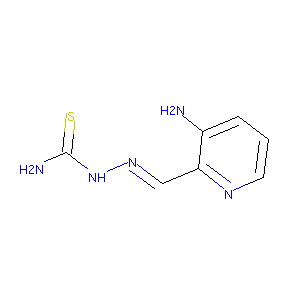
PAN-811 inhibits oxidative stress-induced cell death of human Alzheimer's disease-derived and age-matched olfactory neuroepithelial cells via suppression of intracellular reactive oxygen species. J Alzheimers Dis. 2009;17(3):611-9.
|
| 3 |
URL: http://www.guidetopharmacology.org Nucleic Acids Res. 2015 Oct 12. pii: gkv1037. The IUPHAR/BPS Guide to PHARMACOLOGY in 2016: towards curated quantitative interactions between 1300 protein targets and 6000 ligands. (Ligand id: 2691).
|
| 4 |
The iron-chelating drug triapine causes pronounced mitochondrial thiol redox stress. Toxicol Lett. 2011 Mar 5;201(2):130-6. doi: 10.1016/j.toxlet.2010.12.017. Epub 2010 Dec 31.
|
| 5 |
Distinct mechanisms of cell-kill by triapine and its terminally dimethylated derivative Dp44mT due to a loss or gain of activity of their copper(II) complexes. Biochem Pharmacol. 2014 Oct 1;91(3):312-22. doi: 10.1016/j.bcp.2014.08.006. Epub 2014 Aug 15.
|
| 6 |
Keratinocyte-derived vascular endothelial growth factor biosynthesis represents a pleiotropic side effect of peroxisome proliferator-activated receptor-gamma agonist troglitazone but not rosiglitazone and involves activation of p38 mitogen-activated protein kinase: implications for diabetes-impaired skin repair. Mol Pharmacol. 2008 Oct;74(4):952-63. doi: 10.1124/mol.108.049395. Epub 2008 Jul 3.
|
| 7 |
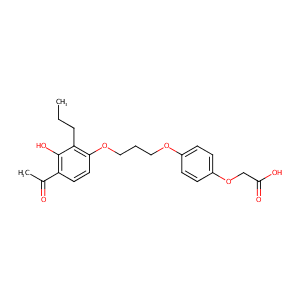
Novel peroxisome proliferator-activated receptor (PPAR) gamma and PPARdelta ligands produce distinct biological effects. J Biol Chem. 1999 Mar 5;274(10):6718-25.
|
| 8 |
Human adipocyte fatty acid-binding protein (aP2) gene promoter-driven reporter assay discriminates nonlipogenic peroxisome proliferator-activated receptor gamma ligands. J Pharmacol Exp Ther. 2004 Nov;311(2):467-75. doi: 10.1124/jpet.104.068254. Epub 2004 Jul 23.
|
|
|
|
|
|
|