General Information of Drug Combination (ID: DC2PEXL)

Drug Combination Name
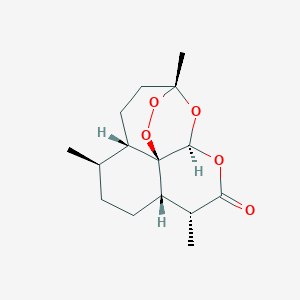
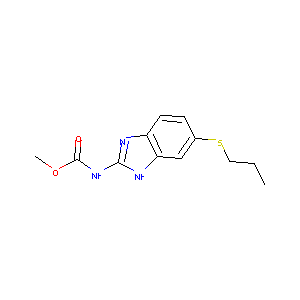
Artemisinin Albendazole
Indication
Disease Entry Status REF
Chronic myelogenous leukemia Investigative [1]
Component Drugs Artemisinin   DMOY7W3 Albendazole   DMYZ57N
Small molecular drug Small molecular drug
2D MOL 2D MOL
3D MOL 3D MOL
High-throughput Screening Result Testing Cell Line: KBM-7
Zero Interaction Potency (ZIP) Score: 10.01
Bliss Independence Score: 10.01
Loewe Additivity Score: 16.52
LHighest Single Agent (HSA) Score: 16.57

Molecular Interaction Atlas of This Drug Combination

Molecular Interaction Atlas (MIA)
Indication(s) of Artemisinin
Disease Entry ICD 11 Status REF
Malaria 1F40-1F45 Approved [2]
Artemisinin Interacts with 2 DTT Molecule(s)
DTT Name DTT ID UniProt ID Mode of Action REF
Plasmodium Dihydroorotate dehydrogenase (Malaria DHOdehase) TT3PQ2Y PYRD_PLAF7 Inhibitor [2]
Sarcoplasmic/endoplasmic reticulum calcium ATPase (ATP2A) TTZVSJ2 NOUNIPROTAC Inhibitor [2]
------------------------------------------------------------------------------------
Artemisinin Interacts with 4 DME Molecule(s)
DME Name DME ID UniProt ID Mode of Action REF
Cytochrome P450 3A4 (CYP3A4) DE4LYSA CP3A4_HUMAN Metabolism [5]
Cytochrome P450 2A6 (CYP2A6) DEJVYAZ CP2A6_HUMAN Metabolism [6]
Glutathione S-transferase alpha-1 (GSTA1) DE4ZHS1 GSTA1_HUMAN Metabolism [7]
Cytochrome P450 2B6 (CYP2B6) DEPKLMQ CP2B6_HUMAN Metabolism [5]
------------------------------------------------------------------------------------
Artemisinin Interacts with 4 DOT Molecule(s)
DOT Name DOT ID UniProt ID Mode of Action REF
Cytochrome P450 2C19 (CYP2C19) OTFMJYYE CP2CJ_HUMAN Decreases Activity [8]
ATP-dependent translocase ABCB1 (ABCB1) OTEJROBO MDR1_HUMAN Increases Expression [9]
Isocitrate dehydrogenase subunit alpha, mitochondrial (IDH3A) OT5QQB5L IDH3A_HUMAN Decreases Expression [10]
Nuclear receptor subfamily 1 group I member 3 (NR1I3) OTS3SGH7 NR1I3_HUMAN Increases Activity [11]
------------------------------------------------------------------------------------
Indication(s) of Albendazole
Disease Entry ICD 11 Status REF
Echinococcus granulosus infectious disease N.A. Approved [3]
Helminth infection 1F90.0 Approved [3]
Worm infection 1F90.Z Approved [4]
Albendazole Interacts with 1 DTT Molecule(s)
DTT Name DTT ID UniProt ID Mode of Action REF
Tubulin beta (TUBB) TTYFKSZ NOUNIPROTAC Binder [13]
------------------------------------------------------------------------------------
Albendazole Interacts with 1 DTP Molecule(s)
DTP Name DTP ID UniProt ID Mode of Action REF
P-glycoprotein 1 (ABCB1) DTUGYRD MDR1_HUMAN Substrate [14]
------------------------------------------------------------------------------------
Albendazole Interacts with 3 DME Molecule(s)
DME Name DME ID UniProt ID Mode of Action REF
Cytochrome P450 3A4 (CYP3A4) DE4LYSA CP3A4_HUMAN Metabolism [15]
Cytochrome P450 1A2 (CYP1A2) DEJGDUW CP1A2_HUMAN Metabolism [16]
Mephenytoin 4-hydroxylase (CYP2C19) DEGTFWK CP2CJ_HUMAN Metabolism [17]
------------------------------------------------------------------------------------
Albendazole Interacts with 5 DOT Molecule(s)
DOT Name DOT ID UniProt ID Mode of Action REF
Interleukin-6 receptor subunit alpha (IL6R) OTCQL07Z IL6RA_HUMAN Increases Expression [12]
Interleukin-8 (CXCL8) OTS7T5VH IL8_HUMAN Increases Expression [12]
C-C motif chemokine 2 (CCL2) OTAD2HEL CCL2_HUMAN Increases Expression [12]
HLA class II histocompatibility antigen, DM beta chain (HLA-DMB) OT17HGXJ DMB_HUMAN Affects Expression [18]
Heat shock factor protein 1 (HSF1) OTYNJ4KP HSF1_HUMAN Increases Activity [19]
------------------------------------------------------------------------------------

References

1 CheMBL Affinity Phenotypic Cellular Interaction Assay ID: CHEMBL1125966
2 The fight against drug-resistant malaria: novel plasmodial targets and antimalarial drugs. Curr Med Chem. 2008;15(2):161-71.
3 Albendazole FDA Label
4 Opportunities and challenges in antiparasitic drug discovery. Nat Rev Drug Discov. 2005 Sep;4(9):727-40.
5 Antimalarial artemisinin drugs induce cytochrome P450 and MDR1 expression by activation of xenosensors pregnane X receptor and constitutive androstane receptor. Mol Pharmacol. 2005 Jun;67(6):1954-65.
6 Identification of the human cytochrome P450 enzymes involved in the in vitro metabolism of artemisinin. Br J Clin Pharmacol. 1999 Oct;48(4):528-35.
7 Inhibition of glutathione S-transferases by antimalarial drugs possible implications for circumventing anticancer drug resistance. Int J Cancer. 2002 Feb 10;97(5):700-5.
8 Application of higher throughput screening (HTS) inhibition assays to evaluate the interaction of antiparasitic drugs with cytochrome P450s. Drug Metab Dispos. 2001 Jan;29(1):30-5.
9 Antimalarial artemisinin drugs induce cytochrome P450 and MDR1 expression by activation of xenosensors pregnane X receptor and constitutive androstane receptor. Mol Pharmacol. 2005 Jun;67(6):1954-65.
10 Identification of Compounds That Inhibit Estrogen-Related Receptor Alpha Signaling Using High-Throughput Screening Assays. Molecules. 2019 Feb 27;24(5):841. doi: 10.3390/molecules24050841.
11 In vivo and mechanistic evidence of nuclear receptor CAR induction by artemisinin. Eur J Clin Invest. 2006 Sep;36(9):647-53. doi: 10.1111/j.1365-2362.2006.01700.x.
12 Cell-based and cytokine-directed chemical screen to identify potential anti-multiple myeloma agents. Leuk Res. 2010 Jul;34(7):917-24. doi: 10.1016/j.leukres.2009.12.002. Epub 2010 Feb 8.
13 Flubendazole interferes with a wide spectrum of cell homeostatic mechanisms in Echinococcus granulosus protoscoleces. Parasitol Int. 2009 Sep;58(3):270-7.
14 The anthelminthic agent albendazole does not interact with p-glycoprotein. Drug Metab Dispos. 2002 Apr;30(4):365-9.
15 Identification of human cytochrome P(450)s that metabolise anti-parasitic drugs and predictions of in vivo drug hepatic clearance from in vitro data. Eur J Clin Pharmacol. 2003 Sep;59(5-6):429-42.
16 Cytochrome P450 1A1/2 induction by antiparasitic drugs: dose-dependent increase in ethoxyresorufin O-deethylase activity and mRNA caused by quinine, primaquine and albendazole in HepG2 cells. Eur J Clin Pharmacol. 2002 Nov;58(8):537-42.
17 Danazol inhibits cytochrome P450 2J2 activity in a substrate-independent manner. Drug Metab Dispos. 2015 Aug;43(8):1250-3.
18 Systems pharmacological analysis of drugs inducing stevens-johnson syndrome and toxic epidermal necrolysis. Chem Res Toxicol. 2015 May 18;28(5):927-34. doi: 10.1021/tx5005248. Epub 2015 Apr 3.
19 A Gene Expression Biomarker Predicts Heat Shock Factor 1 Activation in a Gene Expression Compendium. Chem Res Toxicol. 2021 Jul 19;34(7):1721-1737. doi: 10.1021/acs.chemrestox.0c00510. Epub 2021 Jun 25.