| 1 |
CheMBL Affinity Phenotypic Cellular Interaction Assay ID: CHEMBL1125966
|
| 2 |
Drugs@FDA. U.S. Food and Drug Administration. U.S. Department of Health & Human Services. 2015
|
| 3 |
URL: http://www.guidetopharmacology.org Nucleic Acids Res. 2015 Oct 12. pii: gkv1037. The IUPHAR/BPS Guide to PHARMACOLOGY in 2016: towards curated quantitative interactions between 1300 protein targets and 6000 ligands. (Ligand id: 8394).
|
| 4 |
The Pluripotency Factor Musashi-2 Is a Novel Target for Lung Cancer Therapy.Ann Am Thorac Soc. 2018 Apr;15(Supplement_2):S124.
|
| 5 |
URL: http://www.guidetopharmacology.org Nucleic Acids Res. 2015 Oct 12. pii: gkv1037. The IUPHAR/BPS Guide to PHARMACOLOGY in 2016: towards curated quantitative interactions between 1300 protein targets and 6000 ligands. (Ligand id: 7143).
|
| 6 |
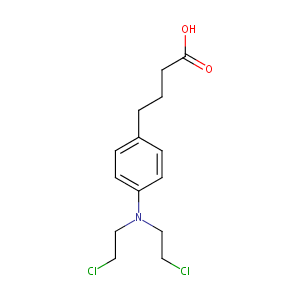
Chlorambucil FDA Label
|
| 7 |
The activity of a novel mithramycin analog is related to its binding to DNA, cellular accumulation, and inhibition of Sp1-driven gene transcription. Chem Biol Interact. 2014 Aug 5;219:123-32. doi: 10.1016/j.cbi.2014.05.019. Epub 2014 Jun 4.
|
| 8 |
Role of magnesium ion in mithramycin-DNA interaction: binding of mithramycin-Mg2+ complexes with DNA. Biochemistry. 1995 Jan 31;34(4):1376-85.
|
| 9 |
SP1 and SP3 mediate progesterone-dependent induction of the 17beta hydroxysteroid dehydrogenase type 2 gene in human endometrium. Biol Reprod. 2006 Oct;75(4):605-14.
|
| 10 |
Molecular mechanisms of transactivation and doxorubicin-mediated repression of survivin gene in cancer cells. J Biol Chem. 2007 Jan 26;282(4):2615-25. doi: 10.1074/jbc.M606203200. Epub 2006 Nov 22.
|
| 11 |
Mithramycin inhibits human epithelial carcinoma cell proliferation and migration involving downregulation of Eps8 expression. Chem Biol Interact. 2010 Jan 5;183(1):181-6. doi: 10.1016/j.cbi.2009.09.018.
|
| 12 |
The human receptor tyrosine kinase Axl gene--promoter characterization and regulation of constitutive expression by Sp1, Sp3 and CpG methylation. Biosci Rep. 2008 Jun;28(3):161-76. doi: 10.1042/BSR20080046.
|
| 13 |
Sp sites contribute to basal and inducible expression of the human TNIP1 (TNF-inducible protein 3-interacting protein 1) promoter. Biochem J. 2013 Jun 15;452(3):519-29. doi: 10.1042/BJ20121666.
|
| 14 |
Transcriptional regulation of neutral sphingomyelinase 2 gene expression of a human breast cancer cell line, MCF-7, induced by the anti-cancer drug, daunorubicin. Biochim Biophys Acta. 2009 Nov-Dec;1789(11-12):681-90. doi: 10.1016/j.bbagrm.2009.08.006. Epub 2009 Aug 19.
|
| 15 |
Roles of DNA repair and reductase activity in the cytotoxicity of the hypoxia-activated dinitrobenzamide mustard PR-104A. Mol Cancer Ther. 2009 Jun;8(6):1714-23.
|
| 16 |
Mammalian drug efflux transporters of the ATP binding cassette (ABC) family in multidrug resistance: A review of the past decade. Cancer Lett. 2016 Jan 1;370(1):153-64.
|
| 17 |
Transporters and renal drug elimination. Annu Rev Pharmacol Toxicol. 2004;44:137-66.
|
| 18 |
The anti-cancer drug chlorambucil as a substrate for the human polymorphic enzyme glutathione transferase P1-1: kinetic properties and crystallographic characterisation of allelic variants. J Mol Biol. 2008 Jun 27;380(1):131-44.
|
| 19 |
Enhanced in vitro invasiveness and drug resistance with altered gene expression patterns in a human lung carcinoma cell line after pulse selection with anticancer drugs. Int J Cancer. 2004 Sep 10;111(4):484-93. doi: 10.1002/ijc.20230.
|
| 20 |
Oxidative stress mechanisms do not discriminate between genotoxic and nongenotoxic liver carcinogens. Chem Res Toxicol. 2015 Aug 17;28(8):1636-46.
|
| 21 |
Role of the TRAIL/APO2-L death receptors in chlorambucil- and fludarabine-induced apoptosis in chronic lymphocytic leukemia. Oncogene. 2003 Nov 13;22(51):8356-69. doi: 10.1038/sj.onc.1207004.
|
| 22 |
Differential effects of chemotherapeutic drugs versus the MDM-2 antagonist nutlin-3 on cell cycle progression and induction of apoptosis in SKW6.4 lymphoblastoid B-cells. J Cell Biochem. 2008 May 15;104(2):595-605. doi: 10.1002/jcb.21649.
|
| 23 |
Differential gene expression induction by TRAIL in B chronic lymphocytic leukemia (B-CLL) cells showing high versus low levels of Zap-70. J Cell Physiol. 2007 Oct;213(1):229-36. doi: 10.1002/jcp.21116.
|
| 24 |
Theophylline synergizes with chlorambucil in inducing apoptosis of B-chronic lymphocytic leukemia cells. Blood. 1996 Sep 15;88(6):2172-82.
|
| 25 |
A two-hit mechanism for pre-mitotic arrest of cancer cell proliferation by a polyamide-alkylator conjugate. Cell Cycle. 2006 Jul;5(14):1537-48. doi: 10.4161/cc.5.14.2913. Epub 2006 Jul 17.
|
| 26 |
Systems pharmacological analysis of drugs inducing stevens-johnson syndrome and toxic epidermal necrolysis. Chem Res Toxicol. 2015 May 18;28(5):927-34. doi: 10.1021/tx5005248. Epub 2015 Apr 3.
|
| 27 |
Caspase 8 activation independent of Fas (CD95/APO-1) signaling may mediate killing of B-chronic lymphocytic leukemia cells by cytotoxic drugs or gamma radiation. Blood. 2001 Nov 1;98(9):2800-7. doi: 10.1182/blood.v98.9.2800.
|
| 28 |
Disruption of gene expression and induction of apoptosis in prostate cancer cells by a DNA-damaging agent tethered to an androgen receptor ligand. Chem Biol. 2005 Jul;12(7):779-87. doi: 10.1016/j.chembiol.2005.05.009.
|
| 29 |
The MT1G Gene in LUHMES Neurons Is a Sensitive Biomarker of Neurotoxicity. Neurotox Res. 2020 Dec;38(4):967-978. doi: 10.1007/s12640-020-00272-3. Epub 2020 Sep 1.
|
| 30 |
In vivo therapeutic responses contingent on Fanconi anemia/BRCA2 status of the tumor. Clin Cancer Res. 2005 Oct 15;11(20):7508-15. doi: 10.1158/1078-0432.CCR-05-1048.
|
| 31 |
Expression and prognostic significance of IAP-family genes in human cancers and myeloid leukemias. Clin Cancer Res. 2000 May;6(5):1796-803.
|
| 32 |
CheMBL Affinity Phenotypic Cellular Interaction Assay ID: CHEMBL1126165
|
| 33 |
CheMBL Affinity Phenotypic Cellular Interaction Assay ID: CHEMBL1125976
|
|
|
|
|
|
|