General Information of Drug Combination (ID: DC5E6GT)

Drug Combination Name
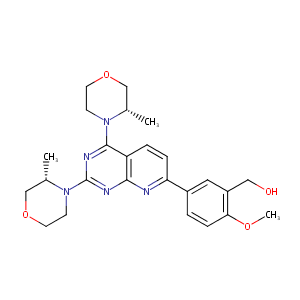
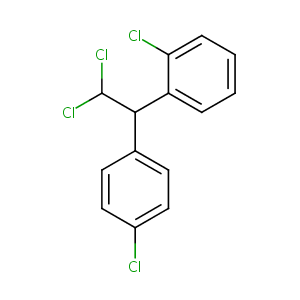
AZD8055 Mitotane
Indication
Disease Entry Status REF
Ewing sarcoma Investigative [1]
Component Drugs AZD8055   DM7L8SG Mitotane   DMU1GX0
Small molecular drug Small molecular drug
2D MOL 2D MOL
3D MOL 3D MOL
High-throughput Screening Result Testing Cell Line: TC-71
Zero Interaction Potency (ZIP) Score: 3.467
Bliss Independence Score: 2.763
Loewe Additivity Score: 0.807
LHighest Single Agent (HSA) Score: 3.82

Molecular Interaction Atlas of This Drug Combination

Molecular Interaction Atlas (MIA)
Indication(s) of AZD8055
Disease Entry ICD 11 Status REF
Solid tumour/cancer 2A00-2F9Z Discontinued in Phase 1/2 [2]
AZD8055 Interacts with 1 DTT Molecule(s)
DTT Name DTT ID UniProt ID Mode of Action REF
Serine/threonine-protein kinase mTOR (mTOR) TTCJG29 MTOR_HUMAN Inhibitor [4]
------------------------------------------------------------------------------------
Indication(s) of Mitotane
Disease Entry ICD 11 Status REF
Adrenocortical carcinoma 2D11.Z Approved [3]
Mitotane Interacts with 1 DTT Molecule(s)
DTT Name DTT ID UniProt ID Mode of Action REF
Estrogen receptor (ESR) TTZAYWL ESR1_HUMAN Binder [5]
------------------------------------------------------------------------------------
Mitotane Interacts with 21 DOT Molecule(s)
DOT Name DOT ID UniProt ID Mode of Action REF
3 beta-hydroxysteroid dehydrogenase/Delta 5-->4-isomerase type 2 (HSD3B2) OT02MSKN 3BHS2_HUMAN Decreases Expression [6]
Steroidogenic acute regulatory protein, mitochondrial (STAR) OTFEZ5AI STAR_HUMAN Decreases Expression [7]
Transforming growth factor beta-1 proprotein (TGFB1) OTV5XHVH TGFB1_HUMAN Decreases Expression [8]
cAMP-dependent protein kinase type I-alpha regulatory subunit (PRKAR1A) OT589JA2 KAP0_HUMAN Decreases Expression [8]
Cytochrome c oxidase subunit 2 (COX2) OTTMVBJJ COX2_HUMAN Decreases Expression [9]
Cytochrome c oxidase subunit 4 isoform 1, mitochondrial (COX4I1) OTU0FC24 COX41_HUMAN Decreases Expression [9]
Stearoyl-CoA desaturase (SCD) OTB1073G SCD_HUMAN Decreases Expression [10]
Nuclear receptor subfamily 1 group I member 2 (NR1I2) OTC5U0N5 NR1I2_HUMAN Increases Activity [10]
Sex hormone-binding globulin (SHBG) OTPWU5IW SHBG_HUMAN Increases Expression [11]
Glia-derived nexin (SERPINE2) OTYF5340 GDN_HUMAN Increases Expression [12]
ATP-dependent translocase ABCB1 (ABCB1) OTEJROBO MDR1_HUMAN Increases Expression [10]
3 beta-hydroxysteroid dehydrogenase/Delta 5-->4-isomerase type 1 (HSD3B1) OTNAZVKB 3BHS1_HUMAN Decreases Expression [12]
ETS domain-containing protein Elk-1 (ELK1) OTH9MXD6 ELK1_HUMAN Increases Activity [13]
Ribonucleoside-diphosphate reductase large subunit (RRM1) OTXGQOR9 RIR1_HUMAN Increases Expression [14]
Phosphoenolpyruvate carboxykinase, cytosolic (PCK1) OTNWEJ5Y PCKGC_HUMAN Decreases Expression [10]
Glucose-6-phosphatase catalytic subunit 1 (G6PC1) OTJ6FM9F G6PC1_HUMAN Decreases Expression [10]
Neurogenic locus notch homolog protein 1 (NOTCH1) OTI1WADQ NOTC1_HUMAN Increases Activity [13]
Nuclear receptor subfamily 1 group I member 3 (NR1I3) OTS3SGH7 NR1I3_HUMAN Increases Activity [15]
Mitochondrial 10-formyltetrahydrofolate dehydrogenase (ALDH1L2) OTCH86VF AL1L2_HUMAN Increases Expression [12]
Thyroid hormone-inducible hepatic protein (THRSP) OTKYE01L THRSP_HUMAN Decreases Expression [10]
Tribbles homolog 3 (TRIB3) OTG5OS7X TRIB3_HUMAN Increases Expression [12]
------------------------------------------------------------------------------------
⏷ Show the Full List of 21 DOT(s)

References

1 CheMBL Affinity Phenotypic Cellular Interaction Assay ID: CHEMBL1125966
2 URL: http://www.guidetopharmacology.org Nucleic Acids Res. 2015 Oct 12. pii: gkv1037. The IUPHAR/BPS Guide to PHARMACOLOGY in 2016: towards curated quantitative interactions between 1300 protein targets and 6000 ligands. (Ligand id: 7714).
3 URL: http://www.guidetopharmacology.org Nucleic Acids Res. 2015 Oct 12. pii: gkv1037. The IUPHAR/BPS Guide to PHARMACOLOGY in 2016: towards curated quantitative interactions between 1300 protein targets and 6000 ligands. (Ligand id: 6957).
4 Clinical pipeline report, company report or official report of AstraZeneca (2009).
5 Mitotane for adrenocortical carcinoma treatment. Curr Opin Investig Drugs. 2005 Apr;6(4):386-94.
6 Biphasic hormonal responses to the adrenocorticolytic DDT metabolite 3-methylsulfonyl-DDE in human cells. Toxicol Appl Pharmacol. 2010 Feb 1;242(3):281-9.
7 Mitotane exhibits dual effects on steroidogenic enzymes gene transcription under basal and cAMP-stimulating microenvironments in NCI-H295 cells. Toxicology. 2012 Aug 16;298(1-3):14-23.
8 The effect of mitotane on viability, steroidogenesis and gene expression in NCI295R adrenocortical cells. Mol Med Rep. 2013 Mar;7(3):893-900.
9 Mitotane alters mitochondrial respiratory chain activity by inducing cytochrome c oxidase defect in human adrenocortical cells. Endocr Relat Cancer. 2013 May 21;20(3):371-81.
10 Identification of novel agonists by high-throughput screening and molecular modelling of human constitutive androstane receptor isoform 3. Arch Toxicol. 2019 Aug;93(8):2247-2264. doi: 10.1007/s00204-019-02495-6. Epub 2019 Jul 16.
11 Mitotane has an estrogenic effect on sex hormone-binding globulin and corticosteroid-binding globulin in humans. J Clin Endocrinol Metab. 2006 Jun;91(6):2165-70. doi: 10.1210/jc.2005-2157. Epub 2006 Mar 21.
12 Effects of mitotane on gene expression in the adrenocortical cell line NCI-H295R: a microarray study. Pharmacogenomics. 2012 Sep;13(12):1351-61. doi: 10.2217/pgs.12.116.
13 Organochlorine-mediated potentiation of the general coactivator p300 through p38 mitogen-activated protein kinase. Carcinogenesis. 2009 Jan;30(1):106-13. doi: 10.1093/carcin/bgn213. Epub 2008 Sep 12.
14 Ribonucleotide reductase large subunit (RRM1) gene expression may predict efficacy of adjuvant mitotane in adrenocortical cancer. Clin Cancer Res. 2012 Jun 15;18(12):3452-61. doi: 10.1158/1078-0432.CCR-11-2692. Epub 2012 Apr 30.
15 Agonistic effects of diverse xenobiotics on the constitutive androstane receptor as detected in a recombinant yeast-cell assay. Toxicol In Vitro. 2018 Feb;46:335-349. doi: 10.1016/j.tiv.2017.09.014. Epub 2017 Sep 18.