General Information of Drug Combination (ID: DC5IYHA)

Drug Combination Name
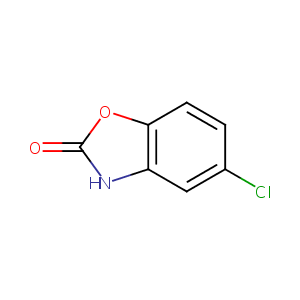
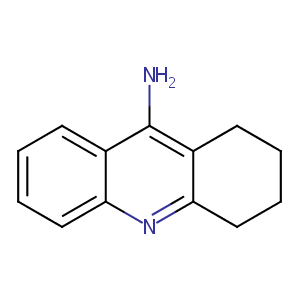
Chlorzoxazone Tacrine
Indication
Disease Entry Status REF
Chronic myelogenous leukemia Investigative [1]
Component Drugs Chlorzoxazone   DMCYVDT Tacrine   DM51FY6
Small molecular drug Small molecular drug
2D MOL 2D MOL
3D MOL 3D MOL
High-throughput Screening Result Testing Cell Line: KBM-7
Zero Interaction Potency (ZIP) Score: 4.55
Bliss Independence Score: 4.55
Loewe Additivity Score: 5.1
LHighest Single Agent (HSA) Score: 5.11

Molecular Interaction Atlas of This Drug Combination

Molecular Interaction Atlas (MIA)
Indication(s) of Chlorzoxazone
Disease Entry ICD 11 Status REF
Acute pain MG31 Approved [2]
Chlorzoxazone Interacts with 1 DTT Molecule(s)
DTT Name DTT ID UniProt ID Mode of Action REF
Calcium-activated potassium channel (KCN) TTMNI76 NOUNIPROTAC Activator [5]
------------------------------------------------------------------------------------
Chlorzoxazone Interacts with 6 DME Molecule(s)
DME Name DME ID UniProt ID Mode of Action REF
Cytochrome P450 3A4 (CYP3A4) DE4LYSA CP3A4_HUMAN Metabolism [6]
Cytochrome P450 1A2 (CYP1A2) DEJGDUW CP1A2_HUMAN Metabolism [7]
Cytochrome P450 2A6 (CYP2A6) DEJVYAZ CP2A6_HUMAN Metabolism [8]
Cytochrome P450 2D6 (CYP2D6) DECB0K3 CP2D6_HUMAN Metabolism [8]
Cytochrome P450 2E1 (CYP2E1) DEVDYN7 CP2E1_HUMAN Metabolism [9]
Cytochrome P450 102A1 (cyp102) DE4OGUF CPXB_BACMB Metabolism [10]
------------------------------------------------------------------------------------
⏷ Show the Full List of 6 DME(s)
Chlorzoxazone Interacts with 2 DOT Molecule(s)
DOT Name DOT ID UniProt ID Mode of Action REF
Intermediate conductance calcium-activated potassium channel protein 4 (KCNN4) OTQKQ346 KCNN4_HUMAN Increases Activity [11]
Arylamine N-acetyltransferase 2 (NAT2) OTBPDQOY ARY2_HUMAN Affects Metabolism [4]
------------------------------------------------------------------------------------
Indication(s) of Tacrine
Disease Entry ICD 11 Status REF
Alzheimer disease 8A20 Approved [3]
Tacrine Interacts with 1 DTT Molecule(s)
DTT Name DTT ID UniProt ID Mode of Action REF
Acetylcholinesterase (AChE) TT1RS9F ACES_HUMAN Inhibitor [12]
------------------------------------------------------------------------------------
Tacrine Interacts with 1 DTP Molecule(s)
DTP Name DTP ID UniProt ID Mode of Action REF
P-glycoprotein 1 (ABCB1) DTUGYRD MDR1_HUMAN Substrate [13]
------------------------------------------------------------------------------------
Tacrine Interacts with 2 DME Molecule(s)
DME Name DME ID UniProt ID Mode of Action REF
Cytochrome P450 1A2 (CYP1A2) DEJGDUW CP1A2_HUMAN Metabolism [14]
Glutathione S-transferase alpha-1 (GSTA1) DE4ZHS1 GSTA1_HUMAN Metabolism [15]
------------------------------------------------------------------------------------
Tacrine Interacts with 4 DOT Molecule(s)
DOT Name DOT ID UniProt ID Mode of Action REF
Cocaine esterase (CES2) OTC647SQ EST2_HUMAN Decreases Activity [16]
Phosphatidylcholine translocator ABCB4 (ABCB4) OTE6PY83 MDR3_HUMAN Decreases Activity [17]
DNA damage-inducible transcript 3 protein (DDIT3) OTI8YKKE DDIT3_HUMAN Increases Expression [18]
Cyclin-dependent kinase inhibitor 1 (CDKN1A) OTQWHCZE CDN1A_HUMAN Increases Expression [18]
------------------------------------------------------------------------------------

References

1 CheMBL Affinity Phenotypic Cellular Interaction Assay ID: CHEMBL1125966
2 URL: http://www.guidetopharmacology.org Nucleic Acids Res. 2015 Oct 12. pii: gkv1037. The IUPHAR/BPS Guide to PHARMACOLOGY in 2016: towards curated quantitative interactions between 1300 protein targets and 6000 ligands. (Ligand id: 2322).
3 URL: http://www.guidetopharmacology.org Nucleic Acids Res. 2015 Oct 12. pii: gkv1037. The IUPHAR/BPS Guide to PHARMACOLOGY in 2016: towards curated quantitative interactions between 1300 protein targets and 6000 ligands. (Ligand id: 6687).
4 Effects of cigarette smoking and carbon monoxide on chlorzoxazone and caffeine metabolism. Clin Pharmacol Ther. 2003 Nov;74(5):468-74. doi: 10.1016/j.clpt.2003.07.001.
5 Chlorzoxazone inhibits contraction of rat thoracic aorta. Eur J Pharmacol. 2006 Sep 18;545(2-3):161-6.
6 Summary of information on human CYP enzymes: human P450 metabolism data. Drug Metab Rev. 2002 Feb-May;34(1-2):83-448.
7 Inhibitory monoclonal antibodies to human cytochrome P450 1A2: analysis of phenacetin O-deethylation in human liver. Pharmacogenetics. 1998 Oct;8(5):375-82.
8 Prediction of human liver microsomal oxidations of 7-ethoxycoumarin and chlorzoxazone with kinetic parameters of recombinant cytochrome P-450 enzymes. Drug Metab Dispos. 1999 Nov;27(11):1274-80.
9 Trimethadione metabolism by human liver cytochrome P450: evidence for the involvement of CYP2E1. Xenobiotica. 1998 Nov;28(11):1041-7.
10 Wild-type CYP102A1 as a biocatalyst: turnover of drugs usually metabolised by human liver enzymes. J Biol Inorg Chem. 2007 Mar;12(3):313-23.
11 Functional and molecular identification of intermediate-conductance Ca(2+)-activated K(+) channels in breast cancer cells: association with cell cycle progression. Am J Physiol Cell Physiol. 2004 Jul;287(1):C125-34. doi: 10.1152/ajpcell.00488.2003. Epub 2004 Feb 25.
12 Evidence that the clinical effects of cholinesterase inhibitors are related to potency and targeting of action. Int J Clin Pract Suppl. 2002 Jun;(127):6-19.
13 Tacrine sinusoidal uptake and biliary excretion in sandwich-cultured primary rat hepatocytes. J Pharm Pharm Sci. 2014;17(3):427-38.
14 Synthetic and natural compounds that interact with human cytochrome P450 1A2 and implications in drug development. Curr Med Chem. 2009;16(31):4066-218.
15 Combined glutathione-S-transferase M1 and T1 genetic polymorphism and tacrine hepatotoxicity. Clin Pharmacol Ther. 2000 Apr;67(4):432-7.
16 Inhibition of human carboxylesterases hCE1 and hiCE by cholinesterase inhibitors. Chem Biol Interact. 2013 Mar 25;203(1):226-30.
17 Evaluating the Role of Multidrug Resistance Protein 3 (MDR3) Inhibition in Predicting Drug-Induced Liver Injury Using 125 Pharmaceuticals. Chem Res Toxicol. 2017 May 15;30(5):1219-1229. doi: 10.1021/acs.chemrestox.7b00048. Epub 2017 May 4.
18 High-content imaging-based BAC-GFP toxicity pathway reporters to assess chemical adversity liabilities. Arch Toxicol. 2017 Mar;91(3):1367-1383. doi: 10.1007/s00204-016-1781-0. Epub 2016 Jun 29.