General Information of Drug Combination (ID: DCBTL8M)

Drug Combination Name
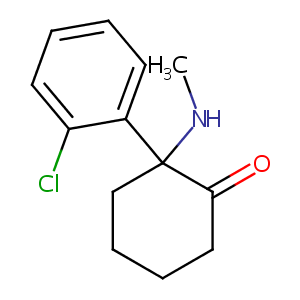
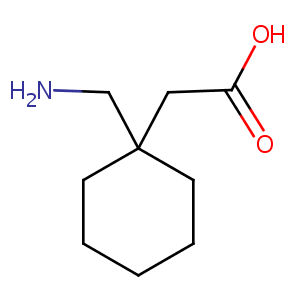
Ketamine Gabapentin
Indication
Disease Entry Status REF
Head and Neck Cancer Phase 1 [1]
Component Drugs Ketamine   DMT5HA4 Gabapentin   DM6T924
Small molecular drug Small molecular drug
2D MOL 2D MOL
3D MOL 3D MOL

Molecular Interaction Atlas of This Drug Combination

Molecular Interaction Atlas (MIA)
Indication(s) of Ketamine
Disease Entry ICD 11 Status REF
Anaesthesia 9A78.6 Approved [2]
Anxiety N.A. Approved [3]
Bipolar disorder 6A60 Approved [3]
Depression 6A70-6A7Z Approved [3]
Traumatic brain injury NA07.Z Approved [3]
Coronavirus Disease 2019 (COVID-19) 1D6Y Phase 2 [4]
Chronic pain MG30 Investigative [3]
Ketamine Interacts with 1 DTT Molecule(s)
DTT Name DTT ID UniProt ID Mode of Action REF
N-methyl-D-aspartate receptor (NMDAR) TT9IK2Z NOUNIPROTAC Antagonist [8]
------------------------------------------------------------------------------------
Ketamine Interacts with 3 DME Molecule(s)
DME Name DME ID UniProt ID Mode of Action REF
Cytochrome P450 3A4 (CYP3A4) DE4LYSA CP3A4_HUMAN Metabolism [9]
Cytochrome P450 2C9 (CYP2C9) DE5IED8 CP2C9_HUMAN Metabolism [9]
Cytochrome P450 2B6 (CYP2B6) DEPKLMQ CP2B6_HUMAN Metabolism [9]
------------------------------------------------------------------------------------
Ketamine Interacts with 10 DOT Molecule(s)
DOT Name DOT ID UniProt ID Mode of Action REF
Zinc finger protein SNAI2 (SNAI2) OT7Y8EJ2 SNAI2_HUMAN Increases Expression [7]
Zinc finger protein SNAI1 (SNAI1) OTDPYAMC SNAI1_HUMAN Increases Expression [7]
Renin (REN) OT52GZR2 RENI_HUMAN Increases Expression [10]
Transforming growth factor beta-1 proprotein (TGFB1) OTV5XHVH TGFB1_HUMAN Increases Expression [7]
Amyloid-beta precursor protein (APP) OTKFD7R4 A4_HUMAN Increases Expression [11]
Cadherin-1 (CDH1) OTFJMXPM CADH1_HUMAN Decreases Expression [7]
Protein S100-A4 (S100A4) OTLRGFSQ S10A4_HUMAN Increases Expression [7]
DNA damage-inducible transcript 3 protein (DDIT3) OTI8YKKE DDIT3_HUMAN Increases Expression [12]
Actin, aortic smooth muscle (ACTA2) OTEDLG8E ACTA_HUMAN Increases Expression [7]
Sodium/hydrogen exchanger 6 (SLC9A6) OT5N47TC SL9A6_HUMAN Decreases Expression [11]
------------------------------------------------------------------------------------
⏷ Show the Full List of 10 DOT(s)
Indication(s) of Gabapentin
Disease Entry ICD 11 Status REF
Complex partial seizure 8A68.0 Approved [5]
Postherpetic neuralgia 1E91.5 Approved [6]
Solid tumour/cancer 2A00-2F9Z Phase 3 [5]
Gabapentin Interacts with 1 DTT Molecule(s)
DTT Name DTT ID UniProt ID Mode of Action REF
Gamma-aminobutyric acid B receptor (GABBR) TTDCVZW GABR1_HUMAN; GABR2_HUMAN Antagonist [13]
------------------------------------------------------------------------------------
Gabapentin Interacts with 3 DTP Molecule(s)
DTP Name DTP ID UniProt ID Mode of Action REF
Organic cation transporter 2 (SLC22A2) DT9IDPW S22A2_HUMAN Substrate [14]
Organic cation/carnitine transporter 1 (SLC22A4) DT2EG60 S22A4_HUMAN Substrate [15]
L-type amino acid transporter 1 (SLC7A5) DT48T0N LAT1_HUMAN Substrate [16]
------------------------------------------------------------------------------------
Gabapentin Interacts with 11 DOT Molecule(s)
DOT Name DOT ID UniProt ID Mode of Action REF
D(1A) dopamine receptor (DRD1) OTLZPBT7 DRD1_HUMAN Increases ADR [17]
5-hydroxytryptamine receptor 3A (HTR3A) OTAIV1AK 5HT3A_HUMAN Increases ADR [17]
5-hydroxytryptamine receptor 2B (HTR2B) OTM1AD9J 5HT2B_HUMAN Increases ADR [17]
Alpha-1A adrenergic receptor (ADRA1A) OTUIWCL5 ADA1A_HUMAN Increases ADR [17]
5-hydroxytryptamine receptor 2A (HTR2A) OTWXJX0M 5HT2A_HUMAN Increases ADR [17]
Glutamine--fructose-6-phosphate aminotransferase 1 (GFPT1) OTQBDO45 GFPT1_HUMAN Increases ADR [17]
Transforming growth factor beta-1 proprotein (TGFB1) OTV5XHVH TGFB1_HUMAN Increases ADR [17]
ATP-dependent translocase ABCB1 (ABCB1) OTEJROBO MDR1_HUMAN Decreases Activity [18]
Sodium-dependent serotonin transporter (SLC6A4) OT6FGDLW SC6A4_HUMAN Decreases Expression [19]
Voltage-dependent calcium channel subunit alpha-2/delta-2 (CACNA2D2) OTFJXVQQ CA2D2_HUMAN Affects Binding [20]
SH3 and multiple ankyrin repeat domains protein 2 (SHANK2) OTSQTPFQ SHAN2_HUMAN Decreases Expression [19]
------------------------------------------------------------------------------------
⏷ Show the Full List of 11 DOT(s)

Test Results of This Drug Combination in Other Disease Systems

Indication DrugCom ID Cell Line Status REF
Pain DC0QGDX N. A. Phase 2 [21]
------------------------------------------------------------------------------------

References

1 ClinicalTrials.gov (NCT05156060) Gabapentin & Ketamine for Prevention/Treatment of Acute/Chronic Pain in Locally Advanced Head and Neck Cancer
2 FDA Approved Drug Products from FDA Official Website. 2019. Application Number: (ANDA) 076092.
3 Ketamine FDA Label
4 ClinicalTrials.gov (NCT04365985) Study of Immunomodulation Using Naltrexone and Ketamine for COVID-19. U.S. National Institutes of Health.
5 URL: http://www.guidetopharmacology.org Nucleic Acids Res. 2015 Oct 12. pii: gkv1037. The IUPHAR/BPS Guide to PHARMACOLOGY in 2016: towards curated quantitative interactions between 1300 protein targets and 6000 ligands. (Ligand id: 5483).
6 Gabapentin FDA Label
7 Ketamine-induced bladder fibrosis involves epithelial-to-mesenchymal transition mediated by transforming growth factor-1. Am J Physiol Renal Physiol. 2017 Oct 1;313(4):F961-F972. doi: 10.1152/ajprenal.00686.2016. Epub 2017 Mar 22.
8 Ketamine modulates theta and gamma oscillations. J Cogn Neurosci. 2010 Jul;22(7):1452-64.
9 Contribution of CYP3A4, CYP2B6, and CYP2C9 isoforms to N-demethylation of ketamine in human liver microsomes. Drug Metab Dispos. 2002 Jul;30(7):853-8.
10 Ketamine hypertension and the renin-angiotensin system. Clin Exp Hypertens A. 1983;5(6):875-83. doi: 10.3109/10641968309081814.
11 Ketamine promotes the amyloidogenic pathway by regulating endosomal pH. Toxicology. 2022 Apr 15;471:153163. doi: 10.1016/j.tox.2022.153163. Epub 2022 Apr 1.
12 Lipoxin A4 methyl ester attenuated ketamine-induced neurotoxicity in SH-SY5Y cells via regulating leptin pathway. Toxicol In Vitro. 2023 Jun;89:105581. doi: 10.1016/j.tiv.2023.105581. Epub 2023 Mar 11.
13 Gabapentin increases a tonic inhibitory conductance in hippocampal pyramidal neurons. Anesthesiology. 2006 Aug;105(2):325-33.
14 Clinical pharmacokinetic drug interaction studies of gabapentin enacarbil, a novel transported prodrug of gabapentin, with naproxen and cimetidine. Br J Clin Pharmacol. 2010 May;69(5):498-507.
15 Effects of genetic variation in the novel organic cation transporter, OCTN1, on the renal clearance of gabapentin. Clin Pharmacol Ther. 2008 Mar;83(3):416-21.
16 Transport of gabapentin by LAT1 (SLC7A5). Biochem Pharmacol. 2013 Jun 1;85(11):1672-83.
17 ADReCS-Target: target profiles for aiding drug safety research and application. Nucleic Acids Res. 2018 Jan 4;46(D1):D911-D917. doi: 10.1093/nar/gkx899.
18 Functional evaluation of polymorphisms in the human ABCB1 gene and the impact on clinical responses of antiepileptic drugs. Pharmacogenet Genomics. 2008 May;18(5):390-402. doi: 10.1097/FPC.0b013e3282f85e36.
19 Establishment of a 13 genes-based molecular prediction score model to discriminate the neurotoxic potential of food relevant-chemicals. Toxicol Lett. 2022 Feb 1;355:1-18. doi: 10.1016/j.toxlet.2021.10.013. Epub 2021 Nov 5.
20 Tissue-specific expression and gabapentin-binding properties of calcium channel alpha2delta subunit subtypes. J Membr Biol. 2001 Nov 1;184(1):35-43. doi: 10.1007/s00232-001-0072-7.
21 ClinicalTrials.gov (NCT02815111) Evaluation of Ketamine and Multi-modal Analgesics