General Information of Drug Combination (ID: DCDQOX1)

Drug Combination Name
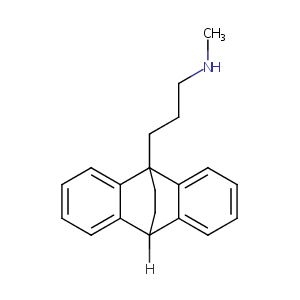
Sulfinpyrazone Maprotiline
Indication
Disease Entry Status REF
Chronic myelogenous leukemia Investigative [1]
Component Drugs Sulfinpyrazone   DMEV954 Maprotiline   DMPWB7T
Small molecular drug Small molecular drug
2D MOL 2D MOL
3D MOL 3D MOL
High-throughput Screening Result Testing Cell Line: KBM-7
Zero Interaction Potency (ZIP) Score: 2.95
Bliss Independence Score: 2.95
Loewe Additivity Score: 3.89
LHighest Single Agent (HSA) Score: 3.89

Molecular Interaction Atlas of This Drug Combination

Molecular Interaction Atlas (MIA)
Indication(s) of Sulfinpyrazone
Disease Entry ICD 11 Status REF
Gout FA25 Approved [2]
Sulfinpyrazone Interacts with 1 DTT Molecule(s)
DTT Name DTT ID UniProt ID Mode of Action REF
Multidrug resistance-associated protein 1 (ABCC1) TTOI92F MRP1_HUMAN Modulator [5]
------------------------------------------------------------------------------------
Sulfinpyrazone Interacts with 1 DTP Molecule(s)
DTP Name DTP ID UniProt ID Mode of Action REF
Multidrug resistance-associated protein 2 (ABCC2) DTFI42L MRP2_HUMAN Substrate [6]
------------------------------------------------------------------------------------
Sulfinpyrazone Interacts with 2 DME Molecule(s)
DME Name DME ID UniProt ID Mode of Action REF
Cytochrome P450 3A4 (CYP3A4) DE4LYSA CP3A4_HUMAN Metabolism [7]
Cytochrome P450 2C8 (CYP2C8) DES5XRU CP2C8_HUMAN Metabolism [8]
------------------------------------------------------------------------------------
Sulfinpyrazone Interacts with 2 DOT Molecule(s)
DOT Name DOT ID UniProt ID Mode of Action REF
Nuclear receptor subfamily 1 group I member 2 (NR1I2) OTC5U0N5 NR1I2_HUMAN Increases Activity [7]
Bile salt export pump (ABCB11) OTRU7THO ABCBB_HUMAN Decreases Activity [9]
------------------------------------------------------------------------------------
Indication(s) of Maprotiline
Disease Entry ICD 11 Status REF
Depression 6A70-6A7Z Approved [3]
Major depressive disorder 6A70.3 Approved [4]
Mixed anxiety and depressive disorder N.A. Investigative [3]
Maprotiline Interacts with 1 DTT Molecule(s)
DTT Name DTT ID UniProt ID Mode of Action REF
Norepinephrine transporter (NET) TTAWNKZ SC6A2_HUMAN Inhibitor [10]
------------------------------------------------------------------------------------
Maprotiline Interacts with 2 DME Molecule(s)
DME Name DME ID UniProt ID Mode of Action REF
Cytochrome P450 1A2 (CYP1A2) DEJGDUW CP1A2_HUMAN Metabolism [11]
Cytochrome P450 2D6 (CYP2D6) DECB0K3 CP2D6_HUMAN Metabolism [11]
------------------------------------------------------------------------------------

References

1 CheMBL Affinity Phenotypic Cellular Interaction Assay ID: CHEMBL1125966
2 URL: http://www.guidetopharmacology.org Nucleic Acids Res. 2015 Oct 12. pii: gkv1037. The IUPHAR/BPS Guide to PHARMACOLOGY in 2016: towards curated quantitative interactions between 1300 protein targets and 6000 ligands. (Ligand id: 5826).
3 Maprotiline FDA Label
4 Drugs@FDA. U.S. Food and Drug Administration. U.S. Department of Health & Human Services. 2015
5 Species-dependent transport and modulation properties of human and mouse multidrug resistance protein 2 (MRP2/Mrp2, ABCC2/Abcc2). Drug Metab Dispos. 2008 Apr;36(4):631-40.
6 Vinblastine and sulfinpyrazone export by the multidrug resistance protein MRP2 is associated with glutathione export. Br J Cancer. 2000 Aug;83(3):375-83.
7 CYP3A4 induction by drugs: correlation between a pregnane X receptor reporter gene assay and CYP3A4 expression in human hepatocytes. Drug Metab Dispos. 2002 Jul;30(7):795-804.
8 Summary of information on human CYP enzymes: human P450 metabolism data. Drug Metab Rev. 2002 Feb-May;34(1-2):83-448.
9 Early identification of clinically relevant drug interactions with the human bile salt export pump (BSEP/ABCB11). Toxicol Sci. 2013 Dec;136(2):328-43.
10 Effect of pharmacologically selective antidepressants on serotonin uptake in rat platelets. Gen Physiol Biophys. 2005 Mar;24(1):113-28.
11 Cytochrome P450 enzymes contributing to demethylation of maprotiline in man. Pharmacol Toxicol. 2002 Mar;90(3):144-9.