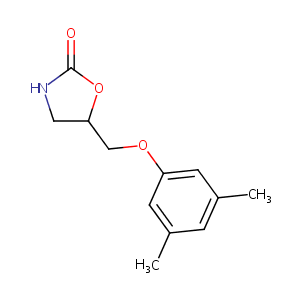
General Information of Drug Combination (ID: DCHNBFK)

Drug Combination Name
Lefaxin Metaxalone
Indication
Disease Entry Status REF
Chronic myelogenous leukemia Investigative [1]
Component Drugs Lefaxin   DM0CEY3 Metaxalone   DMXLZP6
Small molecular drug Small molecular drug
2D MOL 2D MOL
3D MOL 3D MOL
High-throughput Screening Result Testing Cell Line: KBM-7
Zero Interaction Potency (ZIP) Score: 18.09
Bliss Independence Score: 18.09
Loewe Additivity Score: 32.23
LHighest Single Agent (HSA) Score: 32.23

Molecular Interaction Atlas of This Drug Combination

Molecular Interaction Atlas (MIA)
Indication(s) of Lefaxin
Disease Entry ICD 11 Status REF
Discovery agent N.A. Investigative [2]
Lefaxin Interacts with 1 DTT Molecule(s)
DTT Name DTT ID UniProt ID Mode of Action REF
Coagulation factor Xa (F10) TTCIHJA FA10_HUMAN Inhibitor [2]
------------------------------------------------------------------------------------
Lefaxin Interacts with 2 DOT Molecule(s)
DOT Name DOT ID UniProt ID Mode of Action REF
Superoxide dismutase , mitochondrial (SOD2) OTIWXGZ9 SODM_HUMAN Decreases Expression [4]
Albumin (ALB) OTVMM513 ALBU_HUMAN Affects Binding [5]
------------------------------------------------------------------------------------
Indication(s) of Metaxalone
Disease Entry ICD 11 Status REF
Pain MG30-MG3Z Approved [3]

References

1 CheMBL Affinity Phenotypic Cellular Interaction Assay ID: CHEMBL1125966
2 Novel approaches to the treatment of thrombosis. Trends Pharmacol Sci. 2002 Jan;23(1):25-32.
3 URL: http://www.guidetopharmacology.org Nucleic Acids Res. 2015 Oct 12. pii: gkv1037. The IUPHAR/BPS Guide to PHARMACOLOGY in 2016: towards curated quantitative interactions between 1300 protein targets and 6000 ligands. (Ligand id: 7609).
4 The Val16Ala-SOD2 polymorphism affects cyto-genotoxicity of pyridostigmine bromide on human peripheral blood mononuclear cells. Toxicol In Vitro. 2019 Oct;60:237-244.
5 Binding of pyridostigmine bromide, N,N-diethyl-m-toluamide and permethrin, alone and in combinations, to human serum albumin. Arch Toxicol. 2002 May;76(4):203-8. doi: 10.1007/s00204-002-0328-8. Epub 2002 Mar 9.