General Information of Drug Combination (ID: DCIN0YA)

Drug Combination Name
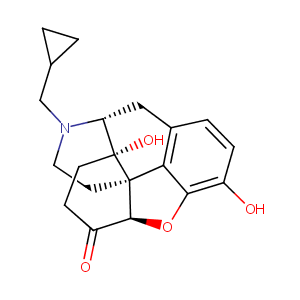
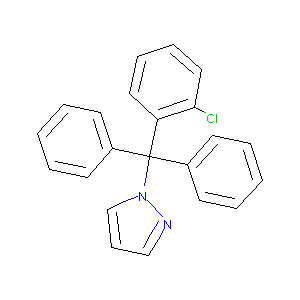
Naltrexone 1-((2-chlorophenyl)diphenylmethyl)-1H-pyrazole
Indication
Disease Entry Status REF
Chronic myelogenous leukemia Investigative [1]
Component Drugs Naltrexone   DMUL45H 1-((2-chlorophenyl)diphenylmethyl)-1H-pyrazole   DMQEJVU
Small molecular drug Small molecular drug
2D MOL 2D MOL
3D MOL 3D MOL
High-throughput Screening Result Testing Cell Line: KBM-7
Zero Interaction Potency (ZIP) Score: 6.09
Bliss Independence Score: 6.09
Loewe Additivity Score: 20.43
LHighest Single Agent (HSA) Score: 20.44

Molecular Interaction Atlas of This Drug Combination

Molecular Interaction Atlas (MIA)
Indication(s) of Naltrexone
Disease Entry ICD 11 Status REF
Alcohol dependence 6C40.2 Approved [2]
Chronic alcoholism 6C40.2Z Approved [3]
Crohn disease DD70 Approved [4]
Gastroparesis DA41.00 Approved [4]
Inflammatory bowel disease DD72 Approved [4]
Obesity 5B81 Approved [4]
Ulcerative colitis DD71 Approved [4]
Human immunodeficiency virus infection 1C62 Phase 4 [5]
Coronavirus Disease 2019 (COVID-19) 1D6Y Phase 2 [6]
Chronic pain MG30 Investigative [4]
Naltrexone Interacts with 1 DTT Molecule(s)
DTT Name DTT ID UniProt ID Mode of Action REF
Opioid receptor (OPR) TTN4QDT NOUNIPROTAC Antagonist [8]
------------------------------------------------------------------------------------
Naltrexone Interacts with 1 DME Molecule(s)
DME Name DME ID UniProt ID Mode of Action REF
UDP-glucuronosyltransferase 1A1 (UGT1A1) DEYGVN4 UD11_HUMAN Metabolism [9]
------------------------------------------------------------------------------------
Naltrexone Interacts with 8 DOT Molecule(s)
DOT Name DOT ID UniProt ID Mode of Action REF
Follitropin subunit beta (FSHB) OTGLS283 FSHB_HUMAN Increases Expression [10]
Lutropin subunit beta (LHB) OT5GBOVJ LSHB_HUMAN Increases Expression [10]
Mu-type opioid receptor (OPRM1) OT16AAT8 OPRM_HUMAN Affects Response To Substance [8]
Mu-type opioid receptor (OPRM1) OT16AAT8 OPRM_HUMAN Increases Response [8]
Sodium-dependent dopamine transporter (SLC6A3) OT39XG28 SC6A3_HUMAN Affects Response To Substance [11]
Gamma-aminobutyric acid receptor subunit beta-2 (GABRB2) OTAOZIGX GBRB2_HUMAN Affects Response To Substance [12]
D(2) dopamine receptor (DRD2) OTBLXKEG DRD2_HUMAN Affects Response To Substance [12]
Gamma-aminobutyric acid receptor subunit alpha-6 (GABRA6) OTX4UC3O GBRA6_HUMAN Affects Response To Substance [12]
------------------------------------------------------------------------------------
⏷ Show the Full List of 8 DOT(s)
Indication(s) of 1-((2-chlorophenyl)diphenylmethyl)-1H-pyrazole
Disease Entry ICD 11 Status REF
Conjunctival fibrosis 9A61.3 Investigative [7]
1-((2-chlorophenyl)diphenylmethyl)-1H-pyrazole Interacts with 2 DTT Molecule(s)
DTT Name DTT ID UniProt ID Mode of Action REF
Calcium-activated potassium channel (KCN) TTMNI76 NOUNIPROTAC Inhibitor [13]
Calcium-activated potassium channel KCa3.1 (KCNN4) TT7M9I6 KCNN4_HUMAN Blocker (channel blocker) [14]
------------------------------------------------------------------------------------

References

1 CheMBL Affinity Phenotypic Cellular Interaction Assay ID: CHEMBL1125966
2 Drugs@FDA. U.S. Food and Drug Administration. U.S. Department of Health & Human Services. 2015
3 FDA Approved Drug Products from FDA Official Website. 2019. Application Number: (ANDA) 074918.
4 Naltrexone FDA Label
5 URL: http://www.guidetopharmacology.org Nucleic Acids Res. 2015 Oct 12. pii: gkv1037. The IUPHAR/BPS Guide to PHARMACOLOGY in 2016: towards curated quantitative interactions between 1300 protein targets and 6000 ligands. (Ligand id: 1639).
6 ClinicalTrials.gov (NCT04365985) Study of Immunomodulation Using Naltrexone and Ketamine for COVID-19. U.S. National Institutes of Health.
7 Blockade of KCa3.1: A novel target to treat TGF-1 induced conjunctival fibrosis.Exp Eye Res. 2018 Feb;167:140-144.
8 An evaluation of mu-opioid receptor (OPRM1) as a predictor of naltrexone response in the treatment of alcohol dependence: results from the Combined Pharmacotherapies and Behavioral Interventions for Alcohol Dependence (COMBINE) study. Arch Gen Psychiatry. 2008 Feb;65(2):135-44.
9 In vivo chronic exposure to heroin or naltrexone selectively inhibits liver microsome formation of estradiol-3-glucuronide in the rat. Biochem Pharmacol. 2008 Sep 1;76(5):672-9.
10 Chronic naltrexone treatment induces desensitization of the luteinizing hormone pulse generator for opioid blockade in hyperprolactinemic patients. J Clin Endocrinol Metab. 1995 May;80(5):1739-42. doi: 10.1210/jcem.80.5.7745028.
11 Association between the Stin2 VNTR polymorphism of the serotonin transporter gene and treatment outcome in alcohol-dependent patients. Alcohol Alcohol. 2008 Sep-Oct;43(5):516-22. doi: 10.1093/alcalc/agn048. Epub 2008 Jun 14.
12 Predicting the effect of naltrexone and acamprosate in alcohol-dependent patients using genetic indicators. Addict Biol. 2009 Jul;14(3):328-37.
13 Inhibitors of potassium channels KV1.3 and IK-1 as immunosuppressants. Bioorg Med Chem Lett. 2009 Apr 15;19(8):2299-304.
14 Blockade of the intermediate-conductance calcium-activated potassium channel as a new therapeutic strategy for restenosis. Circulation. 2003 Sep 2;108(9):1119-25.