General Information of Drug Combination (ID: DCIV1GZ)

Drug Combination Name
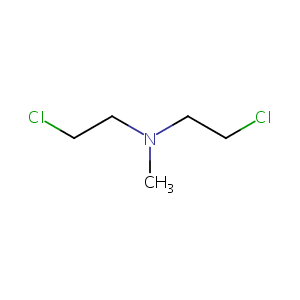
Lenalidomide Mechlorethamine
Indication
Disease Entry Status REF
High grade ovarian serous adenocarcinoma Investigative [1]
Component Drugs Lenalidomide   DM6Q7U4 Mechlorethamine   DM0CVXA
Small molecular drug Small molecular drug
2D MOL 2D MOL
3D MOL 3D MOL
High-throughput Screening Result Testing Cell Line: OVCAR-4
Zero Interaction Potency (ZIP) Score: 1.16
Bliss Independence Score: 3.57
Loewe Additivity Score: 2.49
LHighest Single Agent (HSA) Score: 3.09

Molecular Interaction Atlas of This Drug Combination

Molecular Interaction Atlas (MIA)
Indication(s) of Lenalidomide
Disease Entry ICD 11 Status REF
Adult T-cell leukemia/lymphoma N.A. Approved [2]
Advanced cancer 2A00-2F9Z Approved [2]
Complex regional pain syndrome type 1 N.A. Approved [2]
Hepatosplenic T-cell lymphoma N.A. Approved [2]
Large granular lymphocytic leukemia 2A90.1 Approved [2]
Leukemia N.A. Approved [2]
MALT lymphoma N.A. Approved [2]
Multiple myeloma 2A83 Approved [3]
Nodal marginal zone lymphoma 2A85.0 Approved [2]
Pain MG30-MG3Z Approved [2]
Plasma cell myeloma 2A83.1 Approved [2]
Primary cutaneous peripheral T-cell lymphoma not otherwise specified N.A. Approved [2]
Prolymphocytic leukaemia 2A82.1 Approved [2]
Recurrent adult burkitt lymphoma 2A85.6 Approved [2]
Small intestine lymphoma N.A. Approved [2]
Splenic marginal zone lymphoma N.A. Approved [2]
Testicular lymphoma N.A. Approved [2]
Urinary bladder neoplasm N.A. Approved [2]
Waldenstrom macroglobulinemia 2A85.4 Approved [2]
Coronavirus Disease 2019 (COVID-19) 1D6Y Phase 3 [4]
Colon cancer 2B90.Z Investigative [2]
Lenalidomide Interacts with 1 DTT Molecule(s)
DTT Name DTT ID UniProt ID Mode of Action REF
Tumor necrosis factor (TNF) TTF8CQI TNFA_HUMAN Inhibitor [8]
------------------------------------------------------------------------------------
Lenalidomide Interacts with 1 DTP Molecule(s)
DTP Name DTP ID UniProt ID Mode of Action REF
P-glycoprotein 1 (ABCB1) DTUGYRD MDR1_HUMAN Substrate [9]
------------------------------------------------------------------------------------
Lenalidomide Interacts with 5 DOT Molecule(s)
DOT Name DOT ID UniProt ID Mode of Action REF
Tumor necrosis factor receptor superfamily member 1A (TNFRSF1A) OT2D9DOV TNR1A_HUMAN Decreases Expression [10]
Tumor necrosis factor receptor superfamily member 1B (TNFRSF1B) OTDS2EAR TNR1B_HUMAN Decreases Expression [10]
Interleukin-6 receptor subunit beta (IL6ST) OT1N9C70 IL6RB_HUMAN Decreases Expression [10]
DNA damage-binding protein 1 (DDB1) OTTR2L3Z DDB1_HUMAN Affects Binding [11]
Sal-like protein 4 (SALL4) OTC08PR5 SALL4_HUMAN Affects Binding [12]
------------------------------------------------------------------------------------
Indication(s) of Mechlorethamine
Disease Entry ICD 11 Status REF
Chronic myelogenous leukaemia 2A20.0 Approved [5]
Lung cancer 2C25.0 Approved [5]
Mycosis fungoides 2B01 Approved [5]
Primary cutaneous T-cell lymphoma N.A. Approved [5]
Small lymphocytic lymphoma 2A82.0 Approved [5]
T-cell lymphoma 2A90 Approved [6]
Hodgkin lymphoma 2B30 Phase 3 [7]
Classic Hodgkin lymphoma N.A. Investigative [5]
Mechlorethamine Interacts with 1 DTT Molecule(s)
DTT Name DTT ID UniProt ID Mode of Action REF
Human Deoxyribonucleic acid (hDNA) TTUTN1I NOUNIPROTAC Intercalator [15]
------------------------------------------------------------------------------------
Mechlorethamine Interacts with 9 DOT Molecule(s)
DOT Name DOT ID UniProt ID Mode of Action REF
Receptor tyrosine-protein kinase erbB-2 (ERBB2) OTOAUNCK ERBB2_HUMAN Decreases Expression [16]
Transcription factor Jun (JUN) OTCYBO6X JUN_HUMAN Increases Expression [17]
Interleukin-8 (CXCL8) OTS7T5VH IL8_HUMAN Increases Expression [17]
Transcription factor JunB (JUNB) OTG2JXV5 JUNB_HUMAN Increases Expression [17]
Transcription factor JunD (JUND) OTNKACJD JUND_HUMAN Increases Expression [17]
Protein S100-P (S100P) OTJCXNJG S100P_HUMAN Increases Expression [18]
Laminin subunit gamma-2 (LAMC2) OTJMTM72 LAMC2_HUMAN Decreases Expression [19]
Bcl-2 homologous antagonist/killer (BAK1) OTDP6ILW BAK_HUMAN Increases Expression [20]
Transient receptor potential cation channel subfamily A member 1 (TRPA1) OTRDIR5M TRPA1_HUMAN Increases Response To Substance [21]
------------------------------------------------------------------------------------
⏷ Show the Full List of 9 DOT(s)

Test Results of This Drug Combination in Other Disease Systems

Indication DrugCom ID Cell Line Status REF
Adult acute myeloid leukemia DCG6O7K HL-60(TB) Investigative [22]
Plasma cell myeloma DC948XM RPMI-8226 Investigative [22]
Malignant melanoma DC1MYHO LOX IMVI Investigative [1]
------------------------------------------------------------------------------------

References

1 CheMBL Affinity Phenotypic Cellular Interaction Assay ID: CHEMBL1125976
2 Lenalidomide FDA Label
3 URL: http://www.guidetopharmacology.org Nucleic Acids Res. 2015 Oct 12. pii: gkv1037. The IUPHAR/BPS Guide to PHARMACOLOGY in 2016: towards curated quantitative interactions between 1300 protein targets and 6000 ligands. (Ligand id: 7331).
4 Low-dose Lenalidomide for Non-severe COVID-19 Treatment Trial (GETAFE)
5 Mechlorethamine FDA Label
6 Drugs@FDA. U.S. Food and Drug Administration. U.S. Department of Health & Human Services. 2015
7 URL: http://www.guidetopharmacology.org Nucleic Acids Res. 2015 Oct 12. pii: gkv1037. The IUPHAR/BPS Guide to PHARMACOLOGY in 2016: towards curated quantitative interactions between 1300 protein targets and 6000 ligands. (Ligand id: 7218).
8 Thalidomide and thalidomide analogues for maintenance of remission in Crohn's disease. Cochrane Database Syst Rev. 2009 Apr 15;(2):CD007351.
9 DrugBank 5.0: a major update to the DrugBank database for 2018. Nucleic Acids Res. 2018 Jan 4;46(D1):D1074-D1082. (ID: DB00480)
10 Circulating endothelial progenitor cells in multiple myeloma: implications and significance. Blood. 2005 Apr 15;105(8):3286-94. doi: 10.1182/blood-2004-06-2101. Epub 2004 Dec 23.
11 Structure of the human Cereblon-DDB1-lenalidomide complex reveals basis for responsiveness to thalidomide analogs. Nat Struct Mol Biol. 2014 Sep;21(9):803-9. doi: 10.1038/nsmb.2874. Epub 2014 Aug 10.
12 Thalidomide promotes degradation of SALL4, a transcription factor implicated in Duane Radial Ray syndrome. Elife. 2018 Aug 1;7:e38430. doi: 10.7554/eLife.38430.
13 Thioredoxin Cross-Linking by Nitrogen Mustard in Lung Epithelial Cells: Formation of Multimeric Thioredoxin/Thioredoxin Reductase Complexes and Inhibition of Disulfide Reduction. Chem Res Toxicol. 2015 Nov 16;28(11):2091-103. doi: 10.1021/acs.chemrestox.5b00194. Epub 2015 Oct 19.
14 Cross-linking of thioredoxin reductase by the sulfur mustard analogue mechlorethamine (methylbis(2-chloroethyl)amine) in human lung epithelial cells and rat lung: selective inhibition of disulfide reduction but not redox cycling. Chem Res Toxicol. 2014 Jan 21;27(1):61-75. doi: 10.1021/tx400329a. Epub 2013 Dec 9.
15 Proteomic analysis of DNA-protein cross-linking by antitumor nitrogen mustards. Chem Res Toxicol. 2009 Jun;22(6):1151-62.
16 Down-regulation of HER-2 expression in human breast cancer cell HBC-4 and ZR75-1 by nitrogen-mustard-N-oxide. Kobe J Med Sci. 2007;53(4):135-42.
17 Nitrogen mustard prevents transport of Fra-1 into the nucleus to promote c-Fos- and FosB-dependent IL-8 induction in injured mouse epidermis. Toxicol Lett. 2020 Feb 1;319:256-263. doi: 10.1016/j.toxlet.2019.10.006. Epub 2019 Oct 19.
18 S100P is selectively upregulated in tumor cell lines challenged with DNA cross-linking agents. Leuk Res. 2005 Oct;29(10):1181-90. doi: 10.1016/j.leukres.2005.03.012.
19 Histopathologic and immunohistochemical features in human skin after exposure to nitrogen and sulfur mustard. Am J Dermatopathol. 1998 Feb;20(1):22-8. doi: 10.1097/00000372-199802000-00005.
20 Increased expression of VDAC1 sensitizes carcinoma cells to apoptosis induced by DNA cross-linking agents. Biochem Pharmacol. 2012 May 1;83(9):1172-82. doi: 10.1016/j.bcp.2012.01.017. Epub 2012 Jan 21.
21 Activation of the human TRPA1 channel by different alkylating sulfur and nitrogen mustards and structurally related chemotherapeutic drugs. Toxicol Lett. 2023 Mar 1;376:51-59. doi: 10.1016/j.toxlet.2023.01.007. Epub 2023 Jan 21.
22 CheMBL Affinity Phenotypic Cellular Interaction Assay ID: CHEMBL1125966