General Information of Drug Combination (ID: DCJB3ZY)

Drug Combination Name
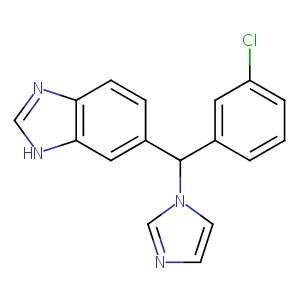
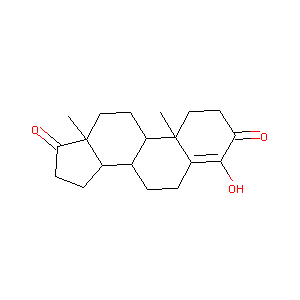
LIAROZOLE FORMESTANE
Indication
Disease Entry Status REF
Childhood T acute lymphoblastic leukemia Investigative [1]
Component Drugs LIAROZOLE   DM4OYXE FORMESTANE   DMWIDJK
Small molecular drug Small molecular drug
2D MOL 2D MOL
3D MOL 3D MOL
High-throughput Screening Result Testing Cell Line: CCRF-CEM
Zero Interaction Potency (ZIP) Score: 5.51
Bliss Independence Score: 10.07
Loewe Additivity Score: 2.01
LHighest Single Agent (HSA) Score: 0.83

Molecular Interaction Atlas of This Drug Combination

Molecular Interaction Atlas (MIA)
Indication(s) of LIAROZOLE
Disease Entry ICD 11 Status REF
Dermatological disease DA24.Y Phase 2/3 [2]
LIAROZOLE Interacts with 2 DTT Molecule(s)
DTT Name DTT ID UniProt ID Mode of Action REF
Aromatase (CYP19A1) TTSZLWK CP19A_HUMAN Inhibitor [4]
Cytochrome P450 26 (CYP26A1) TTD7Q0R CP26A_HUMAN Inhibitor [5]
------------------------------------------------------------------------------------
Indication(s) of FORMESTANE
Disease Entry ICD 11 Status REF
Breast cancer 2C60-2C65 Withdrawn from market [3]
FORMESTANE Interacts with 1 DTT Molecule(s)
DTT Name DTT ID UniProt ID Mode of Action REF
Aromatase (CYP19A1) TTSZLWK CP19A_HUMAN Inhibitor [6]
------------------------------------------------------------------------------------
FORMESTANE Interacts with 2 DOT Molecule(s)
DOT Name DOT ID UniProt ID Mode of Action REF
Adenylate kinase isoenzyme 1 (AK1) OT614AR3 KAD1_HUMAN Increases ADR [7]
17-beta-hydroxysteroid dehydrogenase type 1 (HSD17B1) OT6EBDHM DHB1_HUMAN Decreases Activity [8]
------------------------------------------------------------------------------------

Test Results of This Drug Combination in Other Disease Systems

Indication DrugCom ID Cell Line Status REF
Clear cell renal cell carcinoma DCV9LIH TK-10 Investigative [1]
Adenocarcinoma DCBTJP5 HCC-2998 Investigative [9]
Lung adenocarcinoma DCZQYYP EKVX Investigative [9]
------------------------------------------------------------------------------------

References

1 CheMBL Affinity Phenotypic Cellular Interaction Assay ID: CHEMBL1125966
2 URL: http://www.guidetopharmacology.org Nucleic Acids Res. 2015 Oct 12. pii: gkv1037. The IUPHAR/BPS Guide to PHARMACOLOGY in 2016: towards curated quantitative interactions between 1300 protein targets and 6000 ligands. (Ligand id: 5210).
3 Drugs@FDA. U.S. Food and Drug Administration. U.S. Department of Health & Human Services. 2015
4 Pharmacophore modeling strategies for the development of novel nonsteroidal inhibitors of human aromatase (CYP19). Bioorg Med Chem Lett. 2010 May 15;20(10):3050-64.
5 Novel azolyl-(phenylmethyl)]aryl/heteroarylamines: potent CYP26 inhibitors and enhancers of all-trans retinoic acid activity in neuroblastoma cells. Bioorg Med Chem. 2008 Sep 1;16(17):8301-13.
6 The taiwaniaquinoids: a review. J Nat Prod. 2010 Feb 26;73(2):284-98.
7 ADReCS-Target: target profiles for aiding drug safety research and application. Nucleic Acids Res. 2018 Jan 4;46(D1):D911-D917. doi: 10.1093/nar/gkx899.
8 Mammalian lignans and genistein decrease the activities of aromatase and 17beta-hydroxysteroid dehydrogenase in MCF-7 cells. J Steroid Biochem Mol Biol. 2005 Apr;94(5):461-7.
9 CheMBL Affinity Phenotypic Cellular Interaction Assay ID: CHEMBL1125976