| 1 |
CheMBL Affinity Phenotypic Cellular Interaction Assay ID: CHEMBL1126165
|
| 2 |
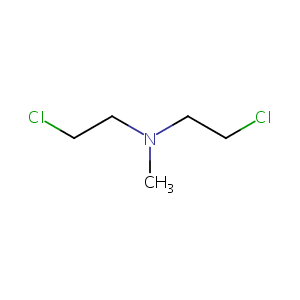
Mechlorethamine FDA Label
|
| 3 |
Drugs@FDA. U.S. Food and Drug Administration. U.S. Department of Health & Human Services. 2015
|
| 4 |
URL: http://www.guidetopharmacology.org Nucleic Acids Res. 2015 Oct 12. pii: gkv1037. The IUPHAR/BPS Guide to PHARMACOLOGY in 2016: towards curated quantitative interactions between 1300 protein targets and 6000 ligands. (Ligand id: 7218).
|
| 5 |
URL: http://www.guidetopharmacology.org Nucleic Acids Res. 2015 Oct 12. pii: gkv1037. The IUPHAR/BPS Guide to PHARMACOLOGY in 2016: towards curated quantitative interactions between 1300 protein targets and 6000 ligands. (Ligand id: 7226).
|
| 6 |
ClinicalTrials.gov (NCT00846703) The GD-2008 ALL Protocol for Childhood Acute Lymphoblastic Leukemia. U.S. National Institutes of Health.
|
| 7 |
Thiopurine analogs and mycophenolic acid synergistically inhibit the papain-like protease of Middle East respiratory syndrome coronavirus. Antiviral Res. 2015 Mar;115:9-16.
|
| 8 |
Thioredoxin Cross-Linking by Nitrogen Mustard in Lung Epithelial Cells: Formation of Multimeric Thioredoxin/Thioredoxin Reductase Complexes and Inhibition of Disulfide Reduction. Chem Res Toxicol. 2015 Nov 16;28(11):2091-103. doi: 10.1021/acs.chemrestox.5b00194. Epub 2015 Oct 19.
|
| 9 |
Cross-linking of thioredoxin reductase by the sulfur mustard analogue mechlorethamine (methylbis(2-chloroethyl)amine) in human lung epithelial cells and rat lung: selective inhibition of disulfide reduction but not redox cycling. Chem Res Toxicol. 2014 Jan 21;27(1):61-75. doi: 10.1021/tx400329a. Epub 2013 Dec 9.
|
| 10 |
Proteomic analysis of DNA-protein cross-linking by antitumor nitrogen mustards. Chem Res Toxicol. 2009 Jun;22(6):1151-62.
|
| 11 |
Down-regulation of HER-2 expression in human breast cancer cell HBC-4 and ZR75-1 by nitrogen-mustard-N-oxide. Kobe J Med Sci. 2007;53(4):135-42.
|
| 12 |
Nitrogen mustard prevents transport of Fra-1 into the nucleus to promote c-Fos- and FosB-dependent IL-8 induction in injured mouse epidermis. Toxicol Lett. 2020 Feb 1;319:256-263. doi: 10.1016/j.toxlet.2019.10.006. Epub 2019 Oct 19.
|
| 13 |
S100P is selectively upregulated in tumor cell lines challenged with DNA cross-linking agents. Leuk Res. 2005 Oct;29(10):1181-90. doi: 10.1016/j.leukres.2005.03.012.
|
| 14 |
Histopathologic and immunohistochemical features in human skin after exposure to nitrogen and sulfur mustard. Am J Dermatopathol. 1998 Feb;20(1):22-8. doi: 10.1097/00000372-199802000-00005.
|
| 15 |
Increased expression of VDAC1 sensitizes carcinoma cells to apoptosis induced by DNA cross-linking agents. Biochem Pharmacol. 2012 May 1;83(9):1172-82. doi: 10.1016/j.bcp.2012.01.017. Epub 2012 Jan 21.
|
| 16 |
Activation of the human TRPA1 channel by different alkylating sulfur and nitrogen mustards and structurally related chemotherapeutic drugs. Toxicol Lett. 2023 Mar 1;376:51-59. doi: 10.1016/j.toxlet.2023.01.007. Epub 2023 Jan 21.
|
| 17 |
CD28-dependent Rac1 activation is the molecular target of azathioprine in primary human CD4+ T lymphocytes. J Clin Invest. 2003 Apr;111(8):1133-45. doi: 10.1172/JCI16432.
|
| 18 |
Pharmacogenetics of outcome in children with acute lymphoblastic leukemia. Blood. 2005 Jun 15;105(12):4752-8. doi: 10.1182/blood-2004-11-4544. Epub 2005 Feb 15.
|
| 19 |
Clinical pharmacology and pharmacogenetics of thiopurines. Eur J Clin Pharmacol. 2008 Aug;64(8):753-67.
|
| 20 |
6-mercaptopurine (6-MP) induces p53-mediated apoptosis of neural progenitor cells in the developing fetal rodent brain. Neurotoxicol Teratol. 2009 Jul-Aug;31(4):198-202.
|
| 21 |
ABC transporters and their role in nucleoside and nucleotide drug resistance. Biochem Pharmacol. 2012 Apr 15;83(8):1073-83.
|
| 22 |
Polymorphisms in multidrug resistance-associated protein gene 4 is associated with outcome in childhood acute lymphoblastic leukemia. Blood. 2009 Aug 13;114(7):1383-6.
|
| 23 |
Overexpression of MRP4 (ABCC4) and MRP5 (ABCC5) confer resistance to the nucleoside analogs cytarabine and troxacitabine, but not gemcitabine. Springerplus. 2014 Dec 13;3:732.
|
| 24 |
Organic anion transporter 3 is involved in the brain-to-blood efflux transport of thiopurine nucleobase analogs. J Neurochem. 2004 Aug;90(4):931-41.
|
| 25 |
PharmGKB: A worldwide resource for pharmacogenomic information. Wiley Interdiscip Rev Syst Biol Med. 2018 Jul;10(4):e1417. (ID: PA2040)
|
| 26 |
Involvement of the concentrative nucleoside transporter 3 and equilibrative nucleoside transporter 2 in the resistance of T-lymphoblastic cell lines to thiopurines. Biochem Biophys Res Commun. 2006 Apr 28;343(1):208-15.
|
| 27 |
Characterization of 6-Mercaptopurine Transport by the SLC43A3-Encoded Nucleobase Transporter. Mol Pharmacol. 2019 Jun;95(6):584-596.
|
| 28 |
Pharmacogenomics in drug-metabolizing enzymes catalyzing anticancer drugs for personalized cancer chemotherapy. Curr Drug Metab. 2007 Aug;8(6):554-62.
|
| 29 |
The degree of myelosuppression during maintenance therapy of adolescents with B-lineage intermediate risk acute lymphoblastic leukemia predicts risk of relapse. Leukemia. 2010 Apr;24(4):715-20.
|
| 30 |
ADReCS-Target: target profiles for aiding drug safety research and application. Nucleic Acids Res. 2018 Jan 4;46(D1):D911-D917. doi: 10.1093/nar/gkx899.
|
| 31 |
Petit E, Langouet S, Akhdar H, Nicolas-Nicolaz C, Guillouzo A, Morel F. Differential toxic effects of azathioprine, 6-mercaptopurine and 6-thioguanine on human hepatocytes. Toxicol In Vitro. 2008;22(3):632-642. [PMID: 18222062]
|
| 32 |
Thiopurine-induced toxicity is associated with dysfunction variant of the human molybdenum cofactor sulfurase gene (xanthinuria type II). Toxicol Appl Pharmacol. 2018 Aug 15;353:102-108. doi: 10.1016/j.taap.2018.06.015. Epub 2018 Jun 20.
|
| 33 |
HLA-DQA1-HLA-DRB1 variants confer susceptibility to pancreatitis induced by thiopurine immunosuppressants. Nat Genet. 2014 Oct;46(10):1131-4. doi: 10.1038/ng.3093. Epub 2014 Sep 14.
|
| 34 |
Sensitization of ABCG2-overexpressing cells to conventional chemotherapeutic agent by sunitinib was associated with inhibiting the function of ABCG2. Cancer Lett. 2009 Jun 28;279(1):74-83. doi: 10.1016/j.canlet.2009.01.027. Epub 2009 Feb 18.
|
| 35 |
A common missense variant in NUDT15 confers susceptibility to thiopurine-induced leukopenia. Nat Genet. 2014 Sep;46(9):1017-20. doi: 10.1038/ng.3060. Epub 2014 Aug 10.
|
|
|
|
|
|
|