| 1 |
CheMBL Affinity Phenotypic Cellular Interaction Assay ID: CHEMBL1125966
|
| 2 |
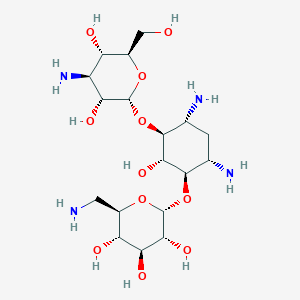
Kanamycin FDA Label
|
| 3 |
Novel agents in the management of Mycobacterium tuberculosis disease. Curr Med Chem. 2007;14(18):2000-8.
|
| 4 |
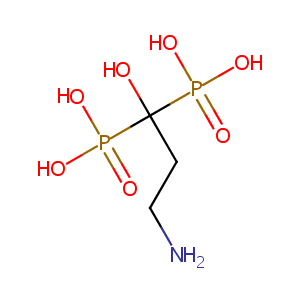
Pamidronate FDA Label
|
| 5 |
URL: http://www.guidetopharmacology.org Nucleic Acids Res. 2015 Oct 12. pii: gkv1037. The IUPHAR/BPS Guide to PHARMACOLOGY in 2016: towards curated quantitative interactions between 1300 protein targets and 6000 ligands. (Ligand id: 7259).
|
| 6 |
SsrA-mediated protein tagging in the presence of miscoding drugs and its physiological role in Escherichia coli. Genes Cells. 2002 Jul;7(7):629-38.
|
| 7 |
Relationship between antimicrobial resistance and aminoglycoside-modifying enzyme gene expressions in Acinetobacter baumannii. Chin Med J (Engl). 2005 Jan 20;118(2):141-5.
|
| 8 |
Cloning and expression of novel aminoglycoside phosphotransferase genes from Campylobacter and their role in the resistance to six aminoglycosides. Antimicrob Agents Chemother. 2017 Dec 21;62(1). pii: e01682-17.
|
| 9 |
Expression of Clostridium thermocellum endoglucanase gene in Lactobacillus gasseri and Lactobacillus johnsonii and characterization of the genetically modified probiotic lactobacilli. Curr Microbiol. 2000 Apr;40(4):257-63.
|
| 10 |
Detection of nonsterol isoprenoids by HPLC-MS/MS. Anal Biochem. 2008 Dec 1;383(1):18-24.
|
| 11 |
Pamidronate increases markers of bone formation in patients with multiple myeloma in plateau phase under interferon-alpha treatment. Calcif Tissue Int. 2001 May;68(5):285-90.
|
| 12 |
Bisphosphonates pamidronate and zoledronic acid stimulate osteoprotegerin production by primary human osteoblasts. Biochem Biophys Res Commun. 2002 Mar 1;291(3):680-6. doi: 10.1006/bbrc.2002.6510.
|
| 13 |
Expression profile and synthesis of different collagen types I, II, III, and V of human gingival fibroblasts, osteoblasts, and SaOS-2 cells after bisphosphonate treatment. Clin Oral Investig. 2010 Feb;14(1):51-8. doi: 10.1007/s00784-009-0312-2. Epub 2009 Jul 14.
|
| 14 |
Bisphosphonates induce apoptosis in human breast cancer cell lines. Br J Cancer. 2000 Apr;82(8):1459-68. doi: 10.1054/bjoc.1999.1131.
|
| 15 |
Pamidronate induced anti-proliferative, apoptotic, and anti-migratory effects in hepatocellular carcinoma. J Hepatol. 2006 Jan;44(1):142-50. doi: 10.1016/j.jhep.2005.09.022. Epub 2005 Nov 9.
|
| 16 |
Nitrogen-containing bisphosphonates induce apoptosis of Caco-2 cells in vitro by inhibiting the mevalonate pathway: a model of bisphosphonate-induced gastrointestinal toxicity. Bone. 2001 Oct;29(4):336-43. doi: 10.1016/s8756-3282(01)00589-0.
|
| 17 |
Caspase-independent induction of apoptosis in human melanoma cells by the proapoptotic Bcl-2-related protein Nbk / Bik. Oncogene. 2005 Nov 10;24(49):7369-80. doi: 10.1038/sj.onc.1208890.
|
|
|
|
|
|
|