| 1 |
CheMBL Affinity Phenotypic Cellular Interaction Assay ID: CHEMBL1125966
|
| 2 |
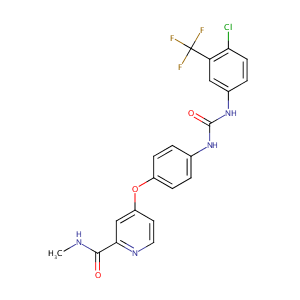
Sorafenib FDA Label
|
| 3 |
URL: http://www.guidetopharmacology.org Nucleic Acids Res. 2015 Oct 12. pii: gkv1037. The IUPHAR/BPS Guide to PHARMACOLOGY in 2016: towards curated quantitative interactions between 1300 protein targets and 6000 ligands. (Ligand id: 5711).
|
| 4 |
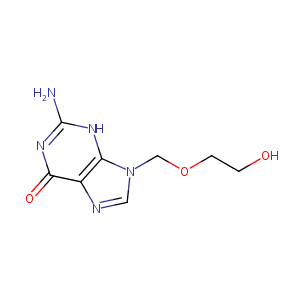
Genital herpes. BMJ Clin Evid. 2011 Apr 15;2011:1603.
|
| 5 |
Management of suspected viral encephalitis in adults--Association of British Neurologists and British Infection Association National Guidelines. J Infect. 2012 Apr;64(4):347-73.
|
| 6 |
Prevention and management of genital herpes simplex infection during pregnancy and delivery: Guidelines from the French College of Gynaecologists and Obstetricians (CNGOF). Eur J Obstet Gynecol Reprod Biol. 2018 May;224:93-101.
|
| 7 |
Interventions for prevention of herpes simplex labialis (cold sores on the lips). Cochrane Database Syst Rev. 2015 Aug 7;2015(8):CD010095.
|
| 8 |
Neonatal varicella. Arch Dis Child. 2023 Oct 31:archdischild-2022-324820.
|
| 9 |
URL: http://www.guidetopharmacology.org Nucleic Acids Res. 2015 Oct 12. pii: gkv1037. The IUPHAR/BPS Guide to PHARMACOLOGY in 2016: towards curated quantitative interactions between 1300 protein targets and 6000 ligands. (Ligand id: 4829).
|
| 10 |
Drugs@FDA. U.S. Food and Drug Administration. U.S. Department of Health & Human Services. 2015
|
| 11 |
Novel carbocyclic curcumin analog CUR3d modulates genes involved in multiple apoptosis pathways in human hepatocellular carcinoma cells. Chem Biol Interact. 2015 Dec 5;242:107-22.
|
| 12 |
Destruxin B inhibits hepatocellular carcinoma cell growth through modulation of the Wnt/-catenin signaling pathway and epithelial-mesenchymal transition. Toxicol In Vitro. 2014 Jun;28(4):552-61. doi: 10.1016/j.tiv.2014.01.002. Epub 2014 Jan 13.
|
| 13 |
The kinase inhibitor sorafenib induces cell death through a process involving induction of endoplasmic reticulum stress. Mol Cell Biol. 2007 Aug;27(15):5499-513. doi: 10.1128/MCB.01080-06. Epub 2007 Jun 4.
|
| 14 |
Sorafenib induces apoptosis of AML cells via Bim-mediated activation of the intrinsic apoptotic pathway. Leukemia. 2008 Apr;22(4):808-18. doi: 10.1038/sj.leu.2405098. Epub 2008 Jan 17.
|
| 15 |
Ovatodiolide suppresses yes-associated protein 1-modulated cancer stem cell phenotypes in highly malignant hepatocellular carcinoma and sensitizes cancer cells to chemotherapy in vitro. Toxicol In Vitro. 2018 Sep;51:74-82. doi: 10.1016/j.tiv.2018.04.010. Epub 2018 Apr 24.
|
| 16 |
Preclinical overview of sorafenib, a multikinase inhibitor that targets both Raf and VEGF and PDGF receptor tyrosine kinase signaling.Mol Cancer Ther.2008 Oct;7(10):3129-40.
|
| 17 |
Nasopharyngeal carcinoma: Current treatment options and future directions. J Nasopharyng Carcinoma, 2014, 1(16): e16.
|
| 18 |
Multidrug resistance protein 2 implicates anticancer drug-resistance to sorafenib. Biol Pharm Bull. 2011;34(3):433-5.
|
| 19 |
Breast cancer resistance protein and P-glycoprotein limit sorafenib brain accumulation. Mol Cancer Ther. 2010 Feb;9(2):319-26.
|
| 20 |
Double-transduced MDCKII cells to study human P-glycoprotein (ABCB1) and breast cancer resistance protein (ABCG2) interplay in drug transport across the blood-brain barrier. Mol Pharm. 2011 Apr 4;8(2):571-82.
|
| 21 |
Contribution of OATP1B1 and OATP1B3 to the disposition of sorafenib and sorafenib-glucuronide. Clin Cancer Res. 2013 Mar 15;19(6):1458-66.
|
| 22 |
Upregulation of histone acetylation reverses organic anion transporter 2 repression and enhances 5-fluorouracil sensitivity in hepatocellular carcinoma
|
| 23 |
Rlip76 transports sunitinib and sorafenib and mediates drug resistance in kidney cancer. Int J Cancer. 2010 Mar 15;126(6):1327-38.
|
| 24 |
Interaction of sorafenib and cytochrome P450 isoenzymes in patients with advanced melanoma: a phase I/II pharmacokinetic interaction study. Cancer Chemother Pharmacol. 2011 Nov;68(5):1111-8.
|
| 25 |
Ontogeny and sorafenib metabolism. Clin Cancer Res. 2012 Oct 15;18(20):5788-95.
|
| 26 |
Drug Interactions Flockhart Table
|
| 27 |
Pharmacokinetic interaction involving sorafenib and the calcium-channel blocker felodipine in a patient with hepatocellular carcinoma. Invest New Drugs. 2011 Dec;29(6):1511-4.
|
| 28 |
Sorafenib induces growth suppression in mouse models of gastrointestinal stromal tumor. Mol Cancer Ther. 2009 Jan;8(1):152-9. doi: 10.1158/1535-7163.MCT-08-0553.
|
| 29 |
Sorafenib induces apoptotic cell death in human non-small cell lung cancer cells by down-regulating mammalian target of rapamycin (mTOR)-dependent survivin expression. Biochem Pharmacol. 2011 Aug 1;82(3):216-26. doi: 10.1016/j.bcp.2011.04.011. Epub 2011 May 13.
|
| 30 |
Interference with bile salt export pump function is a susceptibility factor for human liver injury in drug development. Toxicol Sci. 2010 Dec; 118(2):485-500.
|
| 31 |
Differential effects of arsenic trioxide on chemosensitization in human hepatic tumor and stellate cell lines. BMC Cancer. 2012 Sep 10;12:402.
|
| 32 |
The multikinase inhibitor sorafenib potentiates TRAIL lethality in human leukemia cells in association with Mcl-1 and cFLIPL down-regulation. Cancer Res. 2007 Oct 1;67(19):9490-500. doi: 10.1158/0008-5472.CAN-07-0598.
|
| 33 |
Apoptosis induced by the kinase inhibitor BAY 43-9006 in human leukemia cells involves down-regulation of Mcl-1 through inhibition of translation. J Biol Chem. 2005 Oct 21;280(42):35217-27. doi: 10.1074/jbc.M506551200. Epub 2005 Aug 18.
|
| 34 |
Sorafenib targets the mitochondrial electron transport chain complexes and ATP synthase to activate the PINK1-Parkin pathway and modulate cellular drug response. J Biol Chem. 2017 Sep 8;292(36):15105-15120. doi: 10.1074/jbc.M117.783175. Epub 2017 Jul 3.
|
| 35 |
Induction of DNA damage-inducible gene GADD45beta contributes to sorafenib-induced apoptosis in hepatocellular carcinoma cells. Cancer Res. 2010 Nov 15;70(22):9309-18. doi: 10.1158/0008-5472.CAN-10-1033. Epub 2010 Nov 9.
|
| 36 |
Growth arrest DNA damage-inducible gene 45 gamma expression as a prognostic and predictive biomarker in hepatocellular carcinoma. Oncotarget. 2015 Sep 29;6(29):27953-65. doi: 10.18632/oncotarget.4446.
|
| 37 |
Sorafenib inhibits transforming growth factor 1-mediated epithelial-mesenchymal transition and apoptosis in mouse hepatocytes. Hepatology. 2011 May;53(5):1708-18. doi: 10.1002/hep.24254.
|
| 38 |
Sorafenib induces cell death in chronic lymphocytic leukemia by translational downregulation of Mcl-1. Leukemia. 2011 May;25(5):838-47. doi: 10.1038/leu.2011.2. Epub 2011 Feb 4.
|
| 39 |
Cell cycle dependent and schedule-dependent antitumor effects of sorafenib combined with radiation. Cancer Res. 2007 Oct 1;67(19):9443-54. doi: 10.1158/0008-5472.CAN-07-1473.
|
| 40 |
Synergistic activity of letrozole and sorafenib on breast cancer cells. Breast Cancer Res Treat. 2010 Nov;124(1):79-88. doi: 10.1007/s10549-009-0714-5. Epub 2010 Jan 7.
|
| 41 |
Sorafenib induces apoptosis in HL60 cells by inhibiting Src kinase-mediated STAT3 phosphorylation. Anticancer Drugs. 2011 Jan;22(1):79-88. doi: 10.1097/CAD.0b013e32833f44fd.
|
| 42 |
Sorafenib inhibits signal transducer and activator of transcription 3 signaling associated with growth arrest and apoptosis of medulloblastomas. Mol Cancer Ther. 2008 Nov;7(11):3519-26. doi: 10.1158/1535-7163.MCT-08-0138.
|
| 43 |
Coadministration of sorafenib with rottlerin potently inhibits cell proliferation and migration in human malignant glioma cells. J Pharmacol Exp Ther. 2006 Dec;319(3):1070-80. doi: 10.1124/jpet.106.108621. Epub 2006 Sep 7.
|
| 44 |
Synergistic antimetastatic effect of cotreatment with licochalcone A and sorafenib on human hepatocellular carcinoma cells through the inactivation of MKK4/JNK and uPA expression. Environ Toxicol. 2018 Dec;33(12):1237-1244. doi: 10.1002/tox.22630. Epub 2018 Sep 6.
|
| 45 |
Sorafenib induces apoptosis specifically in cells expressing BCR/ABL by inhibiting its kinase activity to activate the intrinsic mitochondrial pathway. Cancer Res. 2009 May 1;69(9):3927-36. doi: 10.1158/0008-5472.CAN-08-2978. Epub 2009 Apr 14.
|
| 46 |
Proliferation and survival molecules implicated in the inhibition of BRAF pathway in thyroid cancer cells harbouring different genetic mutations. BMC Cancer. 2009 Oct 31;9:387. doi: 10.1186/1471-2407-9-387.
|
| 47 |
The multikinase inhibitor Sorafenib induces apoptosis and sensitises endometrial cancer cells to TRAIL by different mechanisms. Eur J Cancer. 2010 Mar;46(4):836-50. doi: 10.1016/j.ejca.2009.12.025. Epub 2010 Jan 12.
|
| 48 |
Activation of inflammasomes by tyrosine kinase inhibitors of vascular endothelial growth factor receptor: Implications for VEGFR TKIs-induced immune related adverse events. Toxicol In Vitro. 2021 Mar;71:105063. doi: 10.1016/j.tiv.2020.105063. Epub 2020 Dec 1.
|
| 49 |
Protective effect of sestrin2 against iron overload and ferroptosis-induced liver injury. Toxicol Appl Pharmacol. 2019 Sep 15;379:114665. doi: 10.1016/j.taap.2019.114665. Epub 2019 Jul 16.
|
| 50 |
Mechanisms of apoptosis induction by simultaneous inhibition of PI3K and FLT3-ITD in AML cells in the hypoxic bone marrow microenvironment. Cancer Lett. 2013 Feb 1;329(1):45-58. doi: 10.1016/j.canlet.2012.09.020. Epub 2012 Oct 2.
|
| 51 |
The role of Mcl-1 downregulation in the proapoptotic activity of the multikinase inhibitor BAY 43-9006. Oncogene. 2005 Oct 20;24(46):6861-9. doi: 10.1038/sj.onc.1208841.
|
| 52 |
The multikinase inhibitor sorafenib induces caspase-dependent apoptosis in PC-3 prostate cancer cells. Asian J Androl. 2010 Jul;12(4):527-34. doi: 10.1038/aja.2010.21. Epub 2010 May 17.
|
| 53 |
GSK-3beta inhibition enhances sorafenib-induced apoptosis in melanoma cell lines. J Biol Chem. 2008 Jan 11;283(2):726-32. doi: 10.1074/jbc.M705343200. Epub 2007 Nov 8.
|
| 54 |
Cytotoxic synergy between the multikinase inhibitor sorafenib and the proteasome inhibitor bortezomib in vitro: induction of apoptosis through Akt and c-Jun NH2-terminal kinase pathways. Mol Cancer Ther. 2006 Sep;5(9):2378-87. doi: 10.1158/1535-7163.MCT-06-0235.
|
| 55 |
Vorinostat and sorafenib increase ER stress, autophagy and apoptosis via ceramide-dependent CD95 and PERK activation. Cancer Biol Ther. 2008 Oct;7(10):1648-62. doi: 10.4161/cbt.7.10.6623. Epub 2008 Oct 12.
|
| 56 |
A high-throughput screen for teratogens using human pluripotent stem cells. Toxicol Sci. 2014 Jan;137(1):76-90. doi: 10.1093/toxsci/kft239. Epub 2013 Oct 23.
|
| 57 |
Down-regulation of CYLD as a trigger for NF-B activation and a mechanism of apoptotic resistance in hepatocellular carcinoma cells. Int J Oncol. 2011 Jan;38(1):121-31.
|
| 58 |
TRIM62 silencing represses the proliferation and invasion and increases the chemosensitivity of hepatocellular carcinoma cells by affecting the NF-B pathway. Toxicol Appl Pharmacol. 2022 Jun 15;445:116035. doi: 10.1016/j.taap.2022.116035. Epub 2022 Apr 23.
|
| 59 |
The Enhanced metastatic potential of hepatocellular carcinoma (HCC) cells with sorafenib resistance. PLoS One. 2013 Nov 11;8(11):e78675. doi: 10.1371/journal.pone.0078675. eCollection 2013.
|
| 60 |
Comparative proteomic analysis of SLC13A5 knockdown reveals elevated ketogenesis and enhanced cellular toxic response to chemotherapeutic agents in HepG2 cells. Toxicol Appl Pharmacol. 2020 Sep 1;402:115117. doi: 10.1016/j.taap.2020.115117. Epub 2020 Jul 4.
|
| 61 |
Drugs@FDA. U.S. Food and Drug Administration. U.S. Department of Health & Human Services.
|
| 62 |
Interpreting expression profiles of cancers by genome-wide survey of breadth of expression in normal tissues. Genomics 2005 Aug;86(2):127-41.
|
| 63 |
Gene expression in the human intestine and correlation with oral valacyclovir pharmacokinetic parameters. J Pharmacol Exp Ther. 2003 Aug;306(2):778-86.
|
| 64 |
Acyclovir is a substrate for the human breast cancer resistance protein (BCRP/ABCG2): implications for renal tubular transport and acyclovir-induced nephrotoxicity. Can J Physiol Pharmacol. 2011 Sep;89(9):675-80.
|
| 65 |
Organic anion transporter 2 (SLC22A7) is a facilitative transporter of cGMP. Mol Pharmacol. 2008 Apr;73(4):1151-8.
|
| 66 |
Substrate specificity of MATE1 and MATE2-K, human multidrug and toxin extrusions/H(+)-organic cation antiporters. Biochem Pharmacol. 2007 Jul 15;74(2):359-71.
|
| 67 |
Human organic anion transporters and human organic cation transporters mediate renal antiviral transport. J Pharmacol Exp Ther. 2002 Mar;300(3):918-24.
|
| 68 |
Expression of organic anion transporter 2 in the human kidney and its potential role in the tubular secretion of guanine-containing antiviral drugs. Drug Metab Dispos. 2012 Mar;40(3):617-24.
|
| 69 |
Amino Acid Transporter ATB0,+ as a delivery system for drugs and prodrugs. Curr Drug Targets Immune Endocr Metabol Disord. 2005 Dec;5(4):357-64.
|
| 70 |
Acyclovir is a substrate for the human breast cancer resistance protein (BCRP/ABCG2): implications for renal tubular transport and acyclovir-induced nephrotoxicity. Can J Physiol Pharmacol. 2011 Sep;89(9):675-80. doi: 10.1139/y11-045. Epub 2011 Aug 22.
|
| 71 |
An in vitro coculture system of human peripheral blood mononuclear cells with hepatocellular carcinoma-derived cells for predicting drug-induced liver injury. Arch Toxicol. 2021 Jan;95(1):149-168. doi: 10.1007/s00204-020-02882-4. Epub 2020 Aug 20.
|
| 72 |
Systems pharmacological analysis of drugs inducing stevens-johnson syndrome and toxic epidermal necrolysis. Chem Res Toxicol. 2015 May 18;28(5):927-34. doi: 10.1021/tx5005248. Epub 2015 Apr 3.
|
|
|
|
|
|
|