General Information of Drug Combination (ID: DCU67YY)

Drug Combination Name
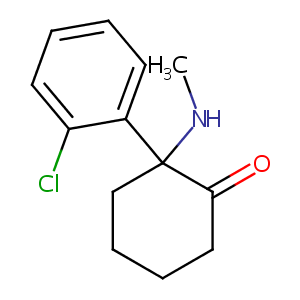
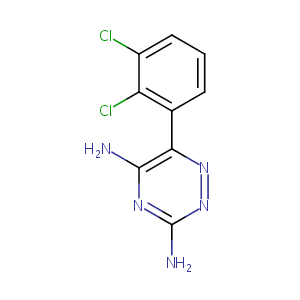
Ketamine Lamotrigine
Indication
Disease Entry Status REF
Major Depression Phase 1 [1]
Component Drugs Ketamine   DMT5HA4 Lamotrigine   DM8SXYG
Small molecular drug Small molecular drug
2D MOL 2D MOL
3D MOL 3D MOL

Molecular Interaction Atlas of This Drug Combination

Molecular Interaction Atlas (MIA)
Indication(s) of Ketamine
Disease Entry ICD 11 Status REF
Anaesthesia 9A78.6 Approved [2]
Anxiety N.A. Approved [3]
Bipolar disorder 6A60 Approved [3]
Depression 6A70-6A7Z Approved [3]
Traumatic brain injury NA07.Z Approved [3]
Coronavirus Disease 2019 (COVID-19) 1D6Y Phase 2 [4]
Chronic pain MG30 Investigative [3]
Ketamine Interacts with 1 DTT Molecule(s)
DTT Name DTT ID UniProt ID Mode of Action REF
N-methyl-D-aspartate receptor (NMDAR) TT9IK2Z NOUNIPROTAC Antagonist [7]
------------------------------------------------------------------------------------
Ketamine Interacts with 3 DME Molecule(s)
DME Name DME ID UniProt ID Mode of Action REF
Cytochrome P450 3A4 (CYP3A4) DE4LYSA CP3A4_HUMAN Metabolism [8]
Cytochrome P450 2C9 (CYP2C9) DE5IED8 CP2C9_HUMAN Metabolism [8]
Cytochrome P450 2B6 (CYP2B6) DEPKLMQ CP2B6_HUMAN Metabolism [8]
------------------------------------------------------------------------------------
Ketamine Interacts with 10 DOT Molecule(s)
DOT Name DOT ID UniProt ID Mode of Action REF
Zinc finger protein SNAI2 (SNAI2) OT7Y8EJ2 SNAI2_HUMAN Increases Expression [6]
Zinc finger protein SNAI1 (SNAI1) OTDPYAMC SNAI1_HUMAN Increases Expression [6]
Renin (REN) OT52GZR2 RENI_HUMAN Increases Expression [9]
Transforming growth factor beta-1 proprotein (TGFB1) OTV5XHVH TGFB1_HUMAN Increases Expression [6]
Amyloid-beta precursor protein (APP) OTKFD7R4 A4_HUMAN Increases Expression [10]
Cadherin-1 (CDH1) OTFJMXPM CADH1_HUMAN Decreases Expression [6]
Protein S100-A4 (S100A4) OTLRGFSQ S10A4_HUMAN Increases Expression [6]
DNA damage-inducible transcript 3 protein (DDIT3) OTI8YKKE DDIT3_HUMAN Increases Expression [11]
Actin, aortic smooth muscle (ACTA2) OTEDLG8E ACTA_HUMAN Increases Expression [6]
Sodium/hydrogen exchanger 6 (SLC9A6) OT5N47TC SL9A6_HUMAN Decreases Expression [10]
------------------------------------------------------------------------------------
⏷ Show the Full List of 10 DOT(s)
Indication(s) of Lamotrigine
Disease Entry ICD 11 Status REF
Bipolar disorder 6A60 Approved [5]
Epilepsy 8A60-8A68 Approved [5]
Lamotrigine Interacts with 1 DTT Molecule(s)
DTT Name DTT ID UniProt ID Mode of Action REF
Voltage-gated sodium channel alpha Nav1.9 (SCN11A) TTN9VTF SCNBA_HUMAN Blocker [13]
------------------------------------------------------------------------------------
Lamotrigine Interacts with 2 DTP Molecule(s)
DTP Name DTP ID UniProt ID Mode of Action REF
P-glycoprotein 1 (ABCB1) DTUGYRD MDR1_HUMAN Substrate [14]
Organic cation transporter 1 (SLC22A1) DTT79CX S22A1_HUMAN Substrate [15]
------------------------------------------------------------------------------------
Lamotrigine Interacts with 3 DME Molecule(s)
DME Name DME ID UniProt ID Mode of Action REF
UDP-glucuronosyltransferase 1A1 (UGT1A1) DEYGVN4 UD11_HUMAN Metabolism [16]
UDP-glucuronosyltransferase 1A3 (UGT1A3) DEF2WXN UD13_HUMAN Metabolism [17]
UDP-glucuronosyltransferase 1A4 (UGT1A4) DELOY3P UD14_HUMAN Metabolism [18]
------------------------------------------------------------------------------------
Lamotrigine Interacts with 8 DOT Molecule(s)
DOT Name DOT ID UniProt ID Mode of Action REF
ATP-dependent translocase ABCB1 (ABCB1) OTEJROBO MDR1_HUMAN Decreases Activity [19]
3 beta-hydroxysteroid dehydrogenase/Delta 5-->4-isomerase type 2 (HSD3B2) OT02MSKN 3BHS2_HUMAN Decreases Activity [20]
Steroidogenic acute regulatory protein, mitochondrial (STAR) OTFEZ5AI STAR_HUMAN Decreases Expression [21]
POU domain, class 5, transcription factor 1 (POU5F1) OTDHHN7O PO5F1_HUMAN Decreases Expression [21]
Sodium channel protein type 2 subunit alpha (SCN2A) OTUSYE4Z SCN2A_HUMAN Decreases Activity [22]
Protein lin-28 homolog A (LIN28A) OTJJBRCQ LN28A_HUMAN Decreases Expression [21]
Adrenocorticotropic hormone receptor (MC2R) OT6V19Y9 ACTHR_HUMAN Increases Response To Substance [23]
D(2) dopamine receptor (DRD2) OTBLXKEG DRD2_HUMAN Increases Response To Substance [23]
------------------------------------------------------------------------------------
⏷ Show the Full List of 8 DOT(s)

Test Results of This Drug Combination in Other Disease Systems

Indication DrugCom ID Cell Line Status REF
Mental Disorders DCQZTVE N. A. Phase 1 [24]
------------------------------------------------------------------------------------

References

1 ClinicalTrials.gov (NCT00419003) Research Study for Major Depressive Disorder: Investigation of Glutamate Medications
2 FDA Approved Drug Products from FDA Official Website. 2019. Application Number: (ANDA) 076092.
3 Ketamine FDA Label
4 ClinicalTrials.gov (NCT04365985) Study of Immunomodulation Using Naltrexone and Ketamine for COVID-19. U.S. National Institutes of Health.
5 URL: http://www.guidetopharmacology.org Nucleic Acids Res. 2015 Oct 12. pii: gkv1037. The IUPHAR/BPS Guide to PHARMACOLOGY in 2016: towards curated quantitative interactions between 1300 protein targets and 6000 ligands. (Ligand id: 2622).
6 Ketamine-induced bladder fibrosis involves epithelial-to-mesenchymal transition mediated by transforming growth factor-1. Am J Physiol Renal Physiol. 2017 Oct 1;313(4):F961-F972. doi: 10.1152/ajprenal.00686.2016. Epub 2017 Mar 22.
7 Ketamine modulates theta and gamma oscillations. J Cogn Neurosci. 2010 Jul;22(7):1452-64.
8 Contribution of CYP3A4, CYP2B6, and CYP2C9 isoforms to N-demethylation of ketamine in human liver microsomes. Drug Metab Dispos. 2002 Jul;30(7):853-8.
9 Ketamine hypertension and the renin-angiotensin system. Clin Exp Hypertens A. 1983;5(6):875-83. doi: 10.3109/10641968309081814.
10 Ketamine promotes the amyloidogenic pathway by regulating endosomal pH. Toxicology. 2022 Apr 15;471:153163. doi: 10.1016/j.tox.2022.153163. Epub 2022 Apr 1.
11 Lipoxin A4 methyl ester attenuated ketamine-induced neurotoxicity in SH-SY5Y cells via regulating leptin pathway. Toxicol In Vitro. 2023 Jun;89:105581. doi: 10.1016/j.tiv.2023.105581. Epub 2023 Mar 11.
12 Expression of the human UGT1 locus in transgenic mice by 4-chloro-6-(2,3-xylidino)-2-pyrimidinylthioacetic acid (WY-14643) and implications on drug metabolism through peroxisome proliferator-activated receptor alpha activation. Drug Metab Dispos. 2007 Mar;35(3):419-27.
13 The effects of lamotrigine on the acquisition and expression of morphine-induced place preference in mice. Pak J Biol Sci. 2009 Jan 1;12(1):33-9.
14 Several major antiepileptic drugs are substrates for human P-glycoprotein. Neuropharmacology. 2008 Dec;55(8):1364-75.
15 Lamotrigine is a substrate for OCT1 in brain endothelial cells. Biochem Pharmacol. 2012 Mar 15;83(6):805-14.
16 Drug-drug interactions for UDP-glucuronosyltransferase substrates: a pharmacokinetic explanation for typically observed low exposure (AUCi/AUC) ratios. Drug Metab Dispos. 2004 Nov;32(11):1201-8.
17 Variation in glucuronidation of lamotrigine in human liver microsomes. Xenobiotica. 2009 May;39(5):355-63.
18 Studies on induction of lamotrigine metabolism in transgenic UGT1 mice. Xenobiotica. 2009 Nov;39(11):826-35.
19 Functional evaluation of polymorphisms in the human ABCB1 gene and the impact on clinical responses of antiepileptic drugs. Pharmacogenet Genomics. 2008 May;18(5):390-402. doi: 10.1097/FPC.0b013e3282f85e36.
20 Effects of anticonvulsants on human p450c17 (17alpha-hydroxylase/17,20 lyase) and 3beta-hydroxysteroid dehydrogenase type 2. Epilepsia. 2005 Mar;46(3):444-8.
21 Antiepileptic drugs are endocrine disruptors for the human fetal testis ex vivo. Toxicol Sci. 2023 Sep 28;195(2):169-183. doi: 10.1093/toxsci/kfad076.
22 Electrophysiological and pharmacological properties of the human brain type IIA Na+ channel expressed in a stable mammalian cell line. Pflugers Arch. 2001 Jan;441(4):425-33. doi: 10.1007/s004240000448.
23 Genetic association study of treatment response with olanzapine/fluoxetine combination or lamotrigine in bipolar I depression. J Clin Psychiatry. 2010 May;71(5):599-605. doi: 10.4088/JCP.08m04632gre. Epub 2009 Dec 15.
24 ClinicalTrials.gov (NCT02708849) The Sustained Effects of Ketamine