General Information of Drug Combination (ID: DCYP3D5)

Drug Combination Name
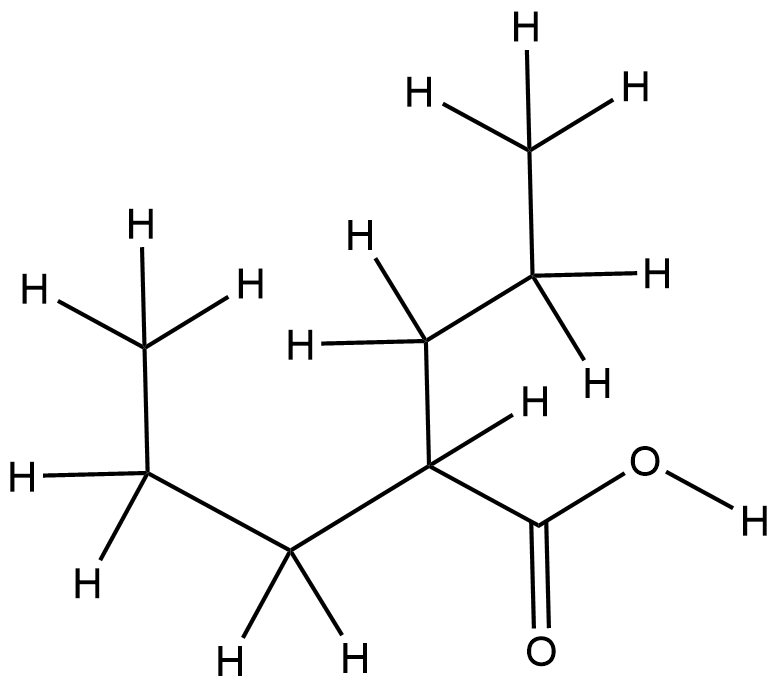
Lenalidomide Valproic Acid
Indication
Disease Entry Status REF
Solid Tumors Phase 1 [1]
Component Drugs Lenalidomide   DM6Q7U4 Valproic Acid   DMS49KH
Small molecular drug Small molecular drug
2D MOL 2D MOL
3D MOL 3D MOL

Molecular Interaction Atlas of This Drug Combination

Molecular Interaction Atlas (MIA)
Indication(s) of Lenalidomide
Disease Entry ICD 11 Status REF
Adult T-cell leukemia/lymphoma N.A. Approved [2]
Advanced cancer 2A00-2F9Z Approved [2]
Complex regional pain syndrome type 1 N.A. Approved [2]
Hepatosplenic T-cell lymphoma N.A. Approved [2]
Large granular lymphocytic leukemia 2A90.1 Approved [2]
Leukemia N.A. Approved [2]
MALT lymphoma N.A. Approved [2]
Multiple myeloma 2A83 Approved [3]
Nodal marginal zone lymphoma 2A85.0 Approved [2]
Pain MG30-MG3Z Approved [2]
Plasma cell myeloma 2A83.1 Approved [2]
Primary cutaneous peripheral T-cell lymphoma not otherwise specified N.A. Approved [2]
Prolymphocytic leukaemia 2A82.1 Approved [2]
Recurrent adult burkitt lymphoma 2A85.6 Approved [2]
Small intestine lymphoma N.A. Approved [2]
Splenic marginal zone lymphoma N.A. Approved [2]
Testicular lymphoma N.A. Approved [2]
Urinary bladder neoplasm N.A. Approved [2]
Waldenstrom macroglobulinemia 2A85.4 Approved [2]
Coronavirus Disease 2019 (COVID-19) 1D6Y Phase 3 [4]
Colon cancer 2B90.Z Investigative [2]
Lenalidomide Interacts with 1 DTT Molecule(s)
DTT Name DTT ID UniProt ID Mode of Action REF
Tumor necrosis factor (TNF) TTF8CQI TNFA_HUMAN Inhibitor [7]
------------------------------------------------------------------------------------
Lenalidomide Interacts with 1 DTP Molecule(s)
DTP Name DTP ID UniProt ID Mode of Action REF
P-glycoprotein 1 (ABCB1) DTUGYRD MDR1_HUMAN Substrate [8]
------------------------------------------------------------------------------------
Lenalidomide Interacts with 5 DOT Molecule(s)
DOT Name DOT ID UniProt ID Mode of Action REF
Tumor necrosis factor receptor superfamily member 1A (TNFRSF1A) OT2D9DOV TNR1A_HUMAN Decreases Expression [9]
Tumor necrosis factor receptor superfamily member 1B (TNFRSF1B) OTDS2EAR TNR1B_HUMAN Decreases Expression [9]
Interleukin-6 receptor subunit beta (IL6ST) OT1N9C70 IL6RB_HUMAN Decreases Expression [9]
DNA damage-binding protein 1 (DDB1) OTTR2L3Z DDB1_HUMAN Affects Binding [10]
Sal-like protein 4 (SALL4) OTC08PR5 SALL4_HUMAN Affects Binding [11]
------------------------------------------------------------------------------------
Indication(s) of Valproic Acid
Disease Entry ICD 11 Status REF
Absence epilepsy N.A. Approved [5]
Epilepsy 8A60-8A68 Approved [5]
Glioblastoma 2A00 Approved [5]
Coronavirus Disease 2019 (COVID-19) 1D6Y Investigative [6]
Neuroblastoma 2D11.2 Investigative [5]

References

1 ClinicalTrials.gov (NCT00495872) Valproic Acid-Based 2-Agent Oral Regimens for Patients With Advanced Solid Tumor
2 Lenalidomide FDA Label
3 URL: http://www.guidetopharmacology.org Nucleic Acids Res. 2015 Oct 12. pii: gkv1037. The IUPHAR/BPS Guide to PHARMACOLOGY in 2016: towards curated quantitative interactions between 1300 protein targets and 6000 ligands. (Ligand id: 7331).
4 Low-dose Lenalidomide for Non-severe COVID-19 Treatment Trial (GETAFE)
5 Valproic Acid FDA Label
6 Immunopharmacological management of COVID-19: Potential therapeutic role of valproic acid. Med Hypotheses. 2020 May 27;143:109891.
7 Thalidomide and thalidomide analogues for maintenance of remission in Crohn's disease. Cochrane Database Syst Rev. 2009 Apr 15;(2):CD007351.
8 DrugBank 5.0: a major update to the DrugBank database for 2018. Nucleic Acids Res. 2018 Jan 4;46(D1):D1074-D1082. (ID: DB00480)
9 Circulating endothelial progenitor cells in multiple myeloma: implications and significance. Blood. 2005 Apr 15;105(8):3286-94. doi: 10.1182/blood-2004-06-2101. Epub 2004 Dec 23.
10 Structure of the human Cereblon-DDB1-lenalidomide complex reveals basis for responsiveness to thalidomide analogs. Nat Struct Mol Biol. 2014 Sep;21(9):803-9. doi: 10.1038/nsmb.2874. Epub 2014 Aug 10.
11 Thalidomide promotes degradation of SALL4, a transcription factor implicated in Duane Radial Ray syndrome. Elife. 2018 Aug 1;7:e38430. doi: 10.7554/eLife.38430.