
Details of the Drug
General Information of Drug (ID: DMT1OZ6)
| Drug Name |
MK-2206
|
||||||||||||||||||||||
|---|---|---|---|---|---|---|---|---|---|---|---|---|---|---|---|---|---|---|---|---|---|---|---|
| Synonyms |
MK-2206; 1032349-93-1; UNII-51HZG6MP1K; MK 2206; 51HZG6MP1K; CHEMBL1079175; CHEBI:67271; NCGC00186465-01; 8-[4-(1-aminocyclobutyl)phenyl]-9-phenyl-2H-[1,2,4]triazolo[3,4-f][1,6]naphthyridin-3-one; DSSTox_RID_83143; DSSTox_CID_28874; 8-[4-(1-aminocyclobutyl)phenyl]-9-phenyl-1,2,4-Triazolo[3,4-f][1,6]naphthyridin-3(2H)-one; DSSTox_GSID_48948; 8-[4-(1-aminocyclobutyl)phenyl]-9-phenyl[1,2,4]triazolo[3,4-f][1,6]naphthyridin-3(2H)-one; 1,2,4-Triazolo[3,4-f][1,6]naphthyridin-3(2H)-one, 8-[4-(1-aminocyclobutyl)phenyl]-9-phenyl-;
|
||||||||||||||||||||||
| Indication |
|
||||||||||||||||||||||
| Drug Type |
Small molecular drug
|
||||||||||||||||||||||
| Structure |
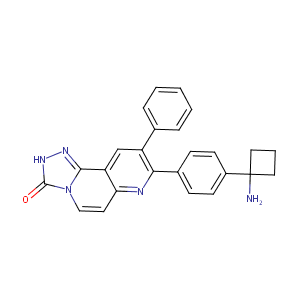 |
||||||||||||||||||||||
| 3D MOL | 2D MOL | ||||||||||||||||||||||
| #Ro5 Violations (Lipinski): 0 | Molecular Weight (mw) | 407.5 | |||||||||||||||||||||
| Logarithm of the Partition Coefficient (xlogp) | 3 | ||||||||||||||||||||||
| Rotatable Bond Count (rotbonds) | 3 | ||||||||||||||||||||||
| Hydrogen Bond Donor Count (hbonddonor) | 2 | ||||||||||||||||||||||
| Hydrogen Bond Acceptor Count (hbondacc) | 4 | ||||||||||||||||||||||
| Chemical Identifiers |
|
||||||||||||||||||||||
| Cross-matching ID | |||||||||||||||||||||||
| Drug-Molecule Activity Atlas (DMA)NEW | Click to Jump to the Detailed DMA Information of This Drug | ||||||||||||||||||||||
| Drug Pharmacogenomic Perturbation (DPP)NEW | Click to Jump to the Detailed DPP Information of This Drug | ||||||||||||||||||||||
| Drug ADMET Endpoint Profile (DAE)NEW | Click to Jump to the Detailed DAE Information of This Drug | ||||||||||||||||||||||
| Combinatorial Drugs (CBD) | Click to Jump to the Detailed CBD Information of This Drug | ||||||||||||||||||||||
| Repurposed Drugs (RPD) | Click to Jump to the Detailed RPD Information of This Drug | ||||||||||||||||||||||
Molecular Interaction Atlas of This Drug
 Drug Therapeutic Target (DTT) |
|
|||||||||||||||||||||||||||||||||||||||||||||||||||||||||||||||||
|---|---|---|---|---|---|---|---|---|---|---|---|---|---|---|---|---|---|---|---|---|---|---|---|---|---|---|---|---|---|---|---|---|---|---|---|---|---|---|---|---|---|---|---|---|---|---|---|---|---|---|---|---|---|---|---|---|---|---|---|---|---|---|---|---|---|---|
 Drug Off-Target (DOT) |
|
|||||||||||||||||||||||||||||||||||||||||||||||||||||||||||||||||
| Molecular Interaction Atlas (MIA) | ||||||||||||||||||||||||||||||||||||||||||||||||||||||||||||||||||
Molecular Expression Atlas of This Drug
| The Studied Disease | Rectal adenocarcinoma | |||||||||||||||||
|---|---|---|---|---|---|---|---|---|---|---|---|---|---|---|---|---|---|---|
| ICD Disease Classification | 2B92 | |||||||||||||||||
|
||||||||||||||||||
| Molecular Expression Atlas (MEA) | ||||||||||||||||||
References