General Information of Drug Combination (ID: DC3P025)

Drug Combination Name
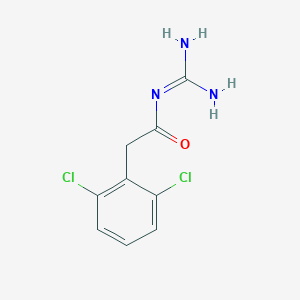
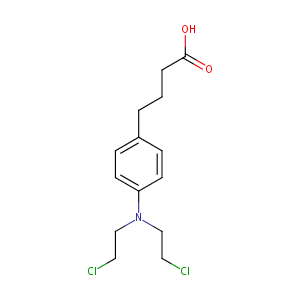
Guanfacine Chlorambucil
Indication
Disease Entry Status REF
Chronic myelogenous leukemia Investigative [1]
Component Drugs Guanfacine   DMPN5IH Chlorambucil   DMRKE63
N.A. Small molecular drug
2D MOL 2D MOL
3D MOL 3D MOL
High-throughput Screening Result Testing Cell Line: KBM-7
Zero Interaction Potency (ZIP) Score: 5.51
Bliss Independence Score: 5.51
Loewe Additivity Score: 20.55
LHighest Single Agent (HSA) Score: 20.55

Molecular Interaction Atlas of This Drug Combination

Molecular Interaction Atlas (MIA)
Indication(s) of Guanfacine
Disease Entry ICD 11 Status REF
Attention deficit hyperactivity disorder 6A05.Z Approved [2]
Alzheimer disease 8A20 Phase 3 [3]
Guanfacine Interacts with 1 DTT Molecule(s)
DTT Name DTT ID UniProt ID Mode of Action REF
Adrenergic receptor alpha-2A (ADRA2A) TTWG9A4 ADA2A_HUMAN Agonist [6]
------------------------------------------------------------------------------------
Guanfacine Interacts with 1 DTP Molecule(s)
DTP Name DTP ID UniProt ID Mode of Action REF
P-glycoprotein 1 (ABCB1) DTUGYRD MDR1_HUMAN Substrate [7]
------------------------------------------------------------------------------------
Indication(s) of Chlorambucil
Disease Entry ICD 11 Status REF
Chronic lymphocytic leukaemia 2A82.0 Approved [4]
Small lymphocytic lymphoma 2A82.0 Approved [5]
Classic Hodgkin lymphoma N.A. Investigative [5]
Follicular lymphoma 2A80 Investigative [5]
Chlorambucil Interacts with 1 DTT Molecule(s)
DTT Name DTT ID UniProt ID Mode of Action REF
DNA replication (DNA repli) TTABD5E NOUNIPROTAC Intercalator [8]
------------------------------------------------------------------------------------
Chlorambucil Interacts with 2 DTP Molecule(s)
DTP Name DTP ID UniProt ID Mode of Action REF
P-glycoprotein 1 (ABCB1) DTUGYRD MDR1_HUMAN Substrate [9]
Organic anion transporting polypeptide 1A2 (SLCO1A2) DTE2B1D SO1A2_HUMAN Substrate [10]
------------------------------------------------------------------------------------
Chlorambucil Interacts with 1 DME Molecule(s)
DME Name DME ID UniProt ID Mode of Action REF
Glutathione S-transferase pi (GSTP1) DEK6079 GSTP1_HUMAN Metabolism [11]
------------------------------------------------------------------------------------
Chlorambucil Interacts with 21 DOT Molecule(s)
DOT Name DOT ID UniProt ID Mode of Action REF
ATP-dependent translocase ABCB1 (ABCB1) OTEJROBO MDR1_HUMAN Increases Expression [12]
Aldo-keto reductase family 1 member B10 (AKR1B10) OTOA4HTH AK1BA_HUMAN Decreases Expression [13]
Aldo-keto reductase family 1 member C2 (AKR1C2) OTQ2XMO3 AK1C2_HUMAN Decreases Expression [13]
Bcl-2-interacting killer (BIK) OTTH1T3D BIK_HUMAN Increases Expression [13]
F-box only protein 30 (FBXO30) OTD1P6LA FBX30_HUMAN Decreases Expression [13]
Histone chaperone ASF1A (ASF1A) OT4S44GP ASF1A_HUMAN Decreases Expression [13]
Tumor necrosis factor receptor superfamily member 10A (TNFRSF10A) OTBPCU2O TR10A_HUMAN Affects Expression [14]
Tumor necrosis factor receptor superfamily member 10B (TNFRSF10B) OTA1CPBV TR10B_HUMAN Increases Expression [15]
Baculoviral IAP repeat-containing protein 5 (BIRC5) OTILXZYL BIRC5_HUMAN Affects Expression [16]
Myc proto-oncogene protein (MYC) OTPV5LUK MYC_HUMAN Increases Expression [17]
Histone H2AX (H2AX) OT18UX57 H2AX_HUMAN Increases Phosphorylation [18]
HLA class II histocompatibility antigen, DP alpha 1 chain (HLA-DPA1) OT7OG7Y2 DPA1_HUMAN Affects Expression [19]
Tumor necrosis factor receptor superfamily member 6 (FAS) OTP9XG86 TNR6_HUMAN Increases Expression [20]
14-3-3 protein sigma (SFN) OTLJCZ1U 1433S_HUMAN Increases Expression [15]
Cyclin-dependent kinase inhibitor 1 (CDKN1A) OTQWHCZE CDN1A_HUMAN Increases Expression [21]
Histone H4 (H4C1) OTB71W46 H4_HUMAN Decreases Expression [18]
kinase isozyme 4, mitochondrial (PDK4) OTCMHMBZ PDK4_HUMAN Affects Expression [22]
Bcl-2-binding component 3, isoforms 3/4 (BBC3) OTUAXDAY BBC3B_HUMAN Increases Expression [16]
Fanconi anemia group G protein (FANCG) OT7MC8TZ FANCG_HUMAN Increases Response To Substance [23]
Baculoviral IAP repeat-containing protein 2 (BIRC2) OTFXFREP BIRC2_HUMAN Decreases Response To Substance [24]
Fanconi anemia group C protein (FANCC) OTTIDM3P FANCC_HUMAN Increases Response To Substance [23]
------------------------------------------------------------------------------------
⏷ Show the Full List of 21 DOT(s)

References

1 CheMBL Affinity Phenotypic Cellular Interaction Assay ID: CHEMBL1125966
2 Guanfacine FDA Label
3 ClinicalTrials.gov (NCT03116126) Randomised Clinical Trial of Noradrenergic Add-on Therapy With Extended-Release Guanfacine in Alzheimer's Disease. U.S.National Institutes of Health.
4 URL: http://www.guidetopharmacology.org Nucleic Acids Res. 2015 Oct 12. pii: gkv1037. The IUPHAR/BPS Guide to PHARMACOLOGY in 2016: towards curated quantitative interactions between 1300 protein targets and 6000 ligands. (Ligand id: 7143).
5 Chlorambucil FDA Label
6 Scientific rationale for the use of alpha2A-adrenoceptor agonists in treating neuroinflammatory cognitive disorders. Mol Psychiatry. 2023 Apr 7:1-13.
7 An in vitro evaluation of guanfacine as a substrate for P-glycoprotein. Neuropsychiatr Dis Treat. 2011;7:501-5.
8 Roles of DNA repair and reductase activity in the cytotoxicity of the hypoxia-activated dinitrobenzamide mustard PR-104A. Mol Cancer Ther. 2009 Jun;8(6):1714-23.
9 Mammalian drug efflux transporters of the ATP binding cassette (ABC) family in multidrug resistance: A review of the past decade. Cancer Lett. 2016 Jan 1;370(1):153-64.
10 Transporters and renal drug elimination. Annu Rev Pharmacol Toxicol. 2004;44:137-66.
11 The anti-cancer drug chlorambucil as a substrate for the human polymorphic enzyme glutathione transferase P1-1: kinetic properties and crystallographic characterisation of allelic variants. J Mol Biol. 2008 Jun 27;380(1):131-44.
12 Enhanced in vitro invasiveness and drug resistance with altered gene expression patterns in a human lung carcinoma cell line after pulse selection with anticancer drugs. Int J Cancer. 2004 Sep 10;111(4):484-93. doi: 10.1002/ijc.20230.
13 Oxidative stress mechanisms do not discriminate between genotoxic and nongenotoxic liver carcinogens. Chem Res Toxicol. 2015 Aug 17;28(8):1636-46.
14 Role of the TRAIL/APO2-L death receptors in chlorambucil- and fludarabine-induced apoptosis in chronic lymphocytic leukemia. Oncogene. 2003 Nov 13;22(51):8356-69. doi: 10.1038/sj.onc.1207004.
15 Differential effects of chemotherapeutic drugs versus the MDM-2 antagonist nutlin-3 on cell cycle progression and induction of apoptosis in SKW6.4 lymphoblastoid B-cells. J Cell Biochem. 2008 May 15;104(2):595-605. doi: 10.1002/jcb.21649.
16 Differential gene expression induction by TRAIL in B chronic lymphocytic leukemia (B-CLL) cells showing high versus low levels of Zap-70. J Cell Physiol. 2007 Oct;213(1):229-36. doi: 10.1002/jcp.21116.
17 Theophylline synergizes with chlorambucil in inducing apoptosis of B-chronic lymphocytic leukemia cells. Blood. 1996 Sep 15;88(6):2172-82.
18 A two-hit mechanism for pre-mitotic arrest of cancer cell proliferation by a polyamide-alkylator conjugate. Cell Cycle. 2006 Jul;5(14):1537-48. doi: 10.4161/cc.5.14.2913. Epub 2006 Jul 17.
19 Systems pharmacological analysis of drugs inducing stevens-johnson syndrome and toxic epidermal necrolysis. Chem Res Toxicol. 2015 May 18;28(5):927-34. doi: 10.1021/tx5005248. Epub 2015 Apr 3.
20 Caspase 8 activation independent of Fas (CD95/APO-1) signaling may mediate killing of B-chronic lymphocytic leukemia cells by cytotoxic drugs or gamma radiation. Blood. 2001 Nov 1;98(9):2800-7. doi: 10.1182/blood.v98.9.2800.
21 Disruption of gene expression and induction of apoptosis in prostate cancer cells by a DNA-damaging agent tethered to an androgen receptor ligand. Chem Biol. 2005 Jul;12(7):779-87. doi: 10.1016/j.chembiol.2005.05.009.
22 The MT1G Gene in LUHMES Neurons Is a Sensitive Biomarker of Neurotoxicity. Neurotox Res. 2020 Dec;38(4):967-978. doi: 10.1007/s12640-020-00272-3. Epub 2020 Sep 1.
23 In vivo therapeutic responses contingent on Fanconi anemia/BRCA2 status of the tumor. Clin Cancer Res. 2005 Oct 15;11(20):7508-15. doi: 10.1158/1078-0432.CCR-05-1048.
24 Expression and prognostic significance of IAP-family genes in human cancers and myeloid leukemias. Clin Cancer Res. 2000 May;6(5):1796-803.