| 1 |
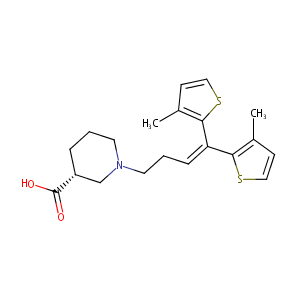
CheMBL Affinity Phenotypic Cellular Interaction Assay ID: CHEMBL1125966
|
| 2 |
URL: http://www.guidetopharmacology.org Nucleic Acids Res. 2015 Oct 12. pii: gkv1037. The IUPHAR/BPS Guide to PHARMACOLOGY in 2016: towards curated quantitative interactions between 1300 protein targets and 6000 ligands. (Ligand id: 4818).
|
| 3 |
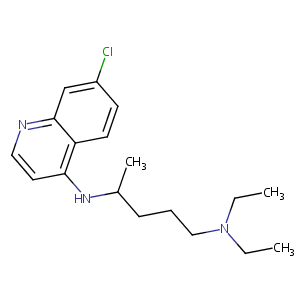
URL: http://www.guidetopharmacology.org Nucleic Acids Res. 2015 Oct 12. pii: gkv1037. The IUPHAR/BPS Guide to PHARMACOLOGY in 2016: towards curated quantitative interactions between 1300 protein targets and 6000 ligands. (Ligand id: 5535).
|
| 4 |
Chloroquine FDA Label
|
| 5 |
ClinicalTrials.gov (NCT04360759) Chloroquine Outpatient Treatment Evaluation for HIV-Covid-19. U.S. National Institutes of Health.
|
| 6 |
Coronaviruses - drug discovery and therapeutic options. Nat Rev Drug Discov. 2016 May;15(5):327-47.
|
| 7 |
Therapeutic options for the 2019 novel coronavirus (2019-nCoV). Nat Rev Drug Discov. 2020 Mar;19(3):149-150.
|
| 8 |
Glutamate- and GABA-based CNS therapeutics. Curr Opin Pharmacol. 2006 Feb;6(1):7-17.
|
| 9 |
URL: http://www.guidetopharmacology.org Nucleic Acids Res. 2015 Oct 12. pii: gkv1037. The IUPHAR/BPS Guide to PHARMACOLOGY in 2016: towards curated quantitative interactions between 1300 protein targets and 6000 ligands. (Target id: 929).
|
| 10 |
Enzyme induction and inhibition by new antiepileptic drugs: a review of human studies. Fundam Clin Pharmacol. 2000 Jul-Aug;14(4):301-19.
|
| 11 |
Actual and Predicted Pharmacokinetic Interactions Between Anticonvulsants and Antiretrovirals.
|
| 12 |
Remdesivir and chloroquine effectively inhibit the recently emerged novel coronavirus (2019-nCoV) in vitro. Cell Res. 2020 Mar;30(3):269-271.
|
| 13 |
Drugs@FDA. U.S. Food and Drug Administration. U.S. Department of Health & Human Services.
|
| 14 |
Improving the prediction of the brain disposition for orally administered drugs using BDDCS. Adv Drug Deliv Rev. 2012 Jan;64(1):95-109.
|
| 15 |
Molecular mechanism of renal tubular secretion of the antimalarial drug chloroquine. Antimicrob Agents Chemother. 2011 Jul;55(7):3091-8.
|
| 16 |
Cytochrome P450 2C8 and CYP3A4/5 are involved in chloroquine metabolism in human liver microsomes. Arch Pharm Res. 2003 Aug;26(8):631-7.
|
| 17 |
In vitro metabolism of chloroquine: identification of CYP2C8, CYP3A4, and CYP2D6 as the main isoforms catalyzing N-desethylchloroquine formation. Drug Metab Dispos. 2003 Jun;31(6):748-54.
|
| 18 |
Halofantrine and chloroquine inhibit CYP2D6 activity in healthy Zambians. Br J Clin Pharmacol. 1998 Mar;45(3):315-7.
|
| 19 |
Short communication: high prevalence of the cytochrome P450 2C8*2 mutation in Northern Ghana. Trop Med Int Health. 2005 Dec;10(12):1271-3.
|
| 20 |
Autophagy inhibition upregulates CD4(+) tumor infiltrating lymphocyte expression via miR-155 regulation and TRAIL activation. Mol Oncol. 2016 Dec;10(10):1516-1531. doi: 10.1016/j.molonc.2016.08.005. Epub 2016 Sep 16.
|
| 21 |
Niclosamide, an anti-helminthic molecule, downregulates the retroviral oncoprotein Tax and pro-survival Bcl-2 proteins in HTLV-1-transformed T lymphocytes. Biochem Biophys Res Commun. 2015 Aug 14;464(1):221-228. doi: 10.1016/j.bbrc.2015.06.120. Epub 2015 Jun 23.
|
| 22 |
Chloroquine inhibits autophagic flux by decreasing autophagosome-lysosome fusion. Autophagy. 2018;14(8):1435-1455. doi: 10.1080/15548627.2018.1474314. Epub 2018 Jul 20.
|
| 23 |
Chloroquine and Hydroxychloroquine Increase Retinal Pigment Epithelial Layer Permeability. J Biochem Mol Toxicol. 2015 Jul;29(7):299-304. doi: 10.1002/jbt.21696. Epub 2015 Mar 9.
|
| 24 |
Artesunate alleviates liver fibrosis by regulating ferroptosis signaling pathway. Biomed Pharmacother. 2019 Jan;109:2043-2053. doi: 10.1016/j.biopha.2018.11.030. Epub 2018 Nov 26.
|
| 25 |
Sulindac metabolites induce proteosomal and lysosomal degradation of the epidermal growth factor receptor. Cancer Prev Res (Phila). 2010 Apr;3(4):560-72. doi: 10.1158/1940-6207.CAPR-09-0159. Epub 2010 Mar 23.
|
| 26 |
Protecting cells by protecting their vulnerable lysosomes: Identification of a new mechanism for preserving lysosomal functional integrity upon oxidative stress. PLoS Genet. 2017 Feb 9;13(2):e1006603. doi: 10.1371/journal.pgen.1006603. eCollection 2017 Feb.
|
| 27 |
NDRG1 inhibition sensitizes osteosarcoma cells to combretastatin A-4 through targeting autophagy. Cell Death Dis. 2017 Sep 14;8(9):e3048. doi: 10.1038/cddis.2017.438.
|
| 28 |
Reactive oxygen species mediate chloroquine-induced expression of chemokines by human astroglial cells. Glia. 2004 Jul;47(1):9-20. doi: 10.1002/glia.20017.
|
| 29 |
Inhibition of autophagic flux differently modulates cannabidiol-induced death in 2D and 3D glioblastoma cell cultures. Sci Rep. 2020 Feb 14;10(1):2687. doi: 10.1038/s41598-020-59468-4.
|
| 30 |
Increasing intratumor C/EBP- LIP and nitric oxide levels overcome resistance to doxorubicin in triple negative breast cancer. J Exp Clin Cancer Res. 2018 Nov 27;37(1):286. doi: 10.1186/s13046-018-0967-0.
|
| 31 |
Control of mammary tumor cell growth in vitro by novel cell differentiation and apoptosis agents. Breast Cancer Res Treat. 2002 Sep;75(2):107-17. doi: 10.1023/a:1019698807564.
|
| 32 |
Chronic use of chloroquine disrupts the urine concentration mechanism by lowering cAMP levels in the inner medulla. Am J Physiol Renal Physiol. 2012 Sep 15;303(6):F900-5. doi: 10.1152/ajprenal.00547.2011. Epub 2012 Jul 11.
|
| 33 |
Chloroquine has tumor-inhibitory and tumor-promoting effects in triple-negative breast cancer. Oncol Lett. 2013 Dec;6(6):1665-1672. doi: 10.3892/ol.2013.1602. Epub 2013 Oct 4.
|
| 34 |
Paradoxical Effect of Chloroquine Treatment in Enhancing Chikungunya Virus Infection. Viruses. 2018 May 17;10(5):268. doi: 10.3390/v10050268.
|
| 35 |
Cadmium induces triglyceride levels via microsomal triglyceride transfer protein (MTTP) accumulation caused by lysosomal deacidification regulated by endoplasmic reticulum (ER) Ca(2+) homeostasis. Chem Biol Interact. 2021 Oct 1;348:109649. doi: 10.1016/j.cbi.2021.109649. Epub 2021 Sep 10.
|
| 36 |
Toxicoproteomics reveals an effect of clozapine on autophagy in human liver spheroids. Toxicol Mech Methods. 2023 Jun;33(5):401-410. doi: 10.1080/15376516.2022.2156005. Epub 2022 Dec 19.
|
| 37 |
Inhibition of cholesterol metabolism underlies synergy between mTOR pathway inhibition and chloroquine in bladder cancer cells. Oncogene. 2016 Aug 25;35(34):4518-28. doi: 10.1038/onc.2015.511. Epub 2016 Feb 8.
|
| 38 |
Ataxia telangiectasia-mutated and p53 are potential mediators of chloroquine-induced resistance to mammary carcinogenesis. Cancer Res. 2007 Dec 15;67(24):12026-33. doi: 10.1158/0008-5472.CAN-07-3058.
|
| 39 |
Critical role of FoxO3a in alcohol-induced autophagy and hepatotoxicity. Am J Pathol. 2013 Dec;183(6):1815-1825. doi: 10.1016/j.ajpath.2013.08.011. Epub 2013 Oct 1.
|
| 40 |
Chloroquine aggravates the arsenic trioxide (As2O3)-induced apoptosis of acute promyelocytic leukemia NB4 cells via inhibiting lysosomal degradation in vitro. Eur Rev Med Pharmacol Sci. 2018 Oct;22(19):6412-6421. doi: 10.26355/eurrev_201810_16054.
|
| 41 |
Riluzole induces AR degradation via endoplasmic reticulum stress pathway in androgen-dependent and castration-resistant prostate cancer cells. Prostate. 2019 Feb;79(2):140-150. doi: 10.1002/pros.23719. Epub 2018 Oct 2.
|
| 42 |
Effects of SIDT2 on the miR-25/NOX4/HuR axis and SIRT3 mRNA stability lead to ROS-mediated TNF- expression in hydroquinone-treated leukemia cells. Cell Biol Toxicol. 2023 Oct;39(5):2207-2225. doi: 10.1007/s10565-022-09705-5. Epub 2022 Mar 18.
|
| 43 |
Downregulation of Organic Anion Transporting Polypeptide (OATP) 1B1 Transport Function by Lysosomotropic Drug Chloroquine: Implication in OATP-Mediated Drug-Drug Interactions. Mol Pharm. 2016 Mar 7;13(3):839-51. doi: 10.1021/acs.molpharmaceut.5b00763. Epub 2016 Feb 1.
|
| 44 |
NTAL is associated with treatment outcome, cell proliferation and differentiation in acute promyelocytic leukemia. Sci Rep. 2020 Jun 25;10(1):10315. doi: 10.1038/s41598-020-66223-2.
|
|
|
|
|
|
|