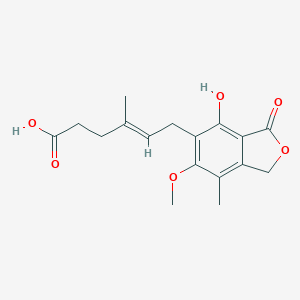
General Information of Drug Combination (ID: DC2Q5NW)

Drug Combination Name
Mebendazole Mycophenolic acid
Indication
Disease Entry Status REF
Chronic myelogenous leukemia Investigative [1]
Component Drugs Mebendazole   DMO14SG Mycophenolic acid   DMRBMAU
Small molecular drug N.A.
2D MOL 2D MOL
3D MOL 3D MOL
High-throughput Screening Result Testing Cell Line: KBM-7
Zero Interaction Potency (ZIP) Score: 5.84
Bliss Independence Score: 5.84
Loewe Additivity Score: 6.65
LHighest Single Agent (HSA) Score: 6.65

Molecular Interaction Atlas of This Drug Combination

Molecular Interaction Atlas (MIA)
Indication(s) of Mebendazole
Disease Entry ICD 11 Status REF
Ascariasis 1F62 Approved [2]
Enterobiasis 1F65 Approved [2]
Helminth infection 1F90.0 Approved [2]
Trichuris trichiura infection 1F6G Approved [2]
Worm infection 1F90.Z Approved [3]
Mebendazole Interacts with 1 DTT Molecule(s)
DTT Name DTT ID UniProt ID Mode of Action REF
Tubulin beta (TUBB) TTYFKSZ NOUNIPROTAC Binder [16]
------------------------------------------------------------------------------------
Mebendazole Interacts with 1 DME Molecule(s)
DME Name DME ID UniProt ID Mode of Action REF
Cytochrome P450 3A4 (CYP3A4) DE4LYSA CP3A4_HUMAN Metabolism [17]
------------------------------------------------------------------------------------
Mebendazole Interacts with 23 DOT Molecule(s)
DOT Name DOT ID UniProt ID Mode of Action REF
Proepiregulin (EREG) OTRM4NQY EREG_HUMAN Increases Expression [18]
Protein c-Fos (FOS) OTJBUVWS FOS_HUMAN Increases Expression [19]
Myc proto-oncogene protein (MYC) OTPV5LUK MYC_HUMAN Decreases Expression [20]
Antileukoproteinase (SLPI) OTUNFUU8 SLPI_HUMAN Increases Expression [18]
Protein S100-A8 (S100A8) OTVMOB3F S10A8_HUMAN Increases Expression [21]
Protein S100-A9 (S100A9) OTOARHCS S10A9_HUMAN Increases Expression [21]
ATP-dependent translocase ABCB1 (ABCB1) OTEJROBO MDR1_HUMAN Decreases Expression [22]
Hepatocyte growth factor receptor (MET) OT7K55MU MET_HUMAN Increases Expression [18]
Interleukin-6 receptor subunit alpha (IL6R) OTCQL07Z IL6RA_HUMAN Increases Expression [15]
Interleukin-8 (CXCL8) OTS7T5VH IL8_HUMAN Increases Expression [23]
Solute carrier family 2, facilitated glucose transporter member 1 (SLC2A1) OTA675TJ GTR1_HUMAN Decreases Expression [24]
C-C motif chemokine 2 (CCL2) OTAD2HEL CCL2_HUMAN Increases Expression [15]
Hexokinase-1 (HK1) OTMPHE8O HXK1_HUMAN Decreases Expression [24]
Mitogen-activated protein kinase 3 (MAPK3) OTCYKGKO MK03_HUMAN Increases Phosphorylation [23]
Mitogen-activated protein kinase 1 (MAPK1) OTH85PI5 MK01_HUMAN Increases Phosphorylation [23]
Mitogen-activated protein kinase 8 (MAPK8) OTEREYS5 MK08_HUMAN Increases Phosphorylation [23]
Mitogen-activated protein kinase 9 (MAPK9) OTCEVJ9E MK09_HUMAN Increases Phosphorylation [23]
Neurogenic locus notch homolog protein 1 (NOTCH1) OTI1WADQ NOTC1_HUMAN Decreases Expression [25]
Transcription factor HES-1 (HES1) OT8P19W2 HES1_HUMAN Decreases Expression [25]
PTB-containing, cubilin and LRP1-interacting protein (PID1) OT5YJ7FI PCLI1_HUMAN Increases Expression [18]
Rho guanine nucleotide exchange factor 2 (ARHGEF2) OTBQTFRT ARHG2_HUMAN Decreases Expression [26]
Multidrug and toxin extrusion protein 1 (SLC47A1) OTZX0U5Q S47A1_HUMAN Decreases Expression [22]
NACHT, LRR and PYD domains-containing protein 3 (NLRP3) OTZM6MHU NLRP3_HUMAN Increases Expression [21]
------------------------------------------------------------------------------------
⏷ Show the Full List of 23 DOT(s)
Indication(s) of Mycophenolic acid
Disease Entry ICD 11 Status REF
Crohn disease DD70 Approved [4]
Hepatosplenic T-cell lymphoma N.A. Approved [5]
Interstitial cystitis GC00.3 Approved [6]
Large granular lymphocytic leukemia 2A90.1 Approved [5]
Leukemia N.A. Approved [7]
Lupus nephritis 4A40.0Y Approved [8]
MALT lymphoma N.A. Approved [5]
Myeloid leukaemia 2B33.1 Approved [9]
Myeloproliferative neoplasm 2A20 Approved [10]
Nodal marginal zone lymphoma 2A85.0 Approved [5]
Primary cutaneous peripheral T-cell lymphoma not otherwise specified N.A. Approved [5]
Recurrent adult burkitt lymphoma 2A85.6 Approved [5]
Small intestine lymphoma N.A. Approved [5]
Splenic marginal zone lymphoma N.A. Approved [5]
Systemic lupus erythematosus 4A40.0 Approved [11]
Testicular lymphoma N.A. Approved [5]
Classic Hodgkin lymphoma N.A. Investigative [12]
Coronavirus Disease 2019 (COVID-19) 1D6Y Investigative [13]
Middle East Respiratory Syndrome (MERS) 1D64 Investigative [14]
Mycophenolic acid Interacts with 1 DTT Molecule(s)
DTT Name DTT ID UniProt ID Mode of Action REF
MERS-CoV papain-like proteinase (PL-PRO) TTYJOLE R1AB_CVEMC (854-2740) Inhibitor [14]
------------------------------------------------------------------------------------
Mycophenolic acid Interacts with 2 DTP Molecule(s)
DTP Name DTP ID UniProt ID Mode of Action REF
Multidrug resistance-associated protein 2 (ABCC2) DTFI42L MRP2_HUMAN Substrate [27]
Organic anion transporter 1 (SLC22A6) DTQ23VB S22A6_HUMAN Substrate [28]
------------------------------------------------------------------------------------
Mycophenolic acid Interacts with 2 DME Molecule(s)
DME Name DME ID UniProt ID Mode of Action REF
UDP-glucuronosyltransferase 2B7 (UGT2B7) DEB3CV1 UD2B7_HUMAN Metabolism [29]
UDP-glucuronosyltransferase 1A9 (UGT1A9) DE85D2P UD19_HUMAN Metabolism [29]
------------------------------------------------------------------------------------

References

1 CheMBL Affinity Phenotypic Cellular Interaction Assay ID: CHEMBL1125966
2 Mebendazole FDA Label
3 Emerging drugs for irritable bowel syndrome. Expert Opin Emerg Drugs. 2006 May;11(2):293-313.
4 Drugs@FDA. U.S. Food and Drug Administration. U.S. Department of Health & Human Services. 2015
5 A standard database for drug repositioning. Sci Data. 2017 Mar 14;4:170029.
6 Early termination of a trial of mycophenolate mofetil for treatment of interstitial cystitis/painful bladder syndrome: lessons learned. J Urol. 2011 Mar;185(3):901-6.
7 New conjugates of mycophenolic acid and their antiproliferative activity. J Asian Nat Prod Res. 2016 Nov;18(11):1057-62.
8 2019 Update of the Joint European League Against Rheumatism and European Renal Association-European Dialysis and Transplant Association (EULAR/ERA-EDTA) recommendations for the management of lupus nephritis. Ann Rheum Dis. 2020 Jun;79(6):713-723.
9 Mycophenolic Acid overcomes imatinib and nilotinib resistance of chronic myeloid leukemia cells by apoptosis or a senescent-like cell cycle arrest. Leuk Res Treatment. 2012;2012:861301.
10 Thiotepa, Busulfan, and Fludarabine Conditioning Regimen in T Cell-Replete HLA-Haploidentical Hematopoietic Stem Cell Transplantation. Biol Blood Marrow Transplant. 2019 Jul;25(7):1407-1415.
11 Systemic Lupus Erythematosus Management in Pregnancy. Int J Womens Health. 2022 Feb 15;14:199-211.
12 Identification of potential drugs for diffuse large b-cell lymphoma based on bioinformatics and Connectivity Map database. Pathol Res Pract. 2018 Nov;214(11):1854-1867.
13 Associations between immune-suppressive and stimulating drugs and novel COVID-19-a systematic review of current evidence. Ecancermedicalscience. 2020 Mar 27;14:1022.
14 SARS and MERS: recent insights into emerging coronaviruses. Nat Rev Microbiol. 2016 Aug;14(8):523-34.
15 Cell-based and cytokine-directed chemical screen to identify potential anti-multiple myeloma agents. Leuk Res. 2010 Jul;34(7):917-24. doi: 10.1016/j.leukres.2009.12.002. Epub 2010 Feb 8.
16 Flubendazole interferes with a wide spectrum of cell homeostatic mechanisms in Echinococcus granulosus protoscoleces. Parasitol Int. 2009 Sep;58(3):270-7.
17 Alveolar echinococcosis of the liver in an adult with human immunodeficiency virus type-1 infection. Infection. 2004 Oct;32(5):299-302.
18 An in vitro coculture system of human peripheral blood mononuclear cells with hepatocellular carcinoma-derived cells for predicting drug-induced liver injury. Arch Toxicol. 2021 Jan;95(1):149-168. doi: 10.1007/s00204-020-02882-4. Epub 2020 Aug 20.
19 Selection of drugs to test the specificity of the Tg.AC assay by screening for induction of the gadd153 promoter in vitro. Toxicol Sci. 2003 Aug;74(2):260-70. doi: 10.1093/toxsci/kfg113. Epub 2003 May 2.
20 Mebendazole induces apoptosis via C-MYC inactivation in malignant ascites cell line (AGP01). Toxicol In Vitro. 2019 Oct;60:305-312. doi: 10.1016/j.tiv.2019.06.010. Epub 2019 Jun 14.
21 Development of a cell-based assay system considering drug metabolism and immune- and inflammatory-related factors for the risk assessment of drug-induced liver injury. Toxicol Lett. 2014 Jul 3;228(1):13-24. doi: 10.1016/j.toxlet.2014.04.005. Epub 2014 Apr 15.
22 Mebendazole, an antiparasitic drug, inhibits drug transporters expression in preclinical model of gastric peritoneal carcinomatosis. Toxicol In Vitro. 2017 Sep;43:87-91. doi: 10.1016/j.tiv.2017.06.007. Epub 2017 Jun 9.
23 Stimulation of pro-inflammatory responses by mebendazole in human monocytic THP-1 cells through an ERK signaling pathway. Arch Toxicol. 2011 Mar;85(3):199-207. doi: 10.1007/s00204-010-0584-y. Epub 2010 Sep 17.
24 Mebendazole targets essential proteins in glucose metabolism leading gastric cancer cells to death. Toxicol Appl Pharmacol. 2023 Sep 15;475:116630. doi: 10.1016/j.taap.2023.116630. Epub 2023 Jul 18.
25 Mebendazole is a potent inhibitor to chemoresistant T cell acute lymphoblastic leukemia cells. Toxicol Appl Pharmacol. 2020 Jun 1;396:115001. doi: 10.1016/j.taap.2020.115001. Epub 2020 Apr 8.
26 Flubendazole and mebendazole impair migration and epithelial to mesenchymal transition in oral cell lines. Chem Biol Interact. 2018 Sep 25;293:124-132. doi: 10.1016/j.cbi.2018.07.026. Epub 2018 Jul 31.
27 C-440T/T-331C polymorphisms in the UGT1A9 gene affect the pharmacokinetics of mycophenolic acid in kidney transplantation. Pharmacogenomics. 2007 Sep;8(9):1127-41.
28 Interaction and transport characteristics of mycophenolic acid and its glucuronide via human organic anion transporters hOAT1 and hOAT3. Biochem Pharmacol. 2007 Jun 30;74(1):161-8.
29 Diabetes mellitus reduces activity of human UDP-glucuronosyltransferase 2B7 in liver and kidney leading to decreased formation of mycophenolic acid acyl-glucuronide metabolite. Drug Metab Dispos. 2011 Mar;39(3):448-55.