General Information of Drug Combination (ID: DC6LV9E)

Drug Combination Name
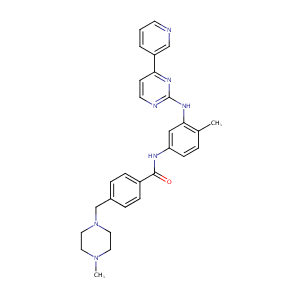
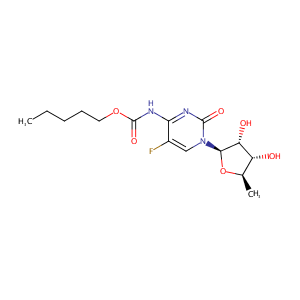
Imatinib Capecitabine
Indication
Disease Entry Status REF
Breast Cancer Phase 1 [1]
Component Drugs Imatinib   DM7RJXL Capecitabine   DMTS85L
Small molecular drug Small molecular drug
2D MOL 2D MOL
3D MOL 3D MOL

Molecular Interaction Atlas of This Drug Combination

Molecular Interaction Atlas (MIA)
Indication(s) of Imatinib
Disease Entry ICD 11 Status REF
Acute lymphoblastic leukaemia 2A85 Approved [2]
Blast phase chronic myelogenous leukemia, BCR-ABL1 positive N.A. Approved [3]
Choroidal neovascularization 9B76 Approved [3]
Chronic eosinophilic leukemia N.A. Approved [3]
Chronic myelogenous leukaemia 2A20.0 Approved [4]
Chronic myeloid leukaemia 2A20 Approved [5]
Dermatofibrosarcoma protuberans N.A. Approved [3]
Gastrointestinal stromal tumour 2B5B Approved [3]
Leukemia N.A. Approved [3]
Malignant peripheral nerve sheath tumor N.A. Approved [3]
Myeloproliferative neoplasm 2A20 Approved [3]
Pulmonary hypertension BB01 Approved [3]
Coronavirus Disease 2019 (COVID-19) 1D6Y Phase 3 [6]
Intestinal cancer 2C0Z Phase 3 [4]
Lung cancer 2C25.0 Phase 2 [4]
Idiopathic hypereosinophilic syndrome N.A. Investigative [3]
Middle East Respiratory Syndrome (MERS) 1D64 Investigative [7]
Scleroderma 4A42 Investigative [3]
Severe acute respiratory syndrome (SARS) 1D65 Investigative [7]
Systemic mastocytosis 2A21.0 Investigative [8]
Imatinib Interacts with 5 DTT Molecule(s)
DTT Name DTT ID UniProt ID Mode of Action REF
Mcl-1 messenger RNA (MCL-1 mRNA) TTN6ORK MCL1_HUMAN . [8]
Fusion protein Bcr-Abl (Bcr-Abl) TTS7G69 BCR_HUMAN-ABL1_HUMAN Inhibitor [14]
Platelet-derived growth factor receptor (PDGFR) TTI2WET NOUNIPROTAC Inhibitor [14]
Tyrosine-protein kinase Kit (KIT) TTX41N9 KIT_HUMAN Inhibitor [14]
HUMAN fusion protein Bcr-Abl (Bcr-Abl) TTE63HY BCR_HUMAN/ABL1_HUMAN Inhibitor [7]
------------------------------------------------------------------------------------
Imatinib Interacts with 6 DTP Molecule(s)
DTP Name DTP ID UniProt ID Mode of Action REF
P-glycoprotein 1 (ABCB1) DTUGYRD MDR1_HUMAN Substrate [15]
Breast cancer resistance protein (ABCG2) DTI7UX6 ABCG2_HUMAN Substrate [16]
Organic anion transporting polypeptide 1B1 (SLCO1B1) DT3D8F0 SO1B1_HUMAN Substrate [17]
Organic cation transporter 1 (SLC22A1) DTT79CX S22A1_HUMAN Substrate [18]
Organic anion transporting polypeptide 1A2 (SLCO1A2) DTE2B1D SO1A2_HUMAN Substrate [19]
Organic anion transporting polypeptide 1B3 (SLCO1B3) DT9C1TS SO1B3_HUMAN Substrate [17]
------------------------------------------------------------------------------------
⏷ Show the Full List of 6 DTP(s)
Imatinib Interacts with 8 DME Molecule(s)
DME Name DME ID UniProt ID Mode of Action REF
Cytochrome P450 3A4 (CYP3A4) DE4LYSA CP3A4_HUMAN Metabolism [20]
Cytochrome P450 1A2 (CYP1A2) DEJGDUW CP1A2_HUMAN Metabolism [21]
Cytochrome P450 2D6 (CYP2D6) DECB0K3 CP2D6_HUMAN Metabolism [22]
Cytochrome P450 3A5 (CYP3A5) DEIBDNY CP3A5_HUMAN Metabolism [23]
Cytochrome P450 3A7 (CYP3A7) DERD86B CP3A7_HUMAN Metabolism [24]
Cytochrome P450 2C8 (CYP2C8) DES5XRU CP2C8_HUMAN Metabolism [25]
Cytochrome P450 2C9 (CYP2C9) DE5IED8 CP2C9_HUMAN Metabolism [26]
Prostaglandin G/H synthase 1 (COX-1) DE073H6 PGH1_HUMAN Metabolism [22]
------------------------------------------------------------------------------------
⏷ Show the Full List of 8 DME(s)
Imatinib Interacts with 48 DOT Molecule(s)
DOT Name DOT ID UniProt ID Mode of Action REF
Broad substrate specificity ATP-binding cassette transporter ABCG2 (ABCG2) OTW8V2V1 ABCG2_HUMAN Increases Expression [27]
ATP-dependent translocase ABCB1 (ABCB1) OTEJROBO MDR1_HUMAN Increases Expression [27]
Aldehyde dehydrogenase, mitochondrial (ALDH2) OTKJ9I3N ALDH2_HUMAN Decreases Expression [28]
Eukaryotic translation initiation factor 4E (EIF4E) OTDAWNLA IF4E_HUMAN Decreases Expression [28]
Fructose-bisphosphate aldolase C (ALDOC) OTEC13I5 ALDOC_HUMAN Decreases Expression [28]
Pyruvate dehydrogenase E1 component subunit beta, mitochondrial (PDHB) OT2NHE5E ODPB_HUMAN Decreases Expression [28]
Eukaryotic translation initiation factor 4B (EIF4B) OTE8TXA8 IF4B_HUMAN Decreases Expression [28]
Phosphatidylinositol 3-kinase regulatory subunit alpha (PIK3R1) OT5BZ1J9 P85A_HUMAN Decreases Expression [28]
G1/S-specific cyclin-D3 (CCND3) OTNKPQ22 CCND3_HUMAN Decreases Expression [28]
Hexokinase-4 (GCK) OTR3Q0NN HXK4_HUMAN Decreases Expression [28]
Serine/threonine-protein phosphatase 2A catalytic subunit alpha isoform (PPP2CA) OT83PT85 PP2AA_HUMAN Increases Expression [28]
Bile salt export pump (ABCB11) OTRU7THO ABCBB_HUMAN Decreases Activity [29]
Tumor necrosis factor receptor superfamily member 10B (TNFRSF10B) OTA1CPBV TR10B_HUMAN Increases Expression [30]
Autophagy-related protein 13 (ATG13) OTYMHNEJ ATG13_HUMAN Increases Phosphorylation [11]
Keratin, type I cytoskeletal 14 (KRT14) OTUVZ1DW K1C14_HUMAN Increases Expression [31]
Heat shock protein beta-1 (HSPB1) OTHFZ8ED HSPB1_HUMAN Increases Expression [30]
Tyrosine-protein kinase Lck (LCK) OT883FG9 LCK_HUMAN Decreases Phosphorylation [32]
ATP-dependent 6-phosphofructokinase, muscle type (PFKM) OT1QY9JM PFKAM_HUMAN Decreases Expression [33]
Poly polymerase 1 (PARP1) OT310QSG PARP1_HUMAN Increases Cleavage [34]
Interleukin-8 (CXCL8) OTS7T5VH IL8_HUMAN Increases Expression [30]
Solute carrier family 2, facilitated glucose transporter member 1 (SLC2A1) OTA675TJ GTR1_HUMAN Decreases Expression [35]
Keratin, type II cytoskeletal 5 (KRT5) OTVGI9HT K2C5_HUMAN Increases Expression [31]
Histone H2AX (H2AX) OT18UX57 H2AX_HUMAN Increases Expression [36]
Transcription factor EB (TFEB) OTJUJJQY TFEB_HUMAN Affects Localization [11]
Insulin-like growth factor-binding protein 4 (IGFBP4) OT2HZRBD IBP4_HUMAN Increases Expression [30]
Interleukin-4 receptor subunit alpha (IL4R) OTTXOTCW IL4RA_HUMAN Increases Expression [30]
Mitogen-activated protein kinase 3 (MAPK3) OTCYKGKO MK03_HUMAN Decreases Phosphorylation [32]
Mitogen-activated protein kinase 1 (MAPK1) OTH85PI5 MK01_HUMAN Decreases Phosphorylation [32]
Catenin beta-1 (CTNNB1) OTZ932A3 CTNB1_HUMAN Decreases Expression [37]
Crk-like protein (CRKL) OTOYSD1R CRKL_HUMAN Decreases Phosphorylation [38]
Small ribosomal subunit protein eS6 (RPS6) OTT4D1LN RS6_HUMAN Decreases Phosphorylation [11]
Heat shock factor protein 1 (HSF1) OTYNJ4KP HSF1_HUMAN Increases Expression [30]
Transcription factor p65 (RELA) OTUJP9CN TF65_HUMAN Decreases Expression [37]
Bcl-2-like protein 1 (BCL2L1) OTRC5K9O B2CL1_HUMAN Decreases Expression [39]
Nuclear receptor subfamily 0 group B member 2 (NR0B2) OT7UVICX NR0B2_HUMAN Increases Expression [40]
NGFI-A-binding protein 2 (NAB2) OTG4BDF3 NAB2_HUMAN Increases Expression [30]
TRAF family member-associated NF-kappa-B activator (TANK) OTZSGFIK TANK_HUMAN Increases Expression [30]
NACHT, LRR and PYD domains-containing protein 3 (NLRP3) OTZM6MHU NLRP3_HUMAN Increases Expression [41]
Bile acid receptor (NR1H4) OTWZLPTB NR1H4_HUMAN Increases Activity [40]
Docking protein 1 (DOK1) OTGVRLW6 DOK1_HUMAN Decreases Phosphorylation [42]
Microtubule-associated proteins 1A/1B light chain 3B (MAP1LC3B) OTUYHB84 MLP3B_HUMAN Increases Expression [11]
Transcription factor SOX-17 (SOX17) OT9H4WWE SOX17_HUMAN Decreases Localization [43]
V-type proton ATPase subunit H (ATP6V1H) OTX17GQ9 VATH_HUMAN Increases Expression [11]
LYR motif-containing protein 9 (LYRM9) OT1MILTK LYRM9_HUMAN Affects Response To Substance [44]
Baculoviral IAP repeat-containing protein 5 (BIRC5) OTILXZYL BIRC5_HUMAN Decreases Response To Substance [45]
Bcl-2-like protein 11 (BCL2L11) OTNQQWFJ B2L11_HUMAN Increases Response To Substance [46]
Tyrosine-protein kinase Lyn (LYN) OTP686K2 LYN_HUMAN Decreases Response To Substance [38]
Serine/threonine-protein kinase PLK1 (PLK1) OTRZX45T PLK1_HUMAN Increases Response To Substance [34]
------------------------------------------------------------------------------------
⏷ Show the Full List of 48 DOT(s)
Indication(s) of Capecitabine
Disease Entry ICD 11 Status REF
Adenocarcinoma 2D40 Approved [9]
Colon adenocarcinoma N.A. Approved [9]
Colorectal cancer 2B91.Z Approved [10]
Metastasis from malignant tumor of colon N.A. Approved [9]
Rectal adenocarcinoma 2B92 Approved [9]
Breast cancer 2C60-2C65 Phase 3 [10]
Colon cancer 2B90.Z Investigative [9]
Gastric cancer 2B72 Investigative [9]
Capecitabine Interacts with 1 DTT Molecule(s)
DTT Name DTT ID UniProt ID Mode of Action REF
Candida Thymidylate synthase (Candi TMP1) TTU6BFZ TYSY_CANAL Inhibitor [49]
------------------------------------------------------------------------------------
Capecitabine Interacts with 2 DME Molecule(s)
DME Name DME ID UniProt ID Mode of Action REF
Cytidine aminohydrolase (CDA) DEKEDRC CDD_HUMAN Metabolism [50]
Thymidine phosphorylase (TYMP) DE4HCYL TYPH_HUMAN Metabolism [51]
------------------------------------------------------------------------------------
Capecitabine Interacts with 54 DOT Molecule(s)
DOT Name DOT ID UniProt ID Mode of Action REF
Cyclin-dependent kinase inhibitor 2A (CDKN2A) OTN0ZWAE CDN2A_HUMAN Decreases Expression [52]
C-C motif chemokine 21 (CCL21) OT7DOXEM CCL21_HUMAN Decreases Expression [47]
CCN family member 1 (CCN1) OTKJBEMD CCN1_HUMAN Decreases Expression [47]
Aquaporin-8 (AQP8) OT99JKME AQP8_HUMAN Increases Expression [47]
HLA class II histocompatibility antigen, DQ alpha 1 chain (HLA-DQA1) OTC6GISG DQA1_HUMAN Decreases Expression [47]
Interleukin-8 (CXCL8) OTS7T5VH IL8_HUMAN Increases Secretion [53]
B-lymphocyte antigen CD20 (MS4A1) OTZTVUBX CD20_HUMAN Decreases Expression [47]
Nuclear receptor subfamily 4immunitygroup A member 1 (NR4A1) OTGP6GA4 NR4A1_HUMAN Decreases Expression [47]
40-kDa huntingtin-associated protein (F8A1) OTXTQ59R HAP40_HUMAN Decreases Expression [47]
Chloride anion exchanger (SLC26A3) OTBNK2U2 S26A3_HUMAN Increases Expression [47]
Nuclear receptor subfamily 4 group A member 2 (NR4A2) OT3F9IR2 NR4A2_HUMAN Decreases Expression [47]
Serine/threonine-protein kinase SIK1 (SIK1) OT6FCHME SIK1_HUMAN Decreases Expression [47]
Hemoglobin subunit alpha (HBA1) OTW2BQF4 HBA_HUMAN Decreases Expression [47]
Fc receptor-like A (FCRLA) OT6MK4M1 FCRLA_HUMAN Decreases Expression [47]
Leucine-rich repeat-containing protein 15 (LRRC15) OTX7JL8H LRC15_HUMAN Decreases Expression [47]
C-C motif chemokine 19 (CCL19) OTQ2UJMH CCL19_HUMAN Decreases Expression [47]
E3 ubiquitin-protein ligase TRIM31 (TRIM31) OT7VW6RP TRI31_HUMAN Increases Expression [47]
Interleukin-17 receptor B (IL17RB) OT0KDNSF I17RB_HUMAN Increases Response To Substance [48]
Glycogen phosphorylase, brain form (PYGB) OT2ZTJT0 PYGB_HUMAN Increases Response To Substance [48]
Calcium and integrin-binding protein 1 (CIB1) OT4BVCRU CIB1_HUMAN Increases Response To Substance [48]
1-acyl-sn-glycerol-3-phosphate acyltransferase beta (AGPAT2) OT5I4Y9K PLCB_HUMAN Increases Response To Substance [48]
cAMP-dependent protein kinase catalytic subunit beta (PRKACB) OT6RMDCE KAPCB_HUMAN Decreases Response To Substance [48]
Claudin-3 (CLDN3) OT71MN9S CLD3_HUMAN Increases Response To Substance [48]
Replication protein A 70 kDa DNA-binding subunit (RPA1) OT76POLP RFA1_HUMAN Decreases Response To Substance [48]
Protein flightless-1 homolog (FLII) OT7G9JG6 FLII_HUMAN Decreases Response To Substance [48]
Stress-induced-phosphoprotein 1 (STIP1) OT7TXLOX STIP1_HUMAN Decreases Response To Substance [48]
Ras-related protein R-Ras2 (RRAS2) OT83NCEB RRAS2_HUMAN Decreases Response To Substance [48]
Cocaine esterase (CES2) OTC647SQ EST2_HUMAN Increases Response To Substance [54]
Ras-related protein Rab-40B (RAB40B) OTCA9ZF5 RB40B_HUMAN Increases Response To Substance [48]
Iron-sulfur clusters transporter ABCB7, mitochondrial (ABCB7) OTDNTHNR ABCB7_HUMAN Decreases Response To Substance [48]
Tyrosine-protein phosphatase non-receptor type 13 (PTPN13) OTESFZSO PTN13_HUMAN Decreases Response To Substance [48]
ADP-ribosylation factor-like protein 4D (ARL4D) OTG5I3KU ARL4D_HUMAN Decreases Response To Substance [48]
Double-strand break repair protein MRE11 (MRE11) OTGU8TZM MRE11_HUMAN Decreases Response To Substance [48]
Inorganic pyrophosphatase (PPA1) OTHZK1QB IPYR_HUMAN Increases Response To Substance [48]
Polycystin-2 (PKD2) OTIXBU8H PKD2_HUMAN Decreases Response To Substance [48]
Protein S100-P (S100P) OTJCXNJG S100P_HUMAN Increases Response To Substance [48]
Transcriptional activator Myb (MYB) OTJH64IV MYB_HUMAN Increases Response To Substance [48]
1-phosphatidylinositol 4,5-bisphosphate phosphodiesterase epsilon-1 (PLCE1) OTJISZOX PLCE1_HUMAN Increases Response To Substance [48]
Plakophilin-2 (PKP2) OTJOVF68 PKP2_HUMAN Increases Response To Substance [48]
Transcriptional enhancer factor TEF-1 (TEAD1) OTK6971C TEAD1_HUMAN Decreases Response To Substance [48]
Tyrosine-protein kinase receptor UFO (AXL) OTKA2SUX UFO_HUMAN Decreases Response To Substance [48]
Myelin regulatory factor (MYRF) OTKF6AEB MYRF_HUMAN Increases Response To Substance [48]
Galectin-4 (LGALS4) OTKQCG0H LEG4_HUMAN Increases Response To Substance [48]
Four and a half LIM domains protein 1 (FHL1) OTN535SU FHL1_HUMAN Decreases Response To Substance [48]
Hepatoma-derived growth factor-related protein 3 (HDGFL3) OTNN7WYH HDGR3_HUMAN Decreases Response To Substance [48]
E3 ubiquitin-protein ligase TRIM15 (TRIM15) OTNYAKP6 TRI15_HUMAN Increases Response To Substance [48]
Dermatan-sulfate epimerase (DSE) OTQ108VJ DSE_HUMAN Decreases Response To Substance [48]
Anterior gradient protein 2 homolog (AGR2) OTRRZT7W AGR2_HUMAN Increases Response To Substance [48]
Receptor tyrosine-protein kinase erbB-3 (ERBB3) OTRSST0A ERBB3_HUMAN Increases Response To Substance [48]
Aldo-keto reductase family 1 member B1 (AKR1B1) OTRX72TH ALDR_HUMAN Decreases Response To Substance [48]
Aldo-keto reductase family 1 member C3 (AKR1C3) OTU2SXBA AK1C3_HUMAN Increases Response To Substance [48]
3-ketoacyl-CoA thiolase, peroxisomal (ACAA1) OTVKRET0 THIK_HUMAN Increases Response To Substance [48]
Tissue alpha-L-fucosidase (FUCA1) OTW71IK4 FUCO_HUMAN Increases Response To Substance [48]
Epidermal growth factor receptor kinase substrate 8 (EPS8) OTZ6ES6V EPS8_HUMAN Increases Response To Substance [48]
------------------------------------------------------------------------------------
⏷ Show the Full List of 54 DOT(s)

References

1 ClinicalTrials.gov (NCT00087152) S0338, Imatinib Mesylate and Capecitabine in Treating Women With Progressive Stage IV Breast Cancer
2 Drugs@FDA. U.S. Food and Drug Administration. U.S. Department of Health & Human Services. 2015
3 Imatinib FDA Label
4 URL: http://www.guidetopharmacology.org Nucleic Acids Res. 2015 Oct 12. pii: gkv1037. The IUPHAR/BPS Guide to PHARMACOLOGY in 2016: towards curated quantitative interactions between 1300 protein targets and 6000 ligands. (Ligand id: 5687).
5 FDA Approved Drug Products from FDA Official Website. 2019. Application Number: (ANDA) 078340.
6 ClinicalTrials.gov (NCT04356495) Treatments to Decrease the Risk of Hospitalization or Death in Elderly Outpatients With Symptomatic SARS-CoV-2 Infection (COVID-19). U.S. National Institutes of Health.
7 Coronaviruses - drug discovery and therapeutic options. Nat Rev Drug Discov. 2016 May;15(5):327-47.
8 Design and development of antisense drugs. Expert Opin. Drug Discov. 2008 3(10):1189-1207.
9 Capecitabine FDA Label
10 URL: http://www.guidetopharmacology.org Nucleic Acids Res. 2015 Oct 12. pii: gkv1037. The IUPHAR/BPS Guide to PHARMACOLOGY in 2016: towards curated quantitative interactions between 1300 protein targets and 6000 ligands. (Ligand id: 6799).
11 Imatinib disturbs lysosomal function and morphology and impairs the activity of mTORC1 in human hepatocyte cell lines. Food Chem Toxicol. 2022 Apr;162:112869. doi: 10.1016/j.fct.2022.112869. Epub 2022 Feb 16.
12 Insulin-like growth factor I receptor pathway inhibition by ADW742, alone or in combination with imatinib, doxorubicin, or vincristine, is a novel therapeutic approach in Ewing tumor. Clin Cancer Res. 2006 Jun 1;12(11 Pt 1):3532-40. doi: 10.1158/1078-0432.CCR-05-1778.
13 Sensitivity to imatinib therapy may be predicted by testing Wilms tumor gene expression and colony growth after a short in vitro incubation. Cancer. 2004 Sep 1;101(5):979-88. doi: 10.1002/cncr.20457.
14 A comparison of physicochemical property profiles of marketed oral drugs and orally bioavailable anti-cancer protein kinase inhibitors in clinical development. Curr Top Med Chem. 2007;7(14):1408-22.
15 Association of genetic polymorphisms in the influx transporter SLCO1B3 and the efflux transporter ABCB1 with imatinib pharmacokinetics in patients with chronic myeloid leukemia. Ther Drug Monit. 2011 Apr;33(2):244-50.
16 Imatinib mesylate (STI571) is a substrate for the breast cancer resistance protein (BCRP)/ABCG2 drug pump. Blood. 2004 Nov 1;104(9):2940-2.
17 Contribution of OATP1B1 and OATP1B3 to the disposition of sorafenib and sorafenib-glucuronide. Clin Cancer Res. 2013 Mar 15;19(6):1458-66.
18 Pharmacologic markers and predictors of responses to imatinib therapy in patients with chronic myeloid leukemia. Leuk Lymphoma. 2008 Apr;49(4):639-42.
19 Environmental and genetic factors affecting transport of imatinib by OATP1A2. Clin Pharmacol Ther. 2011 Jun;89(6):816-20.
20 Potent mechanism-based inhibition of CYP3A4 by imatinib explains its liability to interact with CYP3A4 substrates. Br J Pharmacol. 2012 Apr;165(8):2787-98.
21 The effect of apigenin on pharmacokinetics of imatinib and its metabolite N-desmethyl imatinib in rats. Biomed Res Int. 2013;2013:789184.
22 Substrates, inducers, inhibitors and structure-activity relationships of human Cytochrome P450 2C9 and implications in drug development. Curr Med Chem. 2009;16(27):3480-675.
23 Clinical pharmacokinetics of imatinib. Clin Pharmacokinet. 2005;44(9):879-94.
24 Drug Interactions Flockhart Table
25 Role of cytochrome P450 2C8 in drug metabolism and interactions. Pharmacol Rev. 2016 Jan;68(1):168-241.
26 Drug-drug interactions with imatinib: an observational study. Medicine (Baltimore). 2016 Oct;95(40):e5076.
27 Chronic imatinib mesylate exposure leads to reduced intracellular drug accumulation by induction of the ABCG2 (BCRP) and ABCB1 (MDR1) drug transport pumps. Cancer Biol Ther. 2005 Jul;4(7):747-52.
28 A systems biology understanding of the synergistic effects of arsenic sulfide and Imatinib in BCR/ABL-associated leukemia. Proc Natl Acad Sci U S A. 2009 Mar 3;106(9):3378-83.
29 Interference with bile salt export pump function is a susceptibility factor for human liver injury in drug development. Toxicol Sci. 2010 Dec; 118(2):485-500.
30 Effects of Imatinib Mesylate (Gleevec) on human islet NF-kappaB activation and chemokine production in vitro. PLoS One. 2011;6(9):e24831. doi: 10.1371/journal.pone.0024831. Epub 2011 Sep 14.
31 Oral lichenoid eruption secondary to imatinib (Glivec). J Dermatolog Treat. 2004 Jul;15(4):253-5. doi: 10.1080/09546630410015556.
32 Imatinib mesylate inhibits T-cell proliferation in vitro and delayed-type hypersensitivity in vivo. Blood. 2004 Aug 15;104(4):1094-9. doi: 10.1182/blood-2003-12-4266. Epub 2004 Apr 20.
33 Combination of imatinib and clotrimazole enhances cell growth inhibition in T47D breast cancer cells. Chem Biol Interact. 2015 May 25;233:147-56. doi: 10.1016/j.cbi.2015.03.028. Epub 2015 Apr 8.
34 Efficacy of the polo-like kinase inhibitor rigosertib, alone or in combination with Abelson tyrosine kinase inhibitors, against break point cluster region-c-Abelson-positive leukemia cells. Oncotarget. 2015 Aug 21;6(24):20231-40. doi: 10.18632/oncotarget.4047.
35 AMP-activated protein kinase activation primes cytoplasmic translocation and autophagic degradation of the BCR-ABL protein in CML cells. Cancer Sci. 2021 Jan;112(1):194-204. doi: 10.1111/cas.14698. Epub 2020 Nov 16.
36 Proapoptotic activity of bortezomib in gastrointestinal stromal tumor cells. Cancer Res. 2010 Jan 1;70(1):150-9. doi: 10.1158/0008-5472.CAN-09-1449. Epub 2009 Dec 22.
37 Anthelmintic Niclosamide Disrupts the Interplay of p65 and FOXM1/-catenin and Eradicates Leukemia Stem Cells in Chronic Myelogenous Leukemia. Clin Cancer Res. 2017 Feb 1;23(3):789-803. doi: 10.1158/1078-0432.CCR-16-0226. Epub 2016 Aug 4.
38 Establishment and characterization of a novel imatinib-sensitive chronic myeloid leukemia cell line MYL, and an imatinib-resistant subline MYL-R showing overexpression of Lyn. Eur J Haematol. 2007 May;78(5):417-31. doi: 10.1111/j.1600-0609.2007.00835.x.
39 The catalytic DNA topoisomerase II inhibitor dexrazoxane (ICRF-187) induces differentiation and apoptosis in human leukemia K562 cells. Mol Pharmacol. 2001 Mar;59(3):453-61. doi: 10.1124/mol.59.3.453.
40 Investigation of imatinib and other approved drugs as starting points for antidiabetic drug discovery with FXR modulating activity. Biochem Pharmacol. 2012 Jun 15;83(12):1674-81. doi: 10.1016/j.bcp.2012.02.027. Epub 2012 Mar 7.
41 Imatinib-induced hepatotoxicity via oxidative stress and activation of NLRP3 inflammasome: an in vitro and in vivo study. Arch Toxicol. 2022 Apr;96(4):1075-1087. doi: 10.1007/s00204-022-03245-x. Epub 2022 Feb 22.
42 Sorafenib induces apoptosis specifically in cells expressing BCR/ABL by inhibiting its kinase activity to activate the intrinsic mitochondrial pathway. Cancer Res. 2009 May 1;69(9):3927-36. doi: 10.1158/0008-5472.CAN-08-2978. Epub 2009 Apr 14.
43 A high-throughput screen for teratogens using human pluripotent stem cells. Toxicol Sci. 2014 Jan;137(1):76-90. doi: 10.1093/toxsci/kft239. Epub 2013 Oct 23.
44 Identification of Genes That Modulate Susceptibility to Formaldehyde and Imatinib by Functional Genomic Screening in Human Haploid KBM7 Cells. Toxicol Sci. 2016 May;151(1):10-22. doi: 10.1093/toxsci/kfw032. Epub 2016 Mar 22.
45 Disruption of the inhibitor of apoptosis protein survivin sensitizes Bcr-abl-positive cells to STI571-induced apoptosis. Cancer Res. 2005 Sep 15;65(18):8224-32. doi: 10.1158/0008-5472.CAN-05-0303.
46 Epigenetic down-regulation of BIM expression is associated with reduced optimal responses to imatinib treatment in chronic myeloid leukaemia. Eur J Cancer. 2009 Jul;45(10):1877-89. doi: 10.1016/j.ejca.2009.04.005. Epub 2009 May 4.
47 Gene expression responses reflecting 5-FU-induced toxicity: Comparison between patient colon tissue and 3D human colon organoids. Toxicol Lett. 2022 Dec 1;371:17-24. doi: 10.1016/j.toxlet.2022.09.013. Epub 2022 Sep 29.
48 Gene expression analysis using human cancer xenografts to identify novel predictive marker genes for the efficacy of 5-fluorouracil-based drugs. Cancer Sci. 2006 Jun;97(6):510-22. doi: 10.1111/j.1349-7006.2006.00204.x.
49 UGT1A7 and UGT1A9 polymorphisms predict response and toxicity in colorectal cancer patients treated with capecitabine/irinotecan. Clin Cancer Res. 2005 Feb 1;11(3):1226-36.
50 Augmentation of the antitumor activity of capecitabine by a tumor selective dihydropyrimidine dehydrogenase inhibitor, RO0094889. Int J Cancer. 2003 Sep 20;106(5):799-805.
51 Induction of thymidine phosphorylase in both irradiated and shielded, contralateral human U87MG glioma xenografts: implications for a dual modality treatment using capecitabine and irradiation. Mol Cancer Ther. 2002 Oct;1(12):1139-45.
52 Effects of capecitabine and vinorelbine on cell proliferation, metabolism and COX2 and p16 expression in breast cancer cell lines and solid tumour tissues. Biomed Pharmacother. 2007 Oct;61(9):596-600.
53 P38 MAPK, NF-B, and JAK-STAT3 Signaling Pathways Involved in Capecitabine-Induced Hand-Foot Syndrome via Interleukin 6 or Interleukin 8 Abnormal Expression. Chem Res Toxicol. 2022 Mar 21;35(3):422-430. doi: 10.1021/acs.chemrestox.1c00317. Epub 2022 Feb 11.
54 A carboxylesterase 2 gene polymorphism as predictor of capecitabine on response and time to progression. Curr Drug Metab. 2008 May;9(4):336-43. doi: 10.2174/138920008784220646.