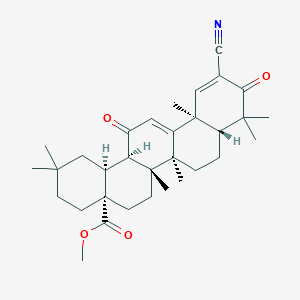
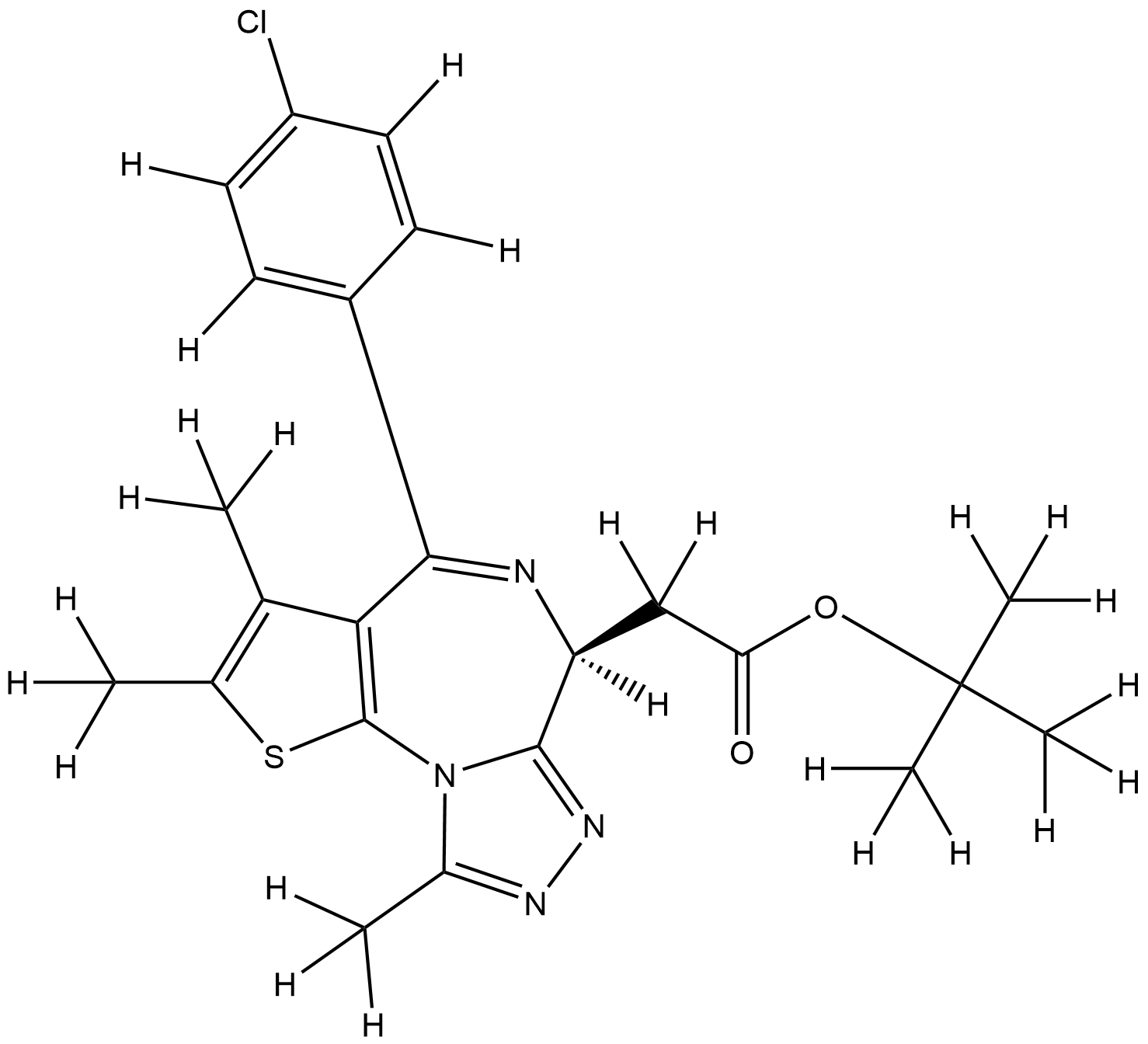
| DOT Name |
DOT ID |
UniProt ID |
Mode of Action |
REF |
|
D(2) dopamine receptor (DRD2)
|
OTBLXKEG
|
DRD2_HUMAN
|
Decreases Activity
|
[7] |
|
Alpha-2C adrenergic receptor (ADRA2C)
|
OT5B9RKP
|
ADA2C_HUMAN
|
Decreases Activity
|
[7] |
|
D(1A) dopamine receptor (DRD1)
|
OTLZPBT7
|
DRD1_HUMAN
|
Decreases Activity
|
[7] |
|
5-hydroxytryptamine receptor 2A (HTR2A)
|
OTWXJX0M
|
5HT2A_HUMAN
|
Decreases Activity
|
[7] |
|
5-hydroxytryptamine receptor 2C (HTR2C)
|
OT6H8DE0
|
5HT2C_HUMAN
|
Decreases Activity
|
[7] |
|
Alpha-1B adrenergic receptor (ADRA1B)
|
OTSAYAFD
|
ADA1B_HUMAN
|
Decreases Activity
|
[7] |
|
Mu-type opioid receptor (OPRM1)
|
OT16AAT8
|
OPRM_HUMAN
|
Decreases Activity
|
[7] |
|
Kappa-type opioid receptor (OPRK1)
|
OTXCZF4L
|
OPRK_HUMAN
|
Decreases Activity
|
[7] |
|
3',5'-cyclic-AMP phosphodiesterase 4B (PDE4B)
|
OTOA8WU2
|
PDE4B_HUMAN
|
Decreases Activity
|
[7] |
|
Voltage-dependent L-type calcium channel subunit alpha-1C (CACNA1C)
|
OT6KFNMS
|
CAC1C_HUMAN
|
Decreases Activity
|
[7] |
|
NF-kappa-B inhibitor epsilon (NFKBIE)
|
OTLAYEL9
|
IKBE_HUMAN
|
Increases Expression
|
[5] |
|
Transcription factor MafG (MAFG)
|
OTBQFUZH
|
MAFG_HUMAN
|
Decreases Expression
|
[5] |
|
SH3 domain-binding protein 5 (SH3BP5)
|
OTOOEGUJ
|
3BP5_HUMAN
|
Affects Expression
|
[8] |
|
Dynamin-like 120 kDa protein, mitochondrial (OPA1)
|
OTJGNWPW
|
OPA1_HUMAN
|
Increases Cleavage
|
[9] |
|
Mitofusin-2 (MFN2)
|
OTPYN8A3
|
MFN2_HUMAN
|
Decreases Expression
|
[9] |
|
Annexin A1 (ANXA1)
|
OT5OFDJC
|
ANXA1_HUMAN
|
Affects Expression
|
[8] |
|
Amino acid transporter heavy chain SLC3A2 (SLC3A2)
|
OTBR33M9
|
4F2_HUMAN
|
Decreases Expression
|
[5] |
|
ATP-dependent 6-phosphofructokinase, muscle type (PFKM)
|
OT1QY9JM
|
PFKAM_HUMAN
|
Decreases Expression
|
[9] |
|
Growth-regulated alpha protein (CXCL1)
|
OT3WCTZV
|
GROA_HUMAN
|
Increases Expression
|
[5] |
|
Poly polymerase 1 (PARP1)
|
OT310QSG
|
PARP1_HUMAN
|
Increases Cleavage
|
[10] |
|
C-C motif chemokine 2 (CCL2)
|
OTAD2HEL
|
CCL2_HUMAN
|
Increases Expression
|
[5] |
|
Beta-1,4-galactosyltransferase 1 (B4GALT1)
|
OTBCXEK7
|
B4GT1_HUMAN
|
Increases Expression
|
[5] |
|
Glutathione peroxidase 2 (GPX2)
|
OTXI2NTI
|
GPX2_HUMAN
|
Affects Expression
|
[8] |
|
Tumor necrosis factor alpha-induced protein 3 (TNFAIP3)
|
OTVLI4DD
|
TNAP3_HUMAN
|
Increases Expression
|
[5] |
|
Growth arrest and DNA damage-inducible protein GADD45 alpha (GADD45A)
|
OTDRV63V
|
GA45A_HUMAN
|
Affects Expression
|
[8] |
|
DnaJ homolog subfamily B member 1 (DNAJB1)
|
OTCOSEVH
|
DNJB1_HUMAN
|
Affects Expression
|
[8] |
|
DNA damage-inducible transcript 3 protein (DDIT3)
|
OTI8YKKE
|
DDIT3_HUMAN
|
Increases Expression
|
[5] |
|
Lon protease homolog, mitochondrial (LONP1)
|
OT665WYT
|
LONM_HUMAN
|
Decreases Expression
|
[11] |
|
Small ribosomal subunit protein eS6 (RPS6)
|
OTT4D1LN
|
RS6_HUMAN
|
Decreases Expression
|
[9] |
|
Oxidized low-density lipoprotein receptor 1 (OLR1)
|
OTS44RIC
|
OLR1_HUMAN
|
Increases Expression
|
[5] |
|
C-C motif chemokine 20 (CCL20)
|
OTUCJY4N
|
CCL20_HUMAN
|
Increases Expression
|
[5] |
|
Heat shock factor protein 1 (HSF1)
|
OTYNJ4KP
|
HSF1_HUMAN
|
Increases Activity
|
[12] |
|
Tumor necrosis factor receptor superfamily member 9 (TNFRSF9)
|
OTNOM26L
|
TNR9_HUMAN
|
Increases Expression
|
[5] |
|
Baculoviral IAP repeat-containing protein 3 (BIRC3)
|
OT3E95KB
|
BIRC3_HUMAN
|
Increases Expression
|
[5] |
|
Kelch-like ECH-associated protein 1 (KEAP1)
|
OTFHOD0C
|
KEAP1_HUMAN
|
Decreases Expression
|
[5] |
|
Neutral amino acid transporter B(0) (SLC1A5)
|
OTE2H26Q
|
AAAT_HUMAN
|
Decreases Expression
|
[9] |
|
Mitofusin-1 (MFN1)
|
OTCBXQZF
|
MFN1_HUMAN
|
Decreases Expression
|
[9] |
|
Thyroid hormone-inducible hepatic protein (THRSP)
|
OTKYE01L
|
THRSP_HUMAN
|
Decreases Expression
|
[13] |
|
Multidrug and toxin extrusion protein 1 (SLC47A1)
|
OTZX0U5Q
|
S47A1_HUMAN
|
Increases Expression
|
[14] |
|
Bcl-2-binding component 3, isoforms 3/4 (BBC3)
|
OTUAXDAY
|
BBC3B_HUMAN
|
Increases Expression
|
[5] |
|
Tribbles homolog 3 (TRIB3)
|
OTG5OS7X
|
TRIB3_HUMAN
|
Decreases Expression
|
[5] |
|
Sulfiredoxin-1 (SRXN1)
|
OTYDBO4L
|
SRXN1_HUMAN
|
Decreases Expression
|
[5] |
|
Prolyl hydroxylase EGLN3 (EGLN3)
|
OTXV3RYX
|
EGLN3_HUMAN
|
Affects Expression
|
[8] |
|
5'-AMP-activated protein kinase subunit gamma-2 (PRKAG2)
|
OTHTAM54
|
AAKG2_HUMAN
|
Affects Expression
|
[5] |
| ------------------------------------------------------------------------------------ |
|
|
|
|