General Information of Drug Combination (ID: DCFU7JW)

Drug Combination Name
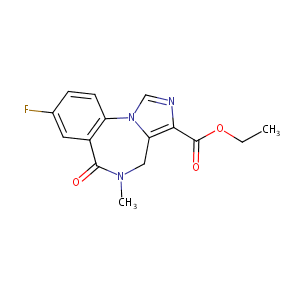
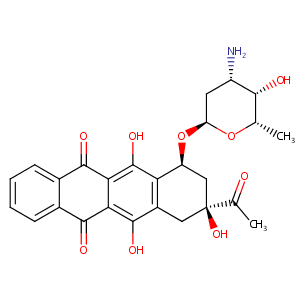
Flumazenil Idarubicin
Indication
Disease Entry Status REF
Glioblastoma? Investigative [1]
Component Drugs Flumazenil   DMPCG2L Idarubicin   DMM0XGL
Small molecular drug Small molecular drug
2D MOL 2D MOL
3D MOL 3D MOL
High-throughput Screening Result Testing Cell Line: T98G
Zero Interaction Potency (ZIP) Score: 9.71
Bliss Independence Score: 9.71
Loewe Additivity Score: 8.44
LHighest Single Agent (HSA) Score: 8.44

Molecular Interaction Atlas of This Drug Combination

Molecular Interaction Atlas (MIA)
Indication(s) of Flumazenil
Disease Entry ICD 11 Status REF
Benzodiazepine overdose PC91 Approved [2]
Flumazenil Interacts with 5 DTT Molecule(s)
DTT Name DTT ID UniProt ID Mode of Action REF
GABA(A) receptor alpha-5 (GABRA5) TTNZPQ1 GBRA5_HUMAN Modulator (allosteric modulator) [5]
GABA(A) receptor gamma-3 (GABRG3) TTEX6LM GBRG3_HUMAN Modulator (allosteric modulator) [6]
GABA(A) receptor alpha-2 (GABRA2) TTBMV1G GBRA2_HUMAN Modulator (allosteric modulator) [7]
GABA(A) receptor alpha-3 (GABRA3) TT37EDJ GBRA3_HUMAN Modulator (allosteric modulator) [8]
Translocator protein (TSPO) TTPTXIN TSPO_HUMAN Antagonist [9]
------------------------------------------------------------------------------------
Flumazenil Interacts with 3 DOT Molecule(s)
DOT Name DOT ID UniProt ID Mode of Action REF
Gamma-aminobutyric acid receptor subunit gamma-2 (GABRG2) OTGNDWUO GBRG2_HUMAN Affects Binding [10]
Gamma-aminobutyric acid receptor subunit beta-3 (GABRB3) OT80C3D4 GBRB3_HUMAN Affects Binding [10]
Gamma-aminobutyric acid receptor subunit alpha-6 (GABRA6) OTX4UC3O GBRA6_HUMAN Affects Binding [10]
------------------------------------------------------------------------------------
Indication(s) of Idarubicin
Disease Entry ICD 11 Status REF
Acute myelogenous leukaemia 2A41 Approved [3]
Acute myeloid leukaemia 2A60 Approved [4]
Adult acute monocytic leukemia N.A. Approved [3]
Childhood acute megakaryoblastic leukemia N.A. Approved [3]
Leukemia N.A. Approved [3]
Idarubicin Interacts with 1 DTT Molecule(s)
DTT Name DTT ID UniProt ID Mode of Action REF
DNA topoisomerase II (TOP2) TT0IHXV TOP2A_HUMAN; TOP2B_HUMAN Modulator [12]
------------------------------------------------------------------------------------
Idarubicin Interacts with 3 DTP Molecule(s)
DTP Name DTP ID UniProt ID Mode of Action REF
Multidrug resistance-associated protein 1 (ABCC1) DTSYQGK MRP1_HUMAN Substrate [13]
P-glycoprotein 1 (ABCB1) DTUGYRD MDR1_HUMAN Substrate [14]
Breast cancer resistance protein (ABCG2) DTI7UX6 ABCG2_HUMAN Substrate [14]
------------------------------------------------------------------------------------
Idarubicin Interacts with 2 DME Molecule(s)
DME Name DME ID UniProt ID Mode of Action REF
Cytochrome P450 2D6 (CYP2D6) DECB0K3 CP2D6_HUMAN Metabolism [15]
Cytochrome P450 2C9 (CYP2C9) DE5IED8 CP2C9_HUMAN Metabolism [15]
------------------------------------------------------------------------------------
Idarubicin Interacts with 2 DOT Molecule(s)
DOT Name DOT ID UniProt ID Mode of Action REF
Natriuretic peptides B (NPPB) OTSN2IPY ANFB_HUMAN Increases Expression [16]
Bile acid receptor (NR1H4) OTWZLPTB NR1H4_HUMAN Decreases Activity [11]
------------------------------------------------------------------------------------

References

1 CheMBL Affinity Phenotypic Cellular Interaction Assay ID: CHEMBL1125966
2 URL: http://www.guidetopharmacology.org Nucleic Acids Res. 2015 Oct 12. pii: gkv1037. The IUPHAR/BPS Guide to PHARMACOLOGY in 2016: towards curated quantitative interactions between 1300 protein targets and 6000 ligands. (Ligand id: 4192).
3 Idarubicin FDA Label
4 URL: http://www.guidetopharmacology.org Nucleic Acids Res. 2015 Oct 12. pii: gkv1037. The IUPHAR/BPS Guide to PHARMACOLOGY in 2016: towards curated quantitative interactions between 1300 protein targets and 6000 ligands. (Ligand id: 7083).
5 URL: http://www.guidetopharmacology.org Nucleic Acids Res. 2015 Oct 12. pii: gkv1037. The IUPHAR/BPS Guide to PHARMACOLOGY in 2016: towards curated quantitative interactions between 1300 protein targets and 6000 ligands. (Target id: 408).
6 URL: http://www.guidetopharmacology.org Nucleic Acids Res. 2015 Oct 12. pii: gkv1037. The IUPHAR/BPS Guide to PHARMACOLOGY in 2016: towards curated quantitative interactions between 1300 protein targets and 6000 ligands. (Target id: 415).
7 URL: http://www.guidetopharmacology.org Nucleic Acids Res. 2015 Oct 12. pii: gkv1037. The IUPHAR/BPS Guide to PHARMACOLOGY in 2016: towards curated quantitative interactions between 1300 protein targets and 6000 ligands. (Target id: 405).
8 URL: http://www.guidetopharmacology.org Nucleic Acids Res. 2015 Oct 12. pii: gkv1037. The IUPHAR/BPS Guide to PHARMACOLOGY in 2016: towards curated quantitative interactions between 1300 protein targets and 6000 ligands. (Target id: 406).
9 URL: http://www.guidetopharmacology.org Nucleic Acids Res. 2015 Oct 12. pii: gkv1037. The IUPHAR/BPS Guide to PHARMACOLOGY in 2016: towards curated quantitative interactions between 1300 protein targets and 6000 ligands. (Target id: 2879).
10 Cloning of cDNAs encoding the human gamma-aminobutyric acid type A receptor alpha 6 subunit and characterization of the pharmacology of alpha 6-containing receptors. Mol Pharmacol. 1996 Feb;49(2):253-9.
11 Quantitative high-throughput profiling of environmental chemicals and drugs that modulate farnesoid X receptor. Sci Rep. 2014 Sep 26;4:6437. doi: 10.1038/srep06437.
12 Drugs@FDA. U.S. Food and Drug Administration. U.S. Department of Health & Human Services.
13 Human intestinal transporter database: QSAR modeling and virtual profiling of drug uptake, efflux and interactions. Pharm Res. 2013 Apr;30(4):996-1007.
14 Amonafide L-malate is not a substrate for multidrug resistance proteins in secondary acute myeloid leukemia. Leukemia. 2008 Nov;22(11):2110-5.
15 In vitro evaluation of cytochrome P450-mediated drug interactions between cytarabine, idarubicin, itraconazole and caspofungin. Hematology. 2004 Jun;9(3):217-21.
16 The use of biochemical markers in cardiotoxicity monitoring in patients treated for leukemia. Neoplasma. 2005;52(5):430-4.