General Information of Drug Combination (ID: DCG60J0)

Drug Combination Name
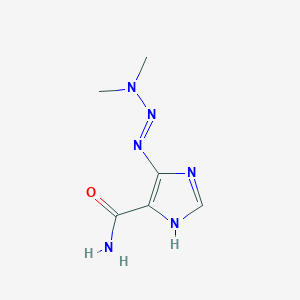
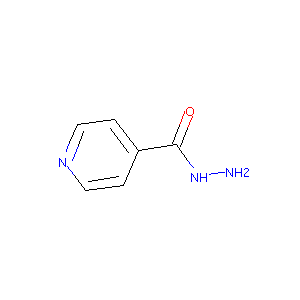
Dacarbazine Isoniazid
Indication
Disease Entry Status REF
Adenocarcinoma Investigative [1]
Component Drugs Dacarbazine   DMNPZL4 Isoniazid   DM5JVS3
Small molecular drug Small molecular drug
2D MOL 2D MOL
3D MOL 3D MOL
High-throughput Screening Result Testing Cell Line: HCC-2998
Zero Interaction Potency (ZIP) Score: 2.26
Bliss Independence Score: 10.16
Loewe Additivity Score: 5.64
LHighest Single Agent (HSA) Score: 6.7

Molecular Interaction Atlas of This Drug Combination

Molecular Interaction Atlas (MIA)
Indication(s) of Dacarbazine
Disease Entry ICD 11 Status REF
Adenocarcinoma 2D40 Approved [2]
Astrocytoma 2A00.0Y Approved [2]
Brain disease 8C70-8E61 Approved [2]
Central nervous system disease 8A04-8D87 Approved [2]
Glioblastoma 2A00 Approved [2]
Gliosarcoma N.A. Approved [2]
Melanoma 2C30 Approved [3]
Classic Hodgkin lymphoma N.A. Investigative [2]
Neuroblastoma 2D11.2 Investigative [2]
Dacarbazine Interacts with 1 DTT Molecule(s)
DTT Name DTT ID UniProt ID Mode of Action REF
Human Deoxyribonucleic acid (hDNA) TTUTN1I NOUNIPROTAC Breaker [7]
------------------------------------------------------------------------------------
Dacarbazine Interacts with 3 DME Molecule(s)
DME Name DME ID UniProt ID Mode of Action REF
Cytochrome P450 1A2 (CYP1A2) DEJGDUW CP1A2_HUMAN Metabolism [8]
Cytochrome P450 1A1 (CYP1A1) DE6OQ3W CP1A1_HUMAN Metabolism [9]
Cytochrome P450 2E1 (CYP2E1) DEVDYN7 CP2E1_HUMAN Metabolism [10]
------------------------------------------------------------------------------------
Dacarbazine Interacts with 8 DOT Molecule(s)
DOT Name DOT ID UniProt ID Mode of Action REF
Baculoviral IAP repeat-containing protein 5 (BIRC5) OTILXZYL BIRC5_HUMAN Increases Expression [11]
Interleukin-8 (CXCL8) OTS7T5VH IL8_HUMAN Increases Expression [6]
Methylated-DNA--protein-cysteine methyltransferase (MGMT) OT40A9WH MGMT_HUMAN Decreases Activity [12]
DNA repair nuclease/redox regulator APEX1 (APEX1) OT53OI14 APEX1_HUMAN Increases Response To Substance [13]
Solute carrier family 2, facilitated glucose transporter member 1 (SLC2A1) OTA675TJ GTR1_HUMAN Decreases Response To Substance [14]
Mitogen-activated protein kinase 3 (MAPK3) OTCYKGKO MK03_HUMAN Decreases Response To Substance [15]
Mitogen-activated protein kinase 1 (MAPK1) OTH85PI5 MK01_HUMAN Decreases Response To Substance [15]
Mitogen-activated protein kinase kinase kinase 1 (MAP3K1) OTS3FVTY M3K1_HUMAN Decreases Response To Substance [15]
------------------------------------------------------------------------------------
⏷ Show the Full List of 8 DOT(s)
Indication(s) of Isoniazid
Disease Entry ICD 11 Status REF
Latent tuberculosis infection N.A. Approved [4]
Pulmonary tuberculosis 1B10.Z Approved [4]
Tuberculosis 1B10-1B1Z Approved [5]
Isoniazid Interacts with 1 DTT Molecule(s)
DTT Name DTT ID UniProt ID Mode of Action REF
Bacterial Fatty acid synthetase I (Bact inhA) TTVTX4N INHA_MYCTU Inhibitor [17]
------------------------------------------------------------------------------------
Isoniazid Interacts with 3 DME Molecule(s)
DME Name DME ID UniProt ID Mode of Action REF
Cytochrome P450 2E1 (CYP2E1) DEVDYN7 CP2E1_HUMAN Metabolism [18]
Catalase-peroxidase (katG) DEAGY5M KATG_SYNE7 Metabolism [19]
Arylamine N-acetyltransferase (NAT) DEXCQTM A0A3P8LE58_TSUPA Metabolism [20]
------------------------------------------------------------------------------------
Isoniazid Interacts with 28 DOT Molecule(s)
DOT Name DOT ID UniProt ID Mode of Action REF
N-alpha-acetyltransferase 20 (NAA20) OTJB0VA6 NAA20_HUMAN Increases ADR [21]
Nuclear protein 1 (NUPR1) OT4FU8C0 NUPR1_HUMAN Increases Expression [22]
Inhibin beta E chain (INHBE) OTOI2NYG INHBE_HUMAN Increases Expression [22]
Protein DEPP1 (DEPP1) OTB36PHJ DEPP1_HUMAN Increases Expression [22]
Aldo-keto reductase family 1 member B10 (AKR1B10) OTOA4HTH AK1BA_HUMAN Increases Expression [16]
Interleukin-12 subunit alpha (IL12A) OTDQT8GI IL12A_HUMAN Increases Secretion [16]
Interleukin-12 subunit beta (IL12B) OT0JF8A3 IL12B_HUMAN Increases Secretion [16]
Sulfiredoxin-1 (SRXN1) OTYDBO4L SRXN1_HUMAN Increases Expression [16]
Gamma-butyrobetaine dioxygenase (BBOX1) OTKEX4RK BODG_HUMAN Increases Expression [23]
Sodium/potassium-transporting ATPase subunit beta-1 (ATP1B1) OTTO6ZP4 AT1B1_HUMAN Increases Expression [23]
Amyloid-beta precursor protein (APP) OTKFD7R4 A4_HUMAN Increases Expression [23]
14-3-3 protein sigma (SFN) OTLJCZ1U 1433S_HUMAN Decreases Expression [23]
DNA damage-inducible transcript 3 protein (DDIT3) OTI8YKKE DDIT3_HUMAN Decreases Expression [23]
Claudin-2 (CLDN2) OTRF3D6Y CLD2_HUMAN Increases Expression [23]
Large neutral amino acids transporter small subunit 1 (SLC7A5) OT2WPVXD LAT1_HUMAN Decreases Expression [23]
Tribbles homolog 3 (TRIB3) OTG5OS7X TRIB3_HUMAN Increases Expression [23]
Procollagen-lysine,2-oxoglutarate 5-dioxygenase 2 (PLOD2) OTKOZRZP PLOD2_HUMAN Increases Expression [24]
Albumin (ALB) OTVMM513 ALBU_HUMAN Affects Binding [25]
Antileukoproteinase (SLPI) OTUNFUU8 SLPI_HUMAN Increases Expression [26]
5-aminolevulinate synthase, non-specific, mitochondrial (ALAS1) OTQY6ZSF HEM1_HUMAN Increases Expression [27]
Ferrochelatase, mitochondrial (FECH) OTDWEI6C HEMH_HUMAN Decreases Expression [27]
Mitogen-activated protein kinase 3 (MAPK3) OTCYKGKO MK03_HUMAN Decreases Phosphorylation [28]
Mitogen-activated protein kinase 1 (MAPK1) OTH85PI5 MK01_HUMAN Decreases Phosphorylation [28]
Nuclear respiratory factor 1 (NRF1) OTOXWNV8 NRF1_HUMAN Decreases Expression [29]
Natural cytotoxicity triggering receptor 3 ligand 1 (NCR3LG1) OT15YWU7 NR3L1_HUMAN Increases Expression [30]
PTB-containing, cubilin and LRP1-interacting protein (PID1) OT5YJ7FI PCLI1_HUMAN Increases Expression [26]
Peroxisome proliferator-activated receptor gamma coactivator 1-alpha (PPARGC1A) OTHCDQ22 PRGC1_HUMAN Decreases Expression [29]
Arylamine N-acetyltransferase 2 (NAT2) OTBPDQOY ARY2_HUMAN Decreases Acetylation [31]
------------------------------------------------------------------------------------
⏷ Show the Full List of 28 DOT(s)

Test Results of This Drug Combination in Other Disease Systems

Indication DrugCom ID Cell Line Status REF
High grade ovarian serous adenocarcinoma DCPBK5H NCI\\/ADR-RES Investigative [1]
Malignant melanoma DCJ8VFS LOX IMVI Investigative [1]
Mixed endometrioid and clear cell carcinoma DCP3VKW IGROV1 Investigative [1]
Pleural epithelioid mesothelioma DCBC46Y NCI-H226 Investigative [1]
Colon carcinoma DCYUWMA KM12 Investigative [32]
------------------------------------------------------------------------------------

References

1 CheMBL Affinity Phenotypic Cellular Interaction Assay ID: CHEMBL1125966
2 Dacarbazine FDA Label
3 FDA Approved Drug Products from FDA Official Website. 2009. Application Number: (ANDA) 075259.
4 Isoniazid FDA Label
5 Novel agents in the management of Mycobacterium tuberculosis disease. Curr Med Chem. 2007;14(18):2000-8.
6 Dacarbazine causes transcriptional up-regulation of interleukin 8 and vascular endothelial growth factor in melanoma cells: a possible escape mechanism from chemotherapy. Mol Cancer Ther. 2003 Aug;2(8):753-63.
7 Predicting the myelotoxicity of chemotherapy: the use of pretreatment O6-methylguanine-DNA methyltransferase determination in peripheral blood mono... Melanoma Res. 2011 Dec;21(6):502-8.
8 Study on mesenchymal stem cells mediated enzyme-prodrug gene CYP1A2 targeting anti-tumor effect. Zhonghua Xue Ye Xue Za Zhi. 2009 Oct;30(10):667-71.
9 Metabolic activation of dacarbazine by human cytochromes P450: the role of CYP1A1, CYP1A2, and CYP2E1. Clin Cancer Res. 1999 Aug;5(8):2192-7.
10 Role of cytochrome P450 isoenzymes in metabolism of O(6)-benzylguanine: implications for dacarbazine activation. Clin Cancer Res. 2001 Dec;7(12):4239-44.
11 Serum bcl-2 and survivin levels in melanoma. Melanoma Res. 2004 Dec;14(6):543-6. doi: 10.1097/00008390-200412000-00017.
12 Pharmacokinetic, biochemical and clinical effects of dimethyltriazenoimidazole-4-carboxamide-bischloroethylnitrosourea combination therapy in patients with advanced breast cancer. Int J Cancer. 2003 Feb 20;103(5):686-92. doi: 10.1002/ijc.10849.
13 Impairment of APE1 function enhances cellular sensitivity to clinically relevant alkylators and antimetabolites. Mol Cancer Res. 2009 Jun;7(6):897-906. doi: 10.1158/1541-7786.MCR-08-0519. Epub 2009 May 26.
14 Glut-1 as a therapeutic target: increased chemoresistance and HIF-1-independent link with cell turnover is revealed through COMPARE analysis and metabolomic studies. Cancer Chemother Pharmacol. 2008 Mar;61(3):377-93. doi: 10.1007/s00280-007-0480-1. Epub 2007 May 23.
15 Exposure of melanoma cells to dacarbazine results in enhanced tumor growth and metastasis in vivo. J Clin Oncol. 2004 Jun 1;22(11):2092-100. doi: 10.1200/JCO.2004.11.070. Epub 2004 May 3.
16 Characterization of drug-specific signaling between primary human hepatocytes and immune cells. Toxicol Sci. 2017 Jul 1;158(1):76-89.
17 Diversity in enoyl-acyl carrier protein reductases. Cell Mol Life Sci. 2009 May;66(9):1507-17.
18 Inhibition of CYP2E1 catalytic activity in vitro by S-adenosyl-L-methionine. Biochem Pharmacol. 2005 Apr 1;69(7):1081-93.
19 Crystal structure of the catalase-peroxidase KatG W78F mutant from Synechococcus elongatus PCC7942 in complex with the antitubercular pro-drug isoniazid. FEBS Lett. 2015 Jan 2;589(1):131-7.
20 The actinobacterium Tsukamurella paurometabola has a functionally divergent arylamine N-acetyltransferase (NAT) homolog. World J Microbiol Biotechnol. 2019 Oct 31;35(11):174.
21 ADReCS-Target: target profiles for aiding drug safety research and application. Nucleic Acids Res. 2018 Jan 4;46(D1):D911-D917. doi: 10.1093/nar/gkx899.
22 Determination of phospholipidosis potential based on gene expression analysis in HepG2 cells. Toxicol Sci. 2007 Mar;96(1):101-14.
23 Comparison of base-line and chemical-induced transcriptomic responses in HepaRG and RPTEC/TERT1 cells using TempO-Seq. Arch Toxicol. 2018 Aug;92(8):2517-2531.
24 Identification of differentially expressed genes in hepatic HepG2 cells treated with acetaminophen using suppression subtractive hybridization. Biol Pharm Bull. 2005 Jul;28(7):1148-53. doi: 10.1248/bpb.28.1148.
25 Auto-oxidation of Isoniazid Leads to Isonicotinic-Lysine Adducts on Human Serum Albumin. Chem Res Toxicol. 2015 Jan 20;28(1):51-8. doi: 10.1021/tx500285k. Epub 2014 Dec 9.
26 An in vitro coculture system of human peripheral blood mononuclear cells with hepatocellular carcinoma-derived cells for predicting drug-induced liver injury. Arch Toxicol. 2021 Jan;95(1):149-168. doi: 10.1007/s00204-020-02882-4. Epub 2020 Aug 20.
27 The Isoniazid Metabolites Hydrazine and Pyridoxal Isonicotinoyl Hydrazone Modulate Heme Biosynthesis. Toxicol Sci. 2019 Mar 1;168(1):209-224. doi: 10.1093/toxsci/kfy294.
28 Quercetin protected against isoniazide-induced HepG2 cell apoptosis by activating the SIRT1/ERK pathway. J Biochem Mol Toxicol. 2019 Sep;33(9):e22369. doi: 10.1002/jbt.22369. Epub 2019 Jul 23.
29 AMPK activator acadesine fails to alleviate isoniazid-caused mitochondrial instability in HepG2 cells. J Appl Toxicol. 2017 Oct;37(10):1219-1224. doi: 10.1002/jat.3483. Epub 2017 May 29.
30 Enhanced activation of human NK cells by drug-exposed hepatocytes. Arch Toxicol. 2020 Feb;94(2):439-448. doi: 10.1007/s00204-020-02668-8. Epub 2020 Feb 14.
31 Effects of N-acetyltransferase 2 (NAT2), CYP2E1 and Glutathione-S-transferase (GST) genotypes on the serum concentrations of isoniazid and metabolites in tuberculosis patients. J Toxicol Sci. 2008 May;33(2):187-95. doi: 10.2131/jts.33.187.
32 CheMBL Affinity Phenotypic Cellular Interaction Assay ID: CHEMBL1126165