General Information of Drug Combination (ID: DCGKP0J)

Drug Combination Name
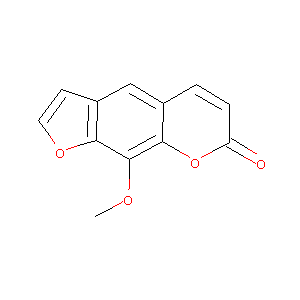
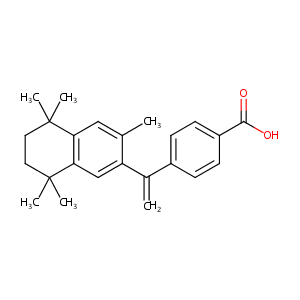
Methoxsalen Bexarotene
Indication
Disease Entry Status REF
Lymphoma Phase 1 [1]
Component Drugs Methoxsalen   DME8FZ9 Bexarotene   DMOBIKY
Small molecular drug Small molecular drug
2D MOL 2D MOL
3D MOL 3D MOL

Molecular Interaction Atlas of This Drug Combination

Molecular Interaction Atlas (MIA)
Indication(s) of Methoxsalen
Disease Entry ICD 11 Status REF
Cutaneous T-cell lymphoma 2B01 Approved [2]
Primary cutaneous T-cell lymphoma N.A. Approved [3]
Psoriasis vulgaris EA90 Approved [2]
Methoxsalen Interacts with 1 DTT Molecule(s)
DTT Name DTT ID UniProt ID Mode of Action REF
Cytochrome P450 2A6 (CYP2A6) TTAQ6ZW CP2A6_HUMAN Binder [7]
------------------------------------------------------------------------------------
Methoxsalen Interacts with 2 DME Molecule(s)
DME Name DME ID UniProt ID Mode of Action REF
Cytochrome P450 3A4 (CYP3A4) DE4LYSA CP3A4_HUMAN Metabolism [8]
Cytochrome P450 2A6 (CYP2A6) DEJVYAZ CP2A6_HUMAN Metabolism [9]
------------------------------------------------------------------------------------
Methoxsalen Interacts with 9 DOT Molecule(s)
DOT Name DOT ID UniProt ID Mode of Action REF
Cocaine esterase (CES2) OTC647SQ EST2_HUMAN Increases Expression [8]
Nuclear receptor subfamily 1 group I member 2 (NR1I2) OTC5U0N5 NR1I2_HUMAN Increases Activity [8]
Class E basic helix-loop-helix protein 40 (BHLHE40) OTITX14U BHE40_HUMAN Decreases Expression [10]
Baculoviral IAP repeat-containing protein 5 (BIRC5) OTILXZYL BIRC5_HUMAN Decreases Expression [10]
ATP-binding cassette sub-family C member 3 (ABCC3) OTC3IJV4 MRP3_HUMAN Increases Expression [6]
ATP-dependent translocase ABCB1 (ABCB1) OTEJROBO MDR1_HUMAN Increases Expression [11]
Phosphatidylcholine translocator ABCB4 (ABCB4) OTE6PY83 MDR3_HUMAN Decreases Expression [12]
Nuclear receptor subfamily 0 group B member 2 (NR0B2) OT7UVICX NR0B2_HUMAN Increases Expression [6]
Broad substrate specificity ATP-binding cassette transporter ABCG2 (ABCG2) OTW8V2V1 ABCG2_HUMAN Increases Expression [11]
------------------------------------------------------------------------------------
⏷ Show the Full List of 9 DOT(s)
Indication(s) of Bexarotene
Disease Entry ICD 11 Status REF
Cutaneous T-cell lymphoma 2B01 Approved [4]
Plasma cell myeloma 2A83.1 Approved [5]
Primary cutaneous T-cell lymphoma N.A. Approved [5]
Schizoaffective disorder 6A21 Approved [5]
Bexarotene Interacts with 1 DTT Molecule(s)
DTT Name DTT ID UniProt ID Mode of Action REF
Retinoic acid receptor RXR-alpha (RXRA) TT6PEUO RXRA_HUMAN Modulator [14]
------------------------------------------------------------------------------------
Bexarotene Interacts with 2 DME Molecule(s)
DME Name DME ID UniProt ID Mode of Action REF
Cytochrome P450 3A4 (CYP3A4) DE4LYSA CP3A4_HUMAN Metabolism [15]
Cytochrome P450 2C9 (CYP2C9) DE5IED8 CP2C9_HUMAN Metabolism [15]
------------------------------------------------------------------------------------
Bexarotene Interacts with 55 DOT Molecule(s)
DOT Name DOT ID UniProt ID Mode of Action REF
Keratin, type I cytoskeletal 14 (KRT14) OTUVZ1DW K1C14_HUMAN Decreases Expression [16]
Involucrin (IVL) OT4VPNGY INVO_HUMAN Decreases Expression [16]
Keratin, type II cytoskeletal 5 (KRT5) OTVGI9HT K2C5_HUMAN Decreases Expression [16]
Procollagen-lysine,2-oxoglutarate 5-dioxygenase 2 (PLOD2) OTKOZRZP PLOD2_HUMAN Increases Expression [13]
CCN family member 1 (CCN1) OTKJBEMD CCN1_HUMAN Decreases Expression [13]
Stearoyl-CoA desaturase (SCD) OTB1073G SCD_HUMAN Increases Expression [13]
Period circadian protein homolog 2 (PER2) OTU2B1DJ PER2_HUMAN Decreases Expression [13]
E3 ubiquitin-protein ligase SIAH2 (SIAH2) OTKED2XN SIAH2_HUMAN Decreases Expression [13]
Integral membrane protein 2A (ITM2A) OT590V63 ITM2A_HUMAN Increases Expression [13]
Transcription factor Maf (MAF) OT1GR3IZ MAF_HUMAN Increases Expression [13]
PRA1 family protein 3 (ARL6IP5) OTYZ6BEQ PRAF3_HUMAN Increases Expression [13]
Cytochrome c oxidase subunit 2 (COX2) OTTMVBJJ COX2_HUMAN Decreases Expression [13]
Interstitial collagenase (MMP1) OTI4I2V1 MMP1_HUMAN Decreases Expression [13]
Protein S100-A9 (S100A9) OTOARHCS S10A9_HUMAN Increases Expression [13]
Beta-2 adrenergic receptor (ADRB2) OTSDOX4Q ADRB2_HUMAN Decreases Expression [13]
SPARC (SPARC) OTPN90H0 SPRC_HUMAN Increases Expression [13]
Bifunctional methylenetetrahydrofolate dehydrogenase/cyclohydrolase, mitochondrial (MTHFD2) OT1LQSGX MTDC_HUMAN Decreases Expression [13]
Keratin, type I cytoskeletal 15 (KRT15) OTS6WLF7 K1C15_HUMAN Increases Expression [13]
Protein-glutamine gamma-glutamyltransferase 2 (TGM2) OT6MFOWF TGM2_HUMAN Increases Expression [13]
Transmembrane 4 L6 family member 1 (TM4SF1) OTY0ECQN T4S1_HUMAN Increases Expression [13]
DNA-binding protein inhibitor ID-1 (ID1) OTKGNZN5 ID1_HUMAN Increases Expression [13]
Glycine--tRNA ligase (GARS1) OT5B6R9Y GARS_HUMAN Decreases Expression [13]
Eukaryotic translation initiation factor 1 (EIF1) OTB4GZ0V EIF1_HUMAN Decreases Expression [13]
Aldo-keto reductase family 1 member C3 (AKR1C3) OTU2SXBA AK1C3_HUMAN Increases Expression [13]
CCAAT/enhancer-binding protein gamma (CEBPG) OTGNAX3H CEBPG_HUMAN Decreases Expression [13]
Cytochrome c (CYCS) OTBFALJD CYC_HUMAN Decreases Expression [13]
Serine/arginine-rich splicing factor 2 (SRSF2) OTVDHO6U SRSF2_HUMAN Decreases Expression [13]
Large neutral amino acids transporter small subunit 1 (SLC7A5) OT2WPVXD LAT1_HUMAN Decreases Expression [13]
Aldo-keto reductase family 1 member C1 (AKR1C1) OTQKR4CM AK1C1_HUMAN Increases Expression [13]
Early growth response protein 3 (EGR3) OTGPJIRA EGR3_HUMAN Decreases Expression [13]
Proline-rich nuclear receptor coactivator 1 (PNRC1) OTQMLEE1 PNRC1_HUMAN Increases Expression [13]
BCL2/adenovirus E1B 19 kDa protein-interacting protein 2 (BNIP2) OTVZD4H6 BNIP2_HUMAN Decreases Expression [13]
Protein AF1q (MLLT11) OTG5RVHC AF1Q_HUMAN Increases Expression [13]
Krueppel-like factor 10 (KLF10) OT4F4UGS KLF10_HUMAN Decreases Expression [13]
Neuronal membrane glycoprotein M6-b (GPM6B) OT8Q1582 GPM6B_HUMAN Increases Expression [13]
Homocysteine-responsive endoplasmic reticulum-resident ubiquitin-like domain member 1 protein (HERPUD1) OT9EROL6 HERP1_HUMAN Decreases Expression [13]
Adipogenesis regulatory factor (ADIRF) OTTJP8D4 ADIRF_HUMAN Increases Expression [13]
Dual specificity protein phosphatase 5 (DUSP5) OTH96RA7 DUS5_HUMAN Decreases Expression [13]
TSC22 domain family protein 3 (TSC22D3) OT03UM03 T22D3_HUMAN Increases Expression [13]
Mothers against decapentaplegic homolog 5 (SMAD5) OTQNSVCQ SMAD5_HUMAN Increases Expression [13]
Immediate early response gene 2 protein (IER2) OT5OY8BO IER2_HUMAN Decreases Expression [13]
RNA-binding protein PNO1 (PNO1) OT010GIS PNO1_HUMAN Decreases Expression [13]
Protein DEPP1 (DEPP1) OTB36PHJ DEPP1_HUMAN Increases Expression [13]
DNA damage-inducible transcript 4 protein (DDIT4) OTHY8SY4 DDIT4_HUMAN Increases Expression [13]
Gamma-adducin (ADD3) OTDRSHAZ ADDG_HUMAN Increases Expression [13]
Transcription factor MafF (MAFF) OT9B7MX0 MAFF_HUMAN Decreases Expression [13]
Angiomotin-like protein 2 (AMOTL2) OTRCTKV9 AMOL2_HUMAN Decreases Expression [13]
Tumor protein p73 (TP73) OT0LUO47 P73_HUMAN Increases Expression [17]
Baculoviral IAP repeat-containing protein 5 (BIRC5) OTILXZYL BIRC5_HUMAN Decreases Expression [17]
Retinoblastoma-associated protein (RB1) OTQJUJMZ RB_HUMAN Decreases Phosphorylation [18]
Cyclin-dependent kinase inhibitor 1 (CDKN1A) OTQWHCZE CDN1A_HUMAN Increases Expression [17]
Serine-protein kinase ATM (ATM) OTQVOHLT ATM_HUMAN Increases Activity [17]
Krueppel-like factor 9 (KLF9) OTBFEJRQ KLF9_HUMAN Increases Expression [19]
Sonic hedgehog protein (SHH) OTOG2BXF SHH_HUMAN Increases Expression [19]
Nuclear receptor subfamily 0 group B member 2 (NR0B2) OT7UVICX NR0B2_HUMAN Increases Expression [20]
------------------------------------------------------------------------------------
⏷ Show the Full List of 55 DOT(s)

References

1 ClinicalTrials.gov (NCT00056056) Ultraviolet Light Therapy Using Methoxsalen With or Without Bexarotene in Treating Patients With Mycosis Fungoides
2 FDA Approved Drug Products from FDA Official Website. 2009. Application Number: (NDA) 009048.
3 Methoxsalen FDA Label
4 URL: http://www.guidetopharmacology.org Nucleic Acids Res. 2015 Oct 12. pii: gkv1037. The IUPHAR/BPS Guide to PHARMACOLOGY in 2016: towards curated quantitative interactions between 1300 protein targets and 6000 ligands. (Ligand id: 2807).
5 Bexarotene FDA Label
6 Adaptive homeostasis of the vitamin D-vitamin D nuclear receptor axis in 8-methoxypsoralen-induced hepatotoxicity. Toxicol Appl Pharmacol. 2019 Jan 1;362:150-158. doi: 10.1016/j.taap.2018.11.002. Epub 2018 Nov 10.
7 Mutagenicity and carcinogenicity of methoxsalen plus UV-A. Arch Dermatol. 1984 May;120(5):662-9.
8 Photochemotherapeutic agent 8-methoxypsoralen induces cytochrome P450 3A4 and carboxylesterase HCE2: evidence on an involvement of the pregnane X receptor. Toxicol Sci. 2007 Jan;95(1):13-22.
9 Identification of the human cytochrome P450 enzymes involved in the in vitro metabolism of artemisinin. Br J Clin Pharmacol. 1999 Oct;48(4):528-35.
10 Down regulation of differentiated embryonic chondrocytes 1 (DEC1) is involved in 8-methoxypsoralen-induced apoptosis in HepG2 cells. Toxicology. 2012 Nov 15;301(1-3):58-65. doi: 10.1016/j.tox.2012.06.022. Epub 2012 Jul 11.
11 ABC-transporter blockage mediated by xanthotoxin and bergapten is the major pathway for chemosensitization of multidrug-resistant cancer cells. Toxicol Appl Pharmacol. 2017 Dec 15;337:22-29. doi: 10.1016/j.taap.2017.10.018. Epub 2017 Oct 25.
12 8-Methoxypsoralen disrupts MDR3-mediated phospholipids efflux and bile acid homeostasis and its relevance to hepatotoxicity. Toxicology. 2017 Jul 1;386:40-48. doi: 10.1016/j.tox.2017.05.011. Epub 2017 May 24.
13 Identification of biomarkers modulated by the rexinoid LGD1069 (bexarotene) in human breast cells using oligonucleotide arrays. Cancer Res. 2006 Dec 15;66(24):12009-18.
14 Drugs@FDA. U.S. Food and Drug Administration. U.S. Department of Health & Human Services.
15 Summary of information on human CYP enzymes: human P450 metabolism data. Drug Metab Rev. 2002 Feb-May;34(1-2):83-448.
16 Retinoic acid receptor- and retinoid X receptor-selective retinoids activate signaling pathways that converge on AP-1 and inhibit squamous differentiation in human bronchial epithelial cells. Cell Growth Differ. 1996 Aug;7(8):997-1004.
17 Bexarotene activates the p53/p73 pathway in human cutaneous T-cell lymphoma. Br J Dermatol. 2009 Mar;160(3):519-26. doi: 10.1111/j.1365-2133.2008.08931.x. Epub 2008 Nov 25.
18 Receptor-selective retinoids inhibit the growth of normal and malignant breast cells by inducing G1 cell cycle blockade. Breast Cancer Res Treat. 2006 Mar;96(2):147-57. doi: 10.1007/s10549-005-9071-1. Epub 2005 Nov 5.
19 Pituitary specific retinoid-X receptor ligand interactions with thyroid hormone receptor signaling revealed by high throughput reporter and endogenous gene responses. Toxicol In Vitro. 2015 Oct;29(7):1609-18. doi: 10.1016/j.tiv.2015.06.018. Epub 2015 Jun 19.
20 Combinations of LXR and RXR agonists induce triglyceride accumulation in human HepaRG cells in a synergistic manner. Arch Toxicol. 2020 Apr;94(4):1303-1320. doi: 10.1007/s00204-020-02685-7. Epub 2020 Mar 2.