General Information of Drug Combination (ID: DCLCOAG)

Drug Combination Name
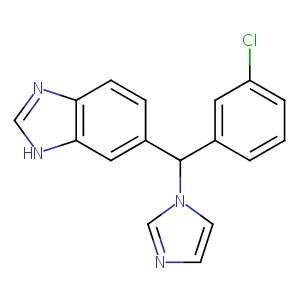
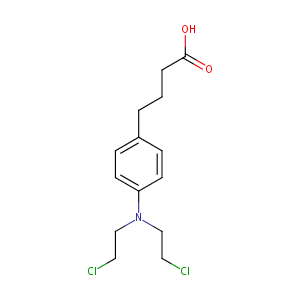
LIAROZOLE Chlorambucil
Indication
Disease Entry Status REF
Invasive ductal carcinoma Investigative [1]
Component Drugs LIAROZOLE   DM4OYXE Chlorambucil   DMRKE63
Small molecular drug Small molecular drug
2D MOL 2D MOL
3D MOL 3D MOL
High-throughput Screening Result Testing Cell Line: T-47D
Zero Interaction Potency (ZIP) Score: 1.26
Bliss Independence Score: 3.7
Loewe Additivity Score: 5.1
LHighest Single Agent (HSA) Score: 4.53

Molecular Interaction Atlas of This Drug Combination

Molecular Interaction Atlas (MIA)
Indication(s) of LIAROZOLE
Disease Entry ICD 11 Status REF
Dermatological disease DA24.Y Phase 2/3 [2]
LIAROZOLE Interacts with 2 DTT Molecule(s)
DTT Name DTT ID UniProt ID Mode of Action REF
Aromatase (CYP19A1) TTSZLWK CP19A_HUMAN Inhibitor [5]
Cytochrome P450 26 (CYP26A1) TTD7Q0R CP26A_HUMAN Inhibitor [6]
------------------------------------------------------------------------------------
Indication(s) of Chlorambucil
Disease Entry ICD 11 Status REF
Chronic lymphocytic leukaemia 2A82.0 Approved [3]
Small lymphocytic lymphoma 2A82.0 Approved [4]
Classic Hodgkin lymphoma N.A. Investigative [4]
Follicular lymphoma 2A80 Investigative [4]
Chlorambucil Interacts with 1 DTT Molecule(s)
DTT Name DTT ID UniProt ID Mode of Action REF
DNA replication (DNA repli) TTABD5E NOUNIPROTAC Intercalator [7]
------------------------------------------------------------------------------------
Chlorambucil Interacts with 2 DTP Molecule(s)
DTP Name DTP ID UniProt ID Mode of Action REF
P-glycoprotein 1 (ABCB1) DTUGYRD MDR1_HUMAN Substrate [8]
Organic anion transporting polypeptide 1A2 (SLCO1A2) DTE2B1D SO1A2_HUMAN Substrate [9]
------------------------------------------------------------------------------------
Chlorambucil Interacts with 1 DME Molecule(s)
DME Name DME ID UniProt ID Mode of Action REF
Glutathione S-transferase pi (GSTP1) DEK6079 GSTP1_HUMAN Metabolism [10]
------------------------------------------------------------------------------------
Chlorambucil Interacts with 21 DOT Molecule(s)
DOT Name DOT ID UniProt ID Mode of Action REF
ATP-dependent translocase ABCB1 (ABCB1) OTEJROBO MDR1_HUMAN Increases Expression [11]
Aldo-keto reductase family 1 member B10 (AKR1B10) OTOA4HTH AK1BA_HUMAN Decreases Expression [12]
Aldo-keto reductase family 1 member C2 (AKR1C2) OTQ2XMO3 AK1C2_HUMAN Decreases Expression [12]
Bcl-2-interacting killer (BIK) OTTH1T3D BIK_HUMAN Increases Expression [12]
F-box only protein 30 (FBXO30) OTD1P6LA FBX30_HUMAN Decreases Expression [12]
Histone chaperone ASF1A (ASF1A) OT4S44GP ASF1A_HUMAN Decreases Expression [12]
Tumor necrosis factor receptor superfamily member 10A (TNFRSF10A) OTBPCU2O TR10A_HUMAN Affects Expression [13]
Tumor necrosis factor receptor superfamily member 10B (TNFRSF10B) OTA1CPBV TR10B_HUMAN Increases Expression [14]
Baculoviral IAP repeat-containing protein 5 (BIRC5) OTILXZYL BIRC5_HUMAN Affects Expression [15]
Myc proto-oncogene protein (MYC) OTPV5LUK MYC_HUMAN Increases Expression [16]
Histone H2AX (H2AX) OT18UX57 H2AX_HUMAN Increases Phosphorylation [17]
HLA class II histocompatibility antigen, DP alpha 1 chain (HLA-DPA1) OT7OG7Y2 DPA1_HUMAN Affects Expression [18]
Tumor necrosis factor receptor superfamily member 6 (FAS) OTP9XG86 TNR6_HUMAN Increases Expression [19]
14-3-3 protein sigma (SFN) OTLJCZ1U 1433S_HUMAN Increases Expression [14]
Cyclin-dependent kinase inhibitor 1 (CDKN1A) OTQWHCZE CDN1A_HUMAN Increases Expression [20]
Histone H4 (H4C1) OTB71W46 H4_HUMAN Decreases Expression [17]
kinase isozyme 4, mitochondrial (PDK4) OTCMHMBZ PDK4_HUMAN Affects Expression [21]
Bcl-2-binding component 3, isoforms 3/4 (BBC3) OTUAXDAY BBC3B_HUMAN Increases Expression [15]
Fanconi anemia group G protein (FANCG) OT7MC8TZ FANCG_HUMAN Increases Response To Substance [22]
Baculoviral IAP repeat-containing protein 2 (BIRC2) OTFXFREP BIRC2_HUMAN Decreases Response To Substance [23]
Fanconi anemia group C protein (FANCC) OTTIDM3P FANCC_HUMAN Increases Response To Substance [22]
------------------------------------------------------------------------------------
⏷ Show the Full List of 21 DOT(s)

Test Results of This Drug Combination in Other Disease Systems

Indication DrugCom ID Cell Line Status REF
Anaplastic large cell lymphoma DC2GQ2D SR Investigative [24]
Childhood T acute lymphoblastic leukemia DCCPOD0 CCRF-CEM Investigative [24]
Colon adenocarcinoma DCEWQIX COLO 205 Investigative [1]
------------------------------------------------------------------------------------

References

1 CheMBL Affinity Phenotypic Cellular Interaction Assay ID: CHEMBL1126165
2 URL: http://www.guidetopharmacology.org Nucleic Acids Res. 2015 Oct 12. pii: gkv1037. The IUPHAR/BPS Guide to PHARMACOLOGY in 2016: towards curated quantitative interactions between 1300 protein targets and 6000 ligands. (Ligand id: 5210).
3 URL: http://www.guidetopharmacology.org Nucleic Acids Res. 2015 Oct 12. pii: gkv1037. The IUPHAR/BPS Guide to PHARMACOLOGY in 2016: towards curated quantitative interactions between 1300 protein targets and 6000 ligands. (Ligand id: 7143).
4 Chlorambucil FDA Label
5 Pharmacophore modeling strategies for the development of novel nonsteroidal inhibitors of human aromatase (CYP19). Bioorg Med Chem Lett. 2010 May 15;20(10):3050-64.
6 Novel azolyl-(phenylmethyl)]aryl/heteroarylamines: potent CYP26 inhibitors and enhancers of all-trans retinoic acid activity in neuroblastoma cells. Bioorg Med Chem. 2008 Sep 1;16(17):8301-13.
7 Roles of DNA repair and reductase activity in the cytotoxicity of the hypoxia-activated dinitrobenzamide mustard PR-104A. Mol Cancer Ther. 2009 Jun;8(6):1714-23.
8 Mammalian drug efflux transporters of the ATP binding cassette (ABC) family in multidrug resistance: A review of the past decade. Cancer Lett. 2016 Jan 1;370(1):153-64.
9 Transporters and renal drug elimination. Annu Rev Pharmacol Toxicol. 2004;44:137-66.
10 The anti-cancer drug chlorambucil as a substrate for the human polymorphic enzyme glutathione transferase P1-1: kinetic properties and crystallographic characterisation of allelic variants. J Mol Biol. 2008 Jun 27;380(1):131-44.
11 Enhanced in vitro invasiveness and drug resistance with altered gene expression patterns in a human lung carcinoma cell line after pulse selection with anticancer drugs. Int J Cancer. 2004 Sep 10;111(4):484-93. doi: 10.1002/ijc.20230.
12 Oxidative stress mechanisms do not discriminate between genotoxic and nongenotoxic liver carcinogens. Chem Res Toxicol. 2015 Aug 17;28(8):1636-46.
13 Role of the TRAIL/APO2-L death receptors in chlorambucil- and fludarabine-induced apoptosis in chronic lymphocytic leukemia. Oncogene. 2003 Nov 13;22(51):8356-69. doi: 10.1038/sj.onc.1207004.
14 Differential effects of chemotherapeutic drugs versus the MDM-2 antagonist nutlin-3 on cell cycle progression and induction of apoptosis in SKW6.4 lymphoblastoid B-cells. J Cell Biochem. 2008 May 15;104(2):595-605. doi: 10.1002/jcb.21649.
15 Differential gene expression induction by TRAIL in B chronic lymphocytic leukemia (B-CLL) cells showing high versus low levels of Zap-70. J Cell Physiol. 2007 Oct;213(1):229-36. doi: 10.1002/jcp.21116.
16 Theophylline synergizes with chlorambucil in inducing apoptosis of B-chronic lymphocytic leukemia cells. Blood. 1996 Sep 15;88(6):2172-82.
17 A two-hit mechanism for pre-mitotic arrest of cancer cell proliferation by a polyamide-alkylator conjugate. Cell Cycle. 2006 Jul;5(14):1537-48. doi: 10.4161/cc.5.14.2913. Epub 2006 Jul 17.
18 Systems pharmacological analysis of drugs inducing stevens-johnson syndrome and toxic epidermal necrolysis. Chem Res Toxicol. 2015 May 18;28(5):927-34. doi: 10.1021/tx5005248. Epub 2015 Apr 3.
19 Caspase 8 activation independent of Fas (CD95/APO-1) signaling may mediate killing of B-chronic lymphocytic leukemia cells by cytotoxic drugs or gamma radiation. Blood. 2001 Nov 1;98(9):2800-7. doi: 10.1182/blood.v98.9.2800.
20 Disruption of gene expression and induction of apoptosis in prostate cancer cells by a DNA-damaging agent tethered to an androgen receptor ligand. Chem Biol. 2005 Jul;12(7):779-87. doi: 10.1016/j.chembiol.2005.05.009.
21 The MT1G Gene in LUHMES Neurons Is a Sensitive Biomarker of Neurotoxicity. Neurotox Res. 2020 Dec;38(4):967-978. doi: 10.1007/s12640-020-00272-3. Epub 2020 Sep 1.
22 In vivo therapeutic responses contingent on Fanconi anemia/BRCA2 status of the tumor. Clin Cancer Res. 2005 Oct 15;11(20):7508-15. doi: 10.1158/1078-0432.CCR-05-1048.
23 Expression and prognostic significance of IAP-family genes in human cancers and myeloid leukemias. Clin Cancer Res. 2000 May;6(5):1796-803.
24 CheMBL Affinity Phenotypic Cellular Interaction Assay ID: CHEMBL1125966