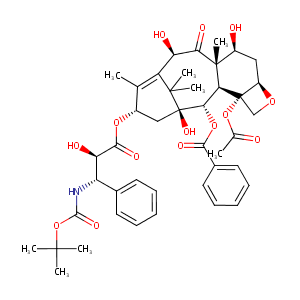
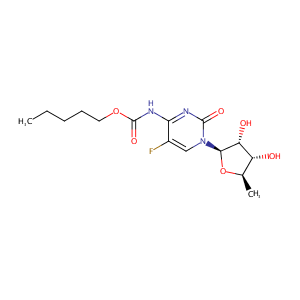
General Information of Drug Combination (ID: DCLDWI8)

Drug Combination Name
Docetaxel Capecitabine
Indication
Disease Entry Status REF
Esophageal Cancer Phase 1 [1]
Component Drugs Docetaxel   DMDI269 Capecitabine   DMTS85L
Small molecular drug Small molecular drug
2D MOL 2D MOL
3D MOL 3D MOL

Molecular Interaction Atlas of This Drug Combination

Molecular Interaction Atlas (MIA)
Indication(s) of Docetaxel
Disease Entry ICD 11 Status REF
Advanced cancer 2A00-2F9Z Approved [2]
Breast carcinoma N.A. Approved [2]
Head and neck cancer 2D42 Approved [2]
Leiomyosarcoma 2B58 Approved [2]
Lung cancer 2C25.0 Approved [2]
Non-small-cell lung cancer 2C25.Y Approved [2]
Prostate adenocarcinoma N.A. Approved [2]
Prostate cancer 2C82.0 Approved [2]
Solid tumour/cancer 2A00-2F9Z Approved [3]
Urinary system neoplasm N.A. Approved [2]
Gastric cancer 2B72 Investigative [2]
Docetaxel Interacts with 1 DTT Molecule(s)
DTT Name DTT ID UniProt ID Mode of Action REF
Tubulin (TUB) TTML2WA NOUNIPROTAC Inhibitor [9]
------------------------------------------------------------------------------------
Docetaxel Interacts with 8 DTP Molecule(s)
DTP Name DTP ID UniProt ID Mode of Action REF
Multidrug resistance-associated protein 1 (ABCC1) DTSYQGK MRP1_HUMAN Substrate [10]
Multidrug resistance-associated protein 2 (ABCC2) DTFI42L MRP2_HUMAN Substrate [11]
P-glycoprotein 1 (ABCB1) DTUGYRD MDR1_HUMAN Substrate [12]
Breast cancer resistance protein (ABCG2) DTI7UX6 ABCG2_HUMAN Substrate [13]
Organic anion transporting polypeptide 1B1 (SLCO1B1) DT3D8F0 SO1B1_HUMAN Substrate [14]
Organic anion transporting polypeptide 1B3 (SLCO1B3) DT9C1TS SO1B3_HUMAN Substrate [15]
TAP-like protein (ABCB9) DT68UV2 ABCB9_HUMAN Substrate [16]
Multidrug resistance-associated protein 7 (ABCC10) DTPS120 MRP7_HUMAN Substrate [17]
------------------------------------------------------------------------------------
⏷ Show the Full List of 8 DTP(s)
Docetaxel Interacts with 3 DME Molecule(s)
DME Name DME ID UniProt ID Mode of Action REF
Cytochrome P450 3A4 (CYP3A4) DE4LYSA CP3A4_HUMAN Metabolism [18]
Cytochrome P450 3A5 (CYP3A5) DEIBDNY CP3A5_HUMAN Metabolism [19]
Cytochrome P450 3A7 (CYP3A7) DERD86B CP3A7_HUMAN Metabolism [19]
------------------------------------------------------------------------------------
Docetaxel Interacts with 41 DOT Molecule(s)
DOT Name DOT ID UniProt ID Mode of Action REF
ATP-dependent translocase ABCB1 (ABCB1) OTEJROBO MDR1_HUMAN Increases Response To Substance [20]
Tumor necrosis factor receptor superfamily member 10A (TNFRSF10A) OTBPCU2O TR10A_HUMAN Increases Expression [21]
Tumor necrosis factor receptor superfamily member 10B (TNFRSF10B) OTA1CPBV TR10B_HUMAN Increases Expression [21]
Bcl-2-like protein 11 (BCL2L11) OTNQQWFJ B2L11_HUMAN Increases Degradation [22]
Nuclear receptor subfamily 1 group I member 2 (NR1I2) OTC5U0N5 NR1I2_HUMAN Increases Activity [23]
RAF proto-oncogene serine/threonine-protein kinase (RAF1) OT51LSFO RAF1_HUMAN Increases Expression [24]
Transcription factor Jun (JUN) OTCYBO6X JUN_HUMAN Increases Phosphorylation [25]
Keratin, type I cytoskeletal 18 (KRT18) OTVLQFIP K1C18_HUMAN Increases Expression [26]
Poly polymerase 1 (PARP1) OT310QSG PARP1_HUMAN Increases Cleavage [25]
Histone H2AX (H2AX) OT18UX57 H2AX_HUMAN Increases Expression [27]
Natriuretic peptides B (NPPB) OTSN2IPY ANFB_HUMAN Increases Expression [28]
Growth arrest and DNA damage-inducible protein GADD45 alpha (GADD45A) OTDRV63V GA45A_HUMAN Decreases Expression [29]
Tumor necrosis factor receptor superfamily member 6 (FAS) OTP9XG86 TNR6_HUMAN Increases Expression [30]
Mitogen-activated protein kinase 3 (MAPK3) OTCYKGKO MK03_HUMAN Increases Phosphorylation [24]
Mitogen-activated protein kinase 1 (MAPK1) OTH85PI5 MK01_HUMAN Increases Phosphorylation [24]
Cyclin-dependent kinase inhibitor 1 (CDKN1A) OTQWHCZE CDN1A_HUMAN Decreases Expression [29]
Cyclin-dependent kinase inhibitor 2A (CDKN2A) OTN0ZWAE CDN2A_HUMAN Decreases Expression [31]
Bcl-2 homologous antagonist/killer (BAK1) OTDP6ILW BAK_HUMAN Increases Activity [22]
Bcl2-associated agonist of cell death (BAD) OT63ERYM BAD_HUMAN Decreases Phosphorylation [22]
ELL-associated factor 2 (EAF2) OTSOET5L EAF2_HUMAN Decreases Expression [29]
Small integral membrane protein 14 (SMIM14) OT47IF19 SIM14_HUMAN Decreases Expression [29]
Protein FAM117A (FAM117A) OT2FBGGV F117A_HUMAN Decreases Expression [29]
Tumor necrosis factor receptor superfamily member 19 (TNFRSF19) OTTVT4MB TNR19_HUMAN Decreases Expression [29]
Tropomodulin-2 (TMOD2) OTTTUH2W TMOD2_HUMAN Decreases Expression [29]
Flavin-containing monooxygenase 3 (FMO3) OT1G2EV3 FMO3_HUMAN Affects Response To Substance [32]
Kinesin heavy chain isoform 5A (KIF5A) OT3ETTI6 KIF5A_HUMAN Decreases Response To Substance [33]
Regulator of G-protein signaling 17 (RGS17) OT5RVUDS RGS17_HUMAN Increases Response To Substance [34]
Mitotic checkpoint serine/threonine-protein kinase BUB1 beta (BUB1B) OT8KME51 BUB1B_HUMAN Affects Response To Substance [35]
Baculoviral IAP repeat-containing protein 5 (BIRC5) OTILXZYL BIRC5_HUMAN Decreases Response To Substance [36]
Superoxide dismutase , mitochondrial (SOD2) OTIWXGZ9 SODM_HUMAN Decreases Response To Substance [37]
Receptor tyrosine-protein kinase erbB-2 (ERBB2) OTOAUNCK ERBB2_HUMAN Increases Response To Substance [38]
Kinesin-like protein KIFC3 (KIFC3) OTOPD4QO KIFC3_HUMAN Decreases Response To Substance [33]
Regulator of G-protein signaling 10 (RGS10) OTQ8N1QH RGS10_HUMAN Increases Response To Substance [34]
E3 ubiquitin-protein ligase CHFR (CHFR) OTRAD2TT CHFR_HUMAN Decreases Response To Substance [39]
Bcl-2-like protein 1 (BCL2L1) OTRC5K9O B2CL1_HUMAN Decreases Response To Substance [40]
Kinesin-like protein KIF12 (KIF12) OTTALNDD KIF12_HUMAN Decreases Response To Substance [33]
Flavin-containing monooxygenase 2 (FMO2) OTUJUL9S FMO2_HUMAN Affects Response To Substance [32]
Kinesin-like protein KIF14 (KIF14) OTXHT4JM KIF14_HUMAN Decreases Response To Substance [41]
Mitotic spindle assembly checkpoint protein MAD2A (MAD2L1) OTXNGZCG MD2L1_HUMAN Affects Response To Substance [35]
Cellular retinoic acid-binding protein 2 (CRABP2) OTY01V9G RABP2_HUMAN Affects Response To Substance [42]
ATP-binding cassette sub-family C member 6 (ABCC6) OTZT0LKT MRP6_HUMAN Affects Response To Substance [32]
------------------------------------------------------------------------------------
⏷ Show the Full List of 41 DOT(s)
Indication(s) of Capecitabine
Disease Entry ICD 11 Status REF
Adenocarcinoma 2D40 Approved [4]
Colon adenocarcinoma N.A. Approved [4]
Colorectal cancer 2B91.Z Approved [5]
Metastasis from malignant tumor of colon N.A. Approved [4]
Rectal adenocarcinoma 2B92 Approved [4]
Breast cancer 2C60-2C65 Phase 3 [5]
Colon cancer 2B90.Z Investigative [4]
Gastric cancer 2B72 Investigative [4]
Capecitabine Interacts with 1 DTT Molecule(s)
DTT Name DTT ID UniProt ID Mode of Action REF
Candida Thymidylate synthase (Candi TMP1) TTU6BFZ TYSY_CANAL Inhibitor [45]
------------------------------------------------------------------------------------
Capecitabine Interacts with 2 DME Molecule(s)
DME Name DME ID UniProt ID Mode of Action REF
Cytidine aminohydrolase (CDA) DEKEDRC CDD_HUMAN Metabolism [46]
Thymidine phosphorylase (TYMP) DE4HCYL TYPH_HUMAN Metabolism [47]
------------------------------------------------------------------------------------
Capecitabine Interacts with 54 DOT Molecule(s)
DOT Name DOT ID UniProt ID Mode of Action REF
Cyclin-dependent kinase inhibitor 2A (CDKN2A) OTN0ZWAE CDN2A_HUMAN Decreases Expression [48]
C-C motif chemokine 21 (CCL21) OT7DOXEM CCL21_HUMAN Decreases Expression [43]
CCN family member 1 (CCN1) OTKJBEMD CCN1_HUMAN Decreases Expression [43]
Aquaporin-8 (AQP8) OT99JKME AQP8_HUMAN Increases Expression [43]
HLA class II histocompatibility antigen, DQ alpha 1 chain (HLA-DQA1) OTC6GISG DQA1_HUMAN Decreases Expression [43]
Interleukin-8 (CXCL8) OTS7T5VH IL8_HUMAN Increases Secretion [49]
B-lymphocyte antigen CD20 (MS4A1) OTZTVUBX CD20_HUMAN Decreases Expression [43]
Nuclear receptor subfamily 4immunitygroup A member 1 (NR4A1) OTGP6GA4 NR4A1_HUMAN Decreases Expression [43]
40-kDa huntingtin-associated protein (F8A1) OTXTQ59R HAP40_HUMAN Decreases Expression [43]
Chloride anion exchanger (SLC26A3) OTBNK2U2 S26A3_HUMAN Increases Expression [43]
Nuclear receptor subfamily 4 group A member 2 (NR4A2) OT3F9IR2 NR4A2_HUMAN Decreases Expression [43]
Serine/threonine-protein kinase SIK1 (SIK1) OT6FCHME SIK1_HUMAN Decreases Expression [43]
Hemoglobin subunit alpha (HBA1) OTW2BQF4 HBA_HUMAN Decreases Expression [43]
Fc receptor-like A (FCRLA) OT6MK4M1 FCRLA_HUMAN Decreases Expression [43]
Leucine-rich repeat-containing protein 15 (LRRC15) OTX7JL8H LRC15_HUMAN Decreases Expression [43]
C-C motif chemokine 19 (CCL19) OTQ2UJMH CCL19_HUMAN Decreases Expression [43]
E3 ubiquitin-protein ligase TRIM31 (TRIM31) OT7VW6RP TRI31_HUMAN Increases Expression [43]
Interleukin-17 receptor B (IL17RB) OT0KDNSF I17RB_HUMAN Increases Response To Substance [44]
Glycogen phosphorylase, brain form (PYGB) OT2ZTJT0 PYGB_HUMAN Increases Response To Substance [44]
Calcium and integrin-binding protein 1 (CIB1) OT4BVCRU CIB1_HUMAN Increases Response To Substance [44]
1-acyl-sn-glycerol-3-phosphate acyltransferase beta (AGPAT2) OT5I4Y9K PLCB_HUMAN Increases Response To Substance [44]
cAMP-dependent protein kinase catalytic subunit beta (PRKACB) OT6RMDCE KAPCB_HUMAN Decreases Response To Substance [44]
Claudin-3 (CLDN3) OT71MN9S CLD3_HUMAN Increases Response To Substance [44]
Replication protein A 70 kDa DNA-binding subunit (RPA1) OT76POLP RFA1_HUMAN Decreases Response To Substance [44]
Protein flightless-1 homolog (FLII) OT7G9JG6 FLII_HUMAN Decreases Response To Substance [44]
Stress-induced-phosphoprotein 1 (STIP1) OT7TXLOX STIP1_HUMAN Decreases Response To Substance [44]
Ras-related protein R-Ras2 (RRAS2) OT83NCEB RRAS2_HUMAN Decreases Response To Substance [44]
Cocaine esterase (CES2) OTC647SQ EST2_HUMAN Increases Response To Substance [50]
Ras-related protein Rab-40B (RAB40B) OTCA9ZF5 RB40B_HUMAN Increases Response To Substance [44]
Iron-sulfur clusters transporter ABCB7, mitochondrial (ABCB7) OTDNTHNR ABCB7_HUMAN Decreases Response To Substance [44]
Tyrosine-protein phosphatase non-receptor type 13 (PTPN13) OTESFZSO PTN13_HUMAN Decreases Response To Substance [44]
ADP-ribosylation factor-like protein 4D (ARL4D) OTG5I3KU ARL4D_HUMAN Decreases Response To Substance [44]
Double-strand break repair protein MRE11 (MRE11) OTGU8TZM MRE11_HUMAN Decreases Response To Substance [44]
Inorganic pyrophosphatase (PPA1) OTHZK1QB IPYR_HUMAN Increases Response To Substance [44]
Polycystin-2 (PKD2) OTIXBU8H PKD2_HUMAN Decreases Response To Substance [44]
Protein S100-P (S100P) OTJCXNJG S100P_HUMAN Increases Response To Substance [44]
Transcriptional activator Myb (MYB) OTJH64IV MYB_HUMAN Increases Response To Substance [44]
1-phosphatidylinositol 4,5-bisphosphate phosphodiesterase epsilon-1 (PLCE1) OTJISZOX PLCE1_HUMAN Increases Response To Substance [44]
Plakophilin-2 (PKP2) OTJOVF68 PKP2_HUMAN Increases Response To Substance [44]
Transcriptional enhancer factor TEF-1 (TEAD1) OTK6971C TEAD1_HUMAN Decreases Response To Substance [44]
Tyrosine-protein kinase receptor UFO (AXL) OTKA2SUX UFO_HUMAN Decreases Response To Substance [44]
Myelin regulatory factor (MYRF) OTKF6AEB MYRF_HUMAN Increases Response To Substance [44]
Galectin-4 (LGALS4) OTKQCG0H LEG4_HUMAN Increases Response To Substance [44]
Four and a half LIM domains protein 1 (FHL1) OTN535SU FHL1_HUMAN Decreases Response To Substance [44]
Hepatoma-derived growth factor-related protein 3 (HDGFL3) OTNN7WYH HDGR3_HUMAN Decreases Response To Substance [44]
E3 ubiquitin-protein ligase TRIM15 (TRIM15) OTNYAKP6 TRI15_HUMAN Increases Response To Substance [44]
Dermatan-sulfate epimerase (DSE) OTQ108VJ DSE_HUMAN Decreases Response To Substance [44]
Anterior gradient protein 2 homolog (AGR2) OTRRZT7W AGR2_HUMAN Increases Response To Substance [44]
Receptor tyrosine-protein kinase erbB-3 (ERBB3) OTRSST0A ERBB3_HUMAN Increases Response To Substance [44]
Aldo-keto reductase family 1 member B1 (AKR1B1) OTRX72TH ALDR_HUMAN Decreases Response To Substance [44]
Aldo-keto reductase family 1 member C3 (AKR1C3) OTU2SXBA AK1C3_HUMAN Increases Response To Substance [44]
3-ketoacyl-CoA thiolase, peroxisomal (ACAA1) OTVKRET0 THIK_HUMAN Increases Response To Substance [44]
Tissue alpha-L-fucosidase (FUCA1) OTW71IK4 FUCO_HUMAN Increases Response To Substance [44]
Epidermal growth factor receptor kinase substrate 8 (EPS8) OTZ6ES6V EPS8_HUMAN Increases Response To Substance [44]
------------------------------------------------------------------------------------
⏷ Show the Full List of 54 DOT(s)

Test Results of This Drug Combination in Other Disease Systems

Indication DrugCom ID Cell Line Status REF
Breast Cancer DCCWXZ6 N. A. Phase 1 [51]
------------------------------------------------------------------------------------

References

1 ClinicalTrials.gov (NCT00054457) Docetaxel and Capecitabine in Treating Patients With Metastatic Cancer of the Stomach or Gastroesophageal Junction
2 Docetaxel FDA Label
3 URL: http://www.guidetopharmacology.org Nucleic Acids Res. 2015 Oct 12. pii: gkv1037. The IUPHAR/BPS Guide to PHARMACOLOGY in 2016: towards curated quantitative interactions between 1300 protein targets and 6000 ligands. (Ligand id: 6809).
4 Capecitabine FDA Label
5 URL: http://www.guidetopharmacology.org Nucleic Acids Res. 2015 Oct 12. pii: gkv1037. The IUPHAR/BPS Guide to PHARMACOLOGY in 2016: towards curated quantitative interactions between 1300 protein targets and 6000 ligands. (Ligand id: 6799).
6 Synergistic effects of docetaxel and S-1 by modulating the expression of metabolic enzymes of 5-fluorouracil in human gastric cancer cell lines. Int J Cancer. 2006 Aug 15;119(4):783-91.
7 Induction of tubulin by docetaxel is associated with p53 status in human non small cell lung cancer cell lines. Int J Cancer. 2006 Jan 15;118(2):317-25. doi: 10.1002/ijc.21372.
8 Cyclooxygenase-2 inhibitor celecoxib augments chemotherapeutic drug-induced apoptosis by enhancing activation of caspase-3 and -9 in prostate cancer cells. Int J Cancer. 2005 Jun 20;115(3):484-92. doi: 10.1002/ijc.20878.
9 Docetaxel: a review of its use in metastatic breast cancer. Drugs. 2005;65(17):2513-31.
10 Human intestinal transporter database: QSAR modeling and virtual profiling of drug uptake, efflux and interactions. Pharm Res. 2013 Apr;30(4):996-1007.
11 Transport of diclofenac by breast cancer resistance protein (ABCG2) and stimulation of multidrug resistance protein 2 (ABCC2)-mediated drug transport by diclofenac and benzbromarone. Drug Metab Dispos. 2009 Jan;37(1):129-36.
12 Effect of ABCB1 C3435T polymorphism on docetaxel pharmacokinetics according to menopausal status in breast cancer patients. Br J Cancer. 2010 Aug 10;103(4):560-6.
13 Ixabepilone, a novel microtubule-targeting agent for breast cancer, is a substrate for P-glycoprotein (P-gp/MDR1/ABCB1) but not breast cancer resistance protein (BCRP/ABCG2). J Pharmacol Exp Ther. 2011 May;337(2):423-32.
14 FDA Drug Development and Drug Interactions
15 Rapid screening of antineoplastic candidates for the human organic anion transporter OATP1B3 substrates using fluorescent probes. Cancer Lett. 2008 Feb 18;260(1-2):163-9.
16 RNA-sequencing dissects the transcriptome of polyploid cancer cells that are resistant to combined treatments of cisplatin with paclitaxel and docetaxel. Mol Biosyst. 2017 Sep 26;13(10):2125-2134.
17 Modulation of the ATPase and transport activities of broad-acting multidrug resistance factor ABCC10 (MRP7). Cancer Res. 2012 Dec 15;72(24):6457-67.
18 Randomized pharmacokinetic and pharmacodynamic study of docetaxel: dosing based on body-surface area compared with individualized dosing based on cytochrome P450 activity estimated using a urinary metabolite of exogenous cortisol. J Clin Oncol. 2005 Feb 20;23(6):1061-9.
19 Drug Interactions Flockhart Table
20 Concise prediction models of anticancer efficacy of 8 drugs using expression data from 12 selected genes. Int J Cancer. 2004 Sep 10;111(4):617-26. doi: 10.1002/ijc.20289.
21 Pretreatment with paclitaxel enhances apo-2 ligand/tumor necrosis factor-related apoptosis-inducing ligand-induced apoptosis of prostate cancer cells by inducing death receptors 4 and 5 protein levels. Cancer Res. 2001 Jan 15;61(2):759-63.
22 Docetaxel-induced apoptosis of human melanoma is mediated by activation of c-Jun NH2-terminal kinase and inhibited by the mitogen-activated protein kinase extracellular signal-regulated kinase 1/2 pathway. Clin Cancer Res. 2007 Feb 15;13(4):1308-14. doi: 10.1158/1078-0432.CCR-06-2216.
23 PXR-mediated induction of P-glycoprotein by anticancer drugs in a human colon adenocarcinoma-derived cell line. Cancer Chemother Pharmacol. 2010 Sep;66(4):765-71. doi: 10.1007/s00280-009-1221-4. Epub 2009 Dec 30.
24 Docetaxel induces p53-dependent apoptosis and synergizes with farnesyl transferase inhibitor r115777 in human epithelial cancer cells. Front Biosci. 2005 Sep 1;10:2566-75. doi: 10.2741/1720.
25 All-trans retinoic acid potentiates Taxotere-induced cell death mediated by Jun N-terminal kinase in breast cancer cells. Oncogene. 2004 Jan 15;23(2):426-33. doi: 10.1038/sj.onc.1207040.
26 Docetaxel induces apoptosis in hormone refractory prostate carcinomas during multiple treatment cycles. Br J Cancer. 2006 Jun 5;94(11):1592-8. doi: 10.1038/sj.bjc.6603129.
27 Replication-dependent -H2AX formation is involved in docetaxel-induced apoptosis in NSCLC A549 cells. Oncol Rep. 2010 Nov;24(5):1297-305. doi: 10.3892/or_00000986.
28 Docetaxel induced cardiotoxicity. Heart. 2001 Aug;86(2):219. doi: 10.1136/heart.86.2.219.
29 Development and validation of the TGx-HDACi transcriptomic biomarker to detect histone deacetylase inhibitors in human TK6 cells. Arch Toxicol. 2021 May;95(5):1631-1645. doi: 10.1007/s00204-021-03014-2. Epub 2021 Mar 26.
30 [The mechanism of docetaxel-induced apoptosis in human lung cancer cells]. Zhonghua Zhong Liu Za Zhi. 2000 May;22(3):208-11.
31 Azidothymidine and cisplatin increase p14ARF expression in OVCAR-3 ovarian cancer cell line. Toxicol Appl Pharmacol. 2006 Oct 1;216(1):89-97. doi: 10.1016/j.taap.2006.04.015. Epub 2006 May 19.
32 Pharmacogenomics variation in drug metabolizing enzymes and transporters in relation to docetaxel toxicity in Lebanese breast cancer patients: paving the way for OMICs in low and middle income countries. OMICS. 2013 Jul;17(7):353-67. doi: 10.1089/omi.2013.0019. Epub 2013 Jun 11.
33 Specific kinesin expression profiles associated with taxane resistance in basal-like breast cancer. Breast Cancer Res Treat. 2012 Feb;131(3):849-58. doi: 10.1007/s10549-011-1500-8. Epub 2011 Apr 9.
34 Regulators of G-Protein signaling RGS10 and RGS17 regulate chemoresistance in ovarian cancer cells. Mol Cancer. 2010 Nov 2;9:289. doi: 10.1186/1476-4598-9-289.
35 Mitotic checkpoint genes, hsMAD2 and BubR1, in oesophageal squamous cancer cells and their association with 5-fluorouracil and cisplatin-based radiochemotherapy. Clin Oncol (R Coll Radiol). 2008 Oct;20(8):639-46. doi: 10.1016/j.clon.2008.06.010. Epub 2008 Aug 8.
36 [Antisense RNA targeting survivin enhances the chemosensitivity of LOVO/Adr cells to taxotere]. Zhonghua Wei Chang Wai Ke Za Zhi. 2005 Sep;8(5):455-8.
37 Manganese superoxide dismutase is a promising target for enhancing chemosensitivity of basal-like breast carcinoma. Antioxid Redox Signal. 2014 May 20;20(15):2326-46. doi: 10.1089/ars.2013.5295. Epub 2013 Nov 14.
38 HER-2/neu as a predictive marker in a population of advanced breast cancer patients randomly treated either with single-agent doxorubicin or single-agent docetaxel. Breast Cancer Res Treat. 2004 Aug;86(3):197-206. doi: 10.1023/B:BREA.0000036783.88387.47.
39 Epigenetic inactivation of the CHFR gene in cervical cancer contributes to sensitivity to taxanes. Int J Oncol. 2007 Oct;31(4):713-20.
40 Differential effect of anti-apoptotic genes Bcl-xL and c-FLIP on sensitivity of MCF-7 breast cancer cells to paclitaxel and docetaxel. Anticancer Res. 2005 May-Jun;25(3c):2367-79.
41 KIF14 promotes AKT phosphorylation and contributes to chemoresistance in triple-negative breast cancer. Neoplasia. 2014 Mar;16(3):247-56, 256.e2. doi: 10.1016/j.neo.2014.03.008.
42 The prognostic gene CRABP2 affects drug sensitivity by regulating docetaxel-induced apoptosis in breast invasive carcinoma: A pan-cancer analysis. Chem Biol Interact. 2023 Mar 1;373:110372. doi: 10.1016/j.cbi.2023.110372. Epub 2023 Feb 2.
43 Gene expression responses reflecting 5-FU-induced toxicity: Comparison between patient colon tissue and 3D human colon organoids. Toxicol Lett. 2022 Dec 1;371:17-24. doi: 10.1016/j.toxlet.2022.09.013. Epub 2022 Sep 29.
44 Gene expression analysis using human cancer xenografts to identify novel predictive marker genes for the efficacy of 5-fluorouracil-based drugs. Cancer Sci. 2006 Jun;97(6):510-22. doi: 10.1111/j.1349-7006.2006.00204.x.
45 UGT1A7 and UGT1A9 polymorphisms predict response and toxicity in colorectal cancer patients treated with capecitabine/irinotecan. Clin Cancer Res. 2005 Feb 1;11(3):1226-36.
46 Augmentation of the antitumor activity of capecitabine by a tumor selective dihydropyrimidine dehydrogenase inhibitor, RO0094889. Int J Cancer. 2003 Sep 20;106(5):799-805.
47 Induction of thymidine phosphorylase in both irradiated and shielded, contralateral human U87MG glioma xenografts: implications for a dual modality treatment using capecitabine and irradiation. Mol Cancer Ther. 2002 Oct;1(12):1139-45.
48 Effects of capecitabine and vinorelbine on cell proliferation, metabolism and COX2 and p16 expression in breast cancer cell lines and solid tumour tissues. Biomed Pharmacother. 2007 Oct;61(9):596-600.
49 P38 MAPK, NF-B, and JAK-STAT3 Signaling Pathways Involved in Capecitabine-Induced Hand-Foot Syndrome via Interleukin 6 or Interleukin 8 Abnormal Expression. Chem Res Toxicol. 2022 Mar 21;35(3):422-430. doi: 10.1021/acs.chemrestox.1c00317. Epub 2022 Feb 11.
50 A carboxylesterase 2 gene polymorphism as predictor of capecitabine on response and time to progression. Curr Drug Metab. 2008 May;9(4):336-43. doi: 10.2174/138920008784220646.
51 ClinicalTrials.gov (NCT00050167) Evaluation of Differing Taxanes/Taxane Combinations on the Outcome of Patients With Operable Breast Cancer