General Information of Drug Combination (ID: DCO73AM)

Drug Combination Name
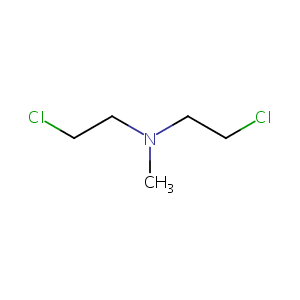
Vandetanib Mechlorethamine
Indication
Disease Entry Status REF
Amelanotic melanoma Investigative [1]
Component Drugs Vandetanib   DMRICNP Mechlorethamine   DM0CVXA
Small molecular drug Small molecular drug
2D MOL 2D MOL
3D MOL 3D MOL
High-throughput Screening Result Testing Cell Line: MDA-MB-435
Zero Interaction Potency (ZIP) Score: 3.63
Bliss Independence Score: 5.44
Loewe Additivity Score: 3.41
LHighest Single Agent (HSA) Score: 0.72

Molecular Interaction Atlas of This Drug Combination

Molecular Interaction Atlas (MIA)
Indication(s) of Vandetanib
Disease Entry ICD 11 Status REF
Solid tumour/cancer 2A00-2F9Z Approved [2]
Vandetanib Interacts with 3 DTT Molecule(s)
DTT Name DTT ID UniProt ID Mode of Action REF
Epidermal growth factor receptor (EGFR) TTGKNB4 EGFR_HUMAN Inhibitor [6]
Proto-oncogene c-Ret (RET) TT4DXQT RET_HUMAN Inhibitor [6]
Vascular endothelial growth factor receptor 2 (KDR) TTUTJGQ VGFR2_HUMAN Inhibitor [6]
------------------------------------------------------------------------------------
Vandetanib Interacts with 3 DTP Molecule(s)
DTP Name DTP ID UniProt ID Mode of Action REF
Breast cancer resistance protein (ABCG2) DTI7UX6 ABCG2_HUMAN Substrate [7]
Organic anion transporting polypeptide 1B1 (SLCO1B1) DT3D8F0 SO1B1_HUMAN Substrate [8]
Organic anion transporting polypeptide 1B3 (SLCO1B3) DT9C1TS SO1B3_HUMAN Substrate [8]
------------------------------------------------------------------------------------
Vandetanib Interacts with 1 DME Molecule(s)
DME Name DME ID UniProt ID Mode of Action REF
Cytochrome P450 3A4 (CYP3A4) DE4LYSA CP3A4_HUMAN Metabolism [9]
------------------------------------------------------------------------------------
Vandetanib Interacts with 22 DOT Molecule(s)
DOT Name DOT ID UniProt ID Mode of Action REF
Procollagen-lysine,2-oxoglutarate 5-dioxygenase 2 (PLOD2) OTKOZRZP PLOD2_HUMAN Increases Expression [10]
Stearoyl-CoA desaturase (SCD) OTB1073G SCD_HUMAN Increases Expression [10]
Insulin-induced gene 1 protein (INSIG1) OTZF5X1D INSI1_HUMAN Increases Expression [10]
BCL2/adenovirus E1B 19 kDa protein-interacting protein 3-like (BNIP3L) OTJKOMXE BNI3L_HUMAN Increases Expression [10]
Protein FAM13A (FAM13A) OTZ6GN0Q FA13A_HUMAN Increases Expression [10]
Phosphoglycerate kinase 1 (PGK1) OT6V1ICH PGK1_HUMAN Increases Expression [10]
Calbindin (CALB1) OTM7IXDG CALB1_HUMAN Increases Expression [10]
Prothymosin alpha (PTMA) OT2W4T1M PTMA_HUMAN Decreases Expression [10]
Trypsin-2 (PRSS2) OTOMVUWL TRY2_HUMAN Increases Expression [10]
Gamma-enolase (ENO2) OTRODL0T ENOG_HUMAN Increases Expression [10]
Solute carrier family 2, facilitated glucose transporter member 3 (SLC2A3) OT2HZK5M GTR3_HUMAN Increases Expression [10]
Histone H1.2 (H1-2) OT0AVI4M H12_HUMAN Increases Expression [10]
DNA mismatch repair protein Msh3 (MSH3) OTD3YPVL MSH3_HUMAN Decreases Expression [10]
Pro-adrenomedullin (ADM) OT7T0TA4 ADML_HUMAN Increases Expression [10]
Small ribosomal subunit protein eS6 (RPS6) OTT4D1LN RS6_HUMAN Decreases Phosphorylation [11]
Collagen alpha-3(IV) chain (COL4A3) OT6SB8X5 CO4A3_HUMAN Increases Expression [10]
Solute carrier family 2, facilitated glucose transporter member 14 (SLC2A14) OTBFIOVY GTR14_HUMAN Increases Expression [10]
Protein NDRG1 (NDRG1) OTVO66BO NDRG1_HUMAN Increases Expression [10]
TSC22 domain family protein 3 (TSC22D3) OT03UM03 T22D3_HUMAN Increases Expression [10]
Transcription factor SOX-17 (SOX17) OT9H4WWE SOX17_HUMAN Decreases Localization [12]
Hypoxia-inducible lipid droplet-associated protein (HILPDA) OTEID3ZM HLPDA_HUMAN Increases Expression [10]
Insulin-induced gene 2 protein (INSIG2) OTX4VY51 INSI2_HUMAN Increases Expression [10]
------------------------------------------------------------------------------------
⏷ Show the Full List of 22 DOT(s)
Indication(s) of Mechlorethamine
Disease Entry ICD 11 Status REF
Chronic myelogenous leukaemia 2A20.0 Approved [3]
Lung cancer 2C25.0 Approved [3]
Mycosis fungoides 2B01 Approved [3]
Primary cutaneous T-cell lymphoma N.A. Approved [3]
Small lymphocytic lymphoma 2A82.0 Approved [3]
T-cell lymphoma 2A90 Approved [4]
Hodgkin lymphoma 2B30 Phase 3 [5]
Classic Hodgkin lymphoma N.A. Investigative [3]
Mechlorethamine Interacts with 1 DTT Molecule(s)
DTT Name DTT ID UniProt ID Mode of Action REF
Human Deoxyribonucleic acid (hDNA) TTUTN1I NOUNIPROTAC Intercalator [15]
------------------------------------------------------------------------------------
Mechlorethamine Interacts with 9 DOT Molecule(s)
DOT Name DOT ID UniProt ID Mode of Action REF
Receptor tyrosine-protein kinase erbB-2 (ERBB2) OTOAUNCK ERBB2_HUMAN Decreases Expression [16]
Transcription factor Jun (JUN) OTCYBO6X JUN_HUMAN Increases Expression [17]
Interleukin-8 (CXCL8) OTS7T5VH IL8_HUMAN Increases Expression [17]
Transcription factor JunB (JUNB) OTG2JXV5 JUNB_HUMAN Increases Expression [17]
Transcription factor JunD (JUND) OTNKACJD JUND_HUMAN Increases Expression [17]
Protein S100-P (S100P) OTJCXNJG S100P_HUMAN Increases Expression [18]
Laminin subunit gamma-2 (LAMC2) OTJMTM72 LAMC2_HUMAN Decreases Expression [19]
Bcl-2 homologous antagonist/killer (BAK1) OTDP6ILW BAK_HUMAN Increases Expression [20]
Transient receptor potential cation channel subfamily A member 1 (TRPA1) OTRDIR5M TRPA1_HUMAN Increases Response To Substance [21]
------------------------------------------------------------------------------------
⏷ Show the Full List of 9 DOT(s)

Test Results of This Drug Combination in Other Disease Systems

Indication DrugCom ID Cell Line Status REF
Adult acute myeloid leukemia DCT445E HL-60(TB) Investigative [1]
Malignant melanoma DC7OVNJ LOX IMVI Investigative [1]
Plasma cell myeloma DCEX87T RPMI-8226 Investigative [1]
------------------------------------------------------------------------------------

References

1 CheMBL Affinity Phenotypic Cellular Interaction Assay ID: CHEMBL1125976
2 URL: http://www.guidetopharmacology.org Nucleic Acids Res. 2015 Oct 12. pii: gkv1037. The IUPHAR/BPS Guide to PHARMACOLOGY in 2016: towards curated quantitative interactions between 1300 protein targets and 6000 ligands. (Ligand id: 5717).
3 Mechlorethamine FDA Label
4 Drugs@FDA. U.S. Food and Drug Administration. U.S. Department of Health & Human Services. 2015
5 URL: http://www.guidetopharmacology.org Nucleic Acids Res. 2015 Oct 12. pii: gkv1037. The IUPHAR/BPS Guide to PHARMACOLOGY in 2016: towards curated quantitative interactions between 1300 protein targets and 6000 ligands. (Ligand id: 7218).
6 A comparison of physicochemical property profiles of marketed oral drugs and orally bioavailable anti-cancer protein kinase inhibitors in clinical development. Curr Top Med Chem. 2007;7(14):1408-22.
7 Tyrosine kinase inhibitors and multidrug resistance proteins: interactions and biological consequences. Cancer Chemother Pharmacol. 2010 Jan;65(2):335-46.
8 Contribution of OATP1B1 and OATP1B3 to the disposition of sorafenib and sorafenib-glucuronide. Clin Cancer Res. 2013 Mar 15;19(6):1458-66.
9 FDA label of Vandetanib. The 2020 official website of the U.S. Food and Drug Administration.
10 ZD6474 inhibits tumor growth and intraperitoneal dissemination in a highly metastatic orthotopic gastric cancer model. Int J Cancer. 2006 Jan 15;118(2):483-9. doi: 10.1002/ijc.21340.
11 Autophagy inhibition induces enhanced proapoptotic effects of ZD6474 in glioblastoma. Br J Cancer. 2013 Jul 9;109(1):164-71. doi: 10.1038/bjc.2013.306. Epub 2013 Jun 25.
12 A high-throughput screen for teratogens using human pluripotent stem cells. Toxicol Sci. 2014 Jan;137(1):76-90. doi: 10.1093/toxsci/kft239. Epub 2013 Oct 23.
13 Thioredoxin Cross-Linking by Nitrogen Mustard in Lung Epithelial Cells: Formation of Multimeric Thioredoxin/Thioredoxin Reductase Complexes and Inhibition of Disulfide Reduction. Chem Res Toxicol. 2015 Nov 16;28(11):2091-103. doi: 10.1021/acs.chemrestox.5b00194. Epub 2015 Oct 19.
14 Cross-linking of thioredoxin reductase by the sulfur mustard analogue mechlorethamine (methylbis(2-chloroethyl)amine) in human lung epithelial cells and rat lung: selective inhibition of disulfide reduction but not redox cycling. Chem Res Toxicol. 2014 Jan 21;27(1):61-75. doi: 10.1021/tx400329a. Epub 2013 Dec 9.
15 Proteomic analysis of DNA-protein cross-linking by antitumor nitrogen mustards. Chem Res Toxicol. 2009 Jun;22(6):1151-62.
16 Down-regulation of HER-2 expression in human breast cancer cell HBC-4 and ZR75-1 by nitrogen-mustard-N-oxide. Kobe J Med Sci. 2007;53(4):135-42.
17 Nitrogen mustard prevents transport of Fra-1 into the nucleus to promote c-Fos- and FosB-dependent IL-8 induction in injured mouse epidermis. Toxicol Lett. 2020 Feb 1;319:256-263. doi: 10.1016/j.toxlet.2019.10.006. Epub 2019 Oct 19.
18 S100P is selectively upregulated in tumor cell lines challenged with DNA cross-linking agents. Leuk Res. 2005 Oct;29(10):1181-90. doi: 10.1016/j.leukres.2005.03.012.
19 Histopathologic and immunohistochemical features in human skin after exposure to nitrogen and sulfur mustard. Am J Dermatopathol. 1998 Feb;20(1):22-8. doi: 10.1097/00000372-199802000-00005.
20 Increased expression of VDAC1 sensitizes carcinoma cells to apoptosis induced by DNA cross-linking agents. Biochem Pharmacol. 2012 May 1;83(9):1172-82. doi: 10.1016/j.bcp.2012.01.017. Epub 2012 Jan 21.
21 Activation of the human TRPA1 channel by different alkylating sulfur and nitrogen mustards and structurally related chemotherapeutic drugs. Toxicol Lett. 2023 Mar 1;376:51-59. doi: 10.1016/j.toxlet.2023.01.007. Epub 2023 Jan 21.