General Information of Drug Combination (ID: DCQK95J)

Drug Combination Name
Propranolol Isoproterenol
Indication
Disease Entry Status REF
Obesity Phase 1 [1]
Component Drugs Propranolol   DM79NTF Isoproterenol   DMK7MEY
Small molecular drug Small molecular drug
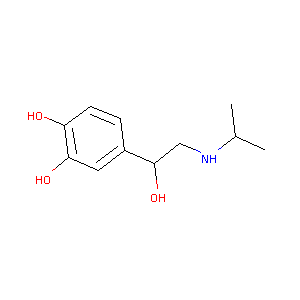
2D MOL 2D MOL
3D MOL 3D MOL

Molecular Interaction Atlas of This Drug Combination

Molecular Interaction Atlas (MIA)
Indication(s) of Propranolol
Disease Entry ICD 11 Status REF
Angina pectoris BA40 Approved [2]
Atrial fibrillation BC81.3 Approved [2]
Cocaine addiction 6C45.2 Approved [2]
Hemangioma 2E81-2F2Y Approved [2]
Migraine 8A80 Approved [3]
Respiratory papillomatosis 2F00.1 Investigative [2]
Propranolol Interacts with 1 DTT Molecule(s)
DTT Name DTT ID UniProt ID Mode of Action REF
Adrenergic receptor beta-1 (ADRB1) TTR6W5O ADRB1_HUMAN Antagonist [8]
------------------------------------------------------------------------------------
Propranolol Interacts with 4 DTP Molecule(s)
DTP Name DTP ID UniProt ID Mode of Action REF
P-glycoprotein 1 (ABCB1) DTUGYRD MDR1_HUMAN Substrate [9]
Organic cation transporter 2 (SLC22A2) DT9IDPW S22A2_HUMAN Substrate [10]
Organic cation transporter 3 (SLC22A3) DT6201N S22A3_HUMAN Substrate [10]
Organic cation transporter 1 (SLC22A1) DTT79CX S22A1_HUMAN Substrate [10]
------------------------------------------------------------------------------------
Propranolol Interacts with 8 DME Molecule(s)
DME Name DME ID UniProt ID Mode of Action REF
Cytochrome P450 3A4 (CYP3A4) DE4LYSA CP3A4_HUMAN Metabolism [11]
Cytochrome P450 1A2 (CYP1A2) DEJGDUW CP1A2_HUMAN Metabolism [12]
Cytochrome P450 2D6 (CYP2D6) DECB0K3 CP2D6_HUMAN Metabolism [13]
Cytochrome P450 3A5 (CYP3A5) DEIBDNY CP3A5_HUMAN Metabolism [14]
Cytochrome P450 3A7 (CYP3A7) DERD86B CP3A7_HUMAN Metabolism [14]
Mephenytoin 4-hydroxylase (CYP2C19) DEGTFWK CP2CJ_HUMAN Metabolism [15]
Dimethylaniline oxidase 2 (FMO2) DEIASEZ FMO2_HUMAN Metabolism [16]
Cytochrome P450 102A1 (cyp102) DE4OGUF CPXB_BACMB Metabolism [17]
------------------------------------------------------------------------------------
⏷ Show the Full List of 8 DME(s)
Propranolol Interacts with 11 DOT Molecule(s)
DOT Name DOT ID UniProt ID Mode of Action REF
Cytochrome P450 2C19 (CYP2C19) OTFMJYYE CP2CJ_HUMAN Increases Oxidation [18]
Flavin-containing monooxygenase 2 (FMO2) OTUJUL9S FMO2_HUMAN Increases Oxidation [16]
ATP-dependent translocase ABCB1 (ABCB1) OTEJROBO MDR1_HUMAN Increases Expression [19]
Nuclear receptor subfamily 1 group I member 2 (NR1I2) OTC5U0N5 NR1I2_HUMAN Increases Activity [20]
Renin (REN) OT52GZR2 RENI_HUMAN Decreases Activity [21]
Beta-2 adrenergic receptor (ADRB2) OTSDOX4Q ADRB2_HUMAN Decreases Expression [22]
Neurogenic locus notch homolog protein 1 (NOTCH1) OTI1WADQ NOTC1_HUMAN Decreases Expression [23]
G protein-activated inward rectifier potassium channel 1 (KCNJ3) OTHQG16J KCNJ3_HUMAN Increases Expression [22]
ADP-ribosylation factor 6 (ARF6) OTVV7KJO ARF6_HUMAN Affects Localization [24]
Sodium channel protein type 5 subunit alpha (SCN5A) OTGYZWR6 SCN5A_HUMAN Increases ADR [25]
Potassium voltage-gated channel subfamily E member 1 (KCNE1) OTZNQUW9 KCNE1_HUMAN Increases ADR [25]
------------------------------------------------------------------------------------
⏷ Show the Full List of 11 DOT(s)
Indication(s) of Isoproterenol
Disease Entry ICD 11 Status REF
Atrioventricular block N.A. Approved [4]
Cardiac arrest MC82 Approved [4]
Common cold CA00 Approved [4]
Heart block BC63 Approved [5]
Melanoma 2C30 Phase 1 [6]
Isoproterenol Interacts with 3 DTT Molecule(s)
DTT Name DTT ID UniProt ID Mode of Action REF
Adrenergic receptor beta-1 (ADRB1) TTR6W5O ADRB1_HUMAN Agonist [27]
Adrenergic receptor beta-2 (ADRB2) TT2CJVK ADRB2_HUMAN Modulator [27]
Interleukin-12 beta (IL12B) TTGW72V IL12B_HUMAN Modulator [28]
------------------------------------------------------------------------------------
Isoproterenol Interacts with 1 DME Molecule(s)
DME Name DME ID UniProt ID Mode of Action REF
Thiopurine methyltransferase (TPMT) DEFQ8VO TPMT_HUMAN Metabolism [29]
------------------------------------------------------------------------------------
Isoproterenol Interacts with 40 DOT Molecule(s)
DOT Name DOT ID UniProt ID Mode of Action REF
Apoptotic protease-activating factor 1 (APAF1) OTJWIVY0 APAF_HUMAN Increases Expression [26]
ATP-binding cassette sub-family C member 3 (ABCC3) OTC3IJV4 MRP3_HUMAN Decreases Expression [26]
Bcl-2-like protein 11 (BCL2L11) OTNQQWFJ B2L11_HUMAN Increases Expression [26]
Metalloproteinase inhibitor 1 (TIMP1) OTOXC51H TIMP1_HUMAN Decreases Expression [26]
C-C motif chemokine 3 (CCL3) OTW2H3ND CCL3_HUMAN Increases Expression [26]
Heat shock cognate 71 kDa protein (HSPA8) OTJI2RCI HSP7C_HUMAN Decreases Expression [26]
Tumor necrosis factor receptor superfamily member 1A (TNFRSF1A) OT2D9DOV TNR1A_HUMAN Decreases Expression [26]
Phosphatidylcholine translocator ABCB4 (ABCB4) OTE6PY83 MDR3_HUMAN Decreases Expression [26]
14-3-3 protein sigma (SFN) OTLJCZ1U 1433S_HUMAN Decreases Expression [26]
Heat shock 70 kDa protein 1-like (HSPA1L) OTC2V1K6 HS71L_HUMAN Decreases Expression [26]
Metalloproteinase inhibitor 3 (TIMP3) OTDGQAD1 TIMP3_HUMAN Increases Expression [26]
Heat shock-related 70 kDa protein 2 (HSPA2) OTSDET7B HSP72_HUMAN Increases Expression [26]
C-C motif chemokine 7 (CCL7) OTDIS99H CCL7_HUMAN Decreases Expression [26]
Bcl-2-like protein 1 (BCL2L1) OTRC5K9O B2CL1_HUMAN Decreases Expression [26]
Four and a half LIM domains protein 1 (FHL1) OTN535SU FHL1_HUMAN Decreases Expression [26]
Phorbol-12-myristate-13-acetate-induced protein 1 (PMAIP1) OTXEE550 APR_HUMAN Increases Expression [26]
Bcl-2 homologous antagonist/killer (BAK1) OTDP6ILW BAK_HUMAN Decreases Expression [26]
Regenerating islet-derived protein 3-gamma (REG3G) OTLIUY8Z REG3G_HUMAN Decreases Expression [26]
Metalloproteinase inhibitor 4 (TIMP4) OT8A68SW TIMP4_HUMAN Decreases Expression [26]
Aryl hydrocarbon receptor nuclear translocator 2 (ARNT2) OTAQD3YV ARNT2_HUMAN Decreases Expression [26]
Hypoxia-inducible factor 1-alpha inhibitor (HIF1AN) OT5LIL3W HIF1N_HUMAN Decreases Expression [26]
Hypoxia-inducible factor 3-alpha (HIF3A) OTPWAAMC HIF3A_HUMAN Increases Expression [26]
Proepiregulin (EREG) OTRM4NQY EREG_HUMAN Increases Expression [30]
Renin (REN) OT52GZR2 RENI_HUMAN Increases Activity [31]
Transforming growth factor beta-1 proprotein (TGFB1) OTV5XHVH TGFB1_HUMAN Decreases Expression [32]
Natriuretic peptides A (NPPA) OTMQNTNX ANF_HUMAN Increases Expression [33]
Antileukoproteinase (SLPI) OTUNFUU8 SLPI_HUMAN Increases Expression [30]
Alkaline phosphatase, placental type (ALPP) OTZU4G9W PPB1_HUMAN Increases Expression [34]
Beta-2 adrenergic receptor (ADRB2) OTSDOX4Q ADRB2_HUMAN Increases Expression [35]
Poly polymerase 1 (PARP1) OT310QSG PARP1_HUMAN Decreases Expression [36]
Interleukin-8 (CXCL8) OTS7T5VH IL8_HUMAN Increases Expression [30]
Beta-3 adrenergic receptor (ADRB3) OTPMG4V7 ADRB3_HUMAN Increases Activity [37]
Natriuretic peptides B (NPPB) OTSN2IPY ANFB_HUMAN Increases Expression [33]
Mitogen-activated protein kinase 3 (MAPK3) OTCYKGKO MK03_HUMAN Increases Phosphorylation [38]
Mitogen-activated protein kinase 1 (MAPK1) OTH85PI5 MK01_HUMAN Increases Phosphorylation [38]
Tumor necrosis factor-inducible gene 6 protein (TNFAIP6) OT1SLUZH TSG6_HUMAN Decreases Expression [30]
Ryanodine receptor 2 (RYR2) OT0PF19E RYR2_HUMAN Increases Phosphorylation [39]
Guanine nucleotide-binding protein G(olf) subunit alpha (GNAL) OTESDTEU GNAL_HUMAN Increases Response To Substance [40]
Neuroendocrine secretory protein 55 (GNAS) OTMH8BKJ GNAS3_HUMAN Increases Response To Substance [40]
Interleukin-5 receptor subunit alpha (IL5RA) OTMSLUG9 IL5RA_HUMAN Affects Response To Substance [41]
------------------------------------------------------------------------------------
⏷ Show the Full List of 40 DOT(s)

References

1 ClinicalTrials.gov (NCT05219799) Sex Disparities in Hypoxic Vasodilation and Impact of Obesity
2 Propranolol FDA Label
3 URL: http://www.guidetopharmacology.org Nucleic Acids Res. 2015 Oct 12. pii: gkv1037. The IUPHAR/BPS Guide to PHARMACOLOGY in 2016: towards curated quantitative interactions between 1300 protein targets and 6000 ligands. (Ligand id: 7596).
4 Isoproterenol FDA Label
5 FDA Approved Drug Products from FDA Official Website. 2009. Application Number: (ANDA) 083346.
6 A phase 1 study of AS1409, a novel antibody-cytokine fusion protein, in patients with malignant melanoma or renal cell carcinoma. Clin Cancer Res. 2011 Apr 1;17(7):1998-2005.
7 beta2-adrenergic antagonists suppress pancreatic cancer cell invasion by inhibiting CREB, NFB and AP-1. Cancer Biol Ther. 2010 Jul 1;10(1):19-29.
8 Beta-blockers in the treatment of hypertension: are there clinically relevant differences Postgrad Med. 2009 May;121(3):90-8.
9 Tarascon Pocket Pharmacopoeia 2018 Classic Shirt-Pocket Edition.
10 Influx Transport of Cationic Drug at the Blood-Retinal Barrier: Impact on the Retinal Delivery of Neuroprotectants. Biol Pharm Bull. 2017;40(8):1139-1145.
11 Cytochrome P450 isozymes involved in propranolol metabolism in human liver microsomes. The role of CYP2D6 as ring-hydroxylase and CYP1A2 as N-desisopropylase. Drug Metab Dispos. 1994 Nov-Dec;22(6):909-15.
12 Synthetic and natural compounds that interact with human cytochrome P450 1A2 and implications in drug development. Curr Med Chem. 2009;16(31):4066-218.
13 Structure-activity relationship for human cytochrome P450 substrates and inhibitors. Drug Metab Rev. 2002 Feb-May;34(1-2):69-82.
14 The influence of diltiazem versus cimetidine on propranolol metabolism. J Clin Pharmacol. 1992 Dec;32(12):1099-104.
15 Clinical relevance of genetic polymorphisms in the human CYP2C subfamily. Br J Clin Pharmacol. 2001 Oct;52(4):349-55.
16 Human FMO2-based microbial whole-cell catalysts for drug metabolite synthesis. Microb Cell Fact. 2015 Jun 12;14:82.
17 acillus megaterium SF185 spores exert protective effects against oxidative stress in vivo and in vitro. Sci Rep. 2019 Aug 19;9(1):12082.
18 Comparative study of the oxidation of propranolol enantiomers in hepatic and small intestinal microsomes from cynomolgus and marmoset monkeys. Chem Biol Interact. 2010 Jan 5;183(1):67-78. doi: 10.1016/j.cbi.2009.10.007.
19 Rapid induction of P-glycoprotein expression by high permeability compounds in colonic cells in vitro: a possible source of transporter mediated drug interactions?. Biochem Pharmacol. 2004 Aug 15;68(4):783-90. doi: 10.1016/j.bcp.2004.05.006.
20 Development of a common carp (Cyprinus carpio) pregnane X receptor (cPXR) transactivation reporter assay and its activation by azole fungicides and pharmaceutical chemicals. Toxicol In Vitro. 2017 Jun;41:114-122. doi: 10.1016/j.tiv.2017.02.023. Epub 2017 Mar 1.
21 Intrapatient comparison of treatment with chlorthalidone, spironolactone and propranolol in normoreninemic essential hypertension. Am J Cardiol. 1975 Oct 31;36(5):716-21. doi: 10.1016/0002-9149(75)90174-5.
22 Expression of inwardly rectifying potassium channels (GIRKs) and beta-adrenergic regulation of breast cancer cell lines. BMC Cancer. 2004 Dec 16;4:93. doi: 10.1186/1471-2407-4-93.
23 Propranolol inhibits proliferation and invasion of hemangioma-derived endothelial cells by suppressing the DLL4/Notch1/Akt pathway. Chem Biol Interact. 2018 Oct 1;294:28-33. doi: 10.1016/j.cbi.2018.08.018. Epub 2018 Aug 18.
24 An effector domain mutant of Arf6 implicates phospholipase D in endosomal membrane recycling. Mol Biol Cell. 2006 Jan;17(1):327-35. doi: 10.1091/mbc.e05-06-0523. Epub 2005 Nov 9.
25 ADReCS-Target: target profiles for aiding drug safety research and application. Nucleic Acids Res. 2018 Jan 4;46(D1):D911-D917. doi: 10.1093/nar/gkx899.
26 Isoproterenol effects evaluated in heart slices of human and rat in comparison to rat heart in vivo. Toxicol Appl Pharmacol. 2014 Jan 15;274(2):302-12.
27 Current therapeutic uses and potential of beta-adrenoceptor agonists and antagonists. Eur J Clin Pharmacol. 1998 Feb;53(6):389-404.
28 A phase 1 study of AS1409, a novel antibody-cytokine fusion protein, in patients with malignant melanoma or renal cell carcinoma. Clin Cancer Res. 2011 Apr 1;17(7):1998-2005.
29 Identification, characterization, and ontogenic study of a catechol O-methyltransferase from zebrafish. Aquat Toxicol. 2011 Mar;102(1-2):18-23.
30 An in vitro coculture system of human peripheral blood mononuclear cells with hepatocellular carcinoma-derived cells for predicting drug-induced liver injury. Arch Toxicol. 2021 Jan;95(1):149-168. doi: 10.1007/s00204-020-02882-4. Epub 2020 Aug 20.
31 Hypokalemia from beta2-receptor stimulation by circulating epinephrine. N Engl J Med. 1983 Dec 8;309(23):1414-9. doi: 10.1056/NEJM198312083092303.
32 The regulation of human vascular smooth muscle extracellular matrix protein production by alpha- and beta-adrenoceptor stimulation. J Hypertens. 2002 Feb;20(2):287-94. doi: 10.1097/00004872-200202000-00019.
33 Low doses of BPF-induced hypertrophy in cardiomyocytes derived from human embryonic stem cells via disrupting the mitochondrial fission upon the interaction between ER and calcineurin A-DRP1 signaling pathway. Cell Biol Toxicol. 2022 Jun;38(3):409-426. doi: 10.1007/s10565-021-09615-y. Epub 2021 May 22.
34 The effects of desmethylimipramine on cyclic AMP-stimulated gene transcription in a model cell system. Biochem Pharmacol. 2005 Sep 1;70(5):762-9. doi: 10.1016/j.bcp.2005.06.012.
35 Isoproterenol inhibits angiotensin II-stimulated proliferation and reactive oxygen species production in vascular smooth muscle cells through heme oxygenase-1. Biol Pharm Bull. 2009 Jun;32(6):1047-52. doi: 10.1248/bpb.32.1047.
36 Impaired PARP activity in response to the -adrenergic receptor agonist isoproterenol. Toxicol In Vitro. 2018 Aug;50:29-39. doi: 10.1016/j.tiv.2018.02.001. Epub 2018 Feb 10.
37 Discovery of a novel series of biphenyl benzoic acid derivatives as highly potent and selective human beta3 adrenergic receptor agonists with good oral bioavailability. Part II. J Med Chem. 2008 Jul 10;51(13):4002-20. doi: 10.1021/jm8000345. Epub 2008 Jun 14.
38 A unique mechanism of beta-blocker action: carvedilol stimulates beta-arrestin signaling. Proc Natl Acad Sci U S A. 2007 Oct 16;104(42):16657-62. doi: 10.1073/pnas.0707936104. Epub 2007 Oct 9.
39 Carvedilol and its new analogs suppress arrhythmogenic store overload-induced Ca2+ release. Nat Med. 2011 Jul 10;17(8):1003-9. doi: 10.1038/nm.2406.
40 Identification of specific ligands for orphan olfactory receptors. G protein-dependent agonism and antagonism of odorants. J Biol Chem. 2005 Mar 25;280(12):11807-15. doi: 10.1074/jbc.M411508200. Epub 2004 Dec 14.
41 Autocrine interaction between IL-5 and IL-1beta mediates altered responsiveness of atopic asthmatic sensitized airway smooth muscle. J Clin Invest. 1999 Sep;104(5):657-67. doi: 10.1172/JCI7137.