General Information of Drug Combination (ID: DCTPD8J)

Drug Combination Name
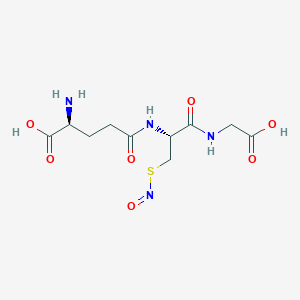
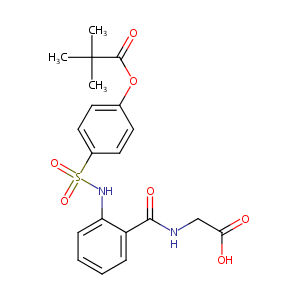
Nitrosoglutathione Sivelestat
Indication
Disease Entry Status REF
Chronic myelogenous leukemia Investigative [1]
Component Drugs Nitrosoglutathione   DMZ9WI4 Sivelestat   DM6BZCV
N.A. Small molecular drug
2D MOL 2D MOL
3D MOL 3D MOL
High-throughput Screening Result Testing Cell Line: KBM-7
Zero Interaction Potency (ZIP) Score: 11.89
Bliss Independence Score: 11.89
Loewe Additivity Score: 24.35
LHighest Single Agent (HSA) Score: 24.35

Molecular Interaction Atlas of This Drug Combination

Molecular Interaction Atlas (MIA)
Nitrosoglutathione Interacts with 1 DME Molecule(s)
DME Name DME ID UniProt ID Mode of Action REF
S-(hydroxymethyl)glutathione dehydrogenase (adh) DEAH3PE A0A0A7DS01_VIBCL Metabolism [5]
------------------------------------------------------------------------------------
Nitrosoglutathione Interacts with 6 DOT Molecule(s)
DOT Name DOT ID UniProt ID Mode of Action REF
Serine protease HTRA2, mitochondrial (HTRA2) OTC7616F HTRA2_HUMAN Affects Localization [6]
C-C motif chemokine 5 (CCL5) OTSCA5CK CCL5_HUMAN Decreases Secretion [7]
Interleukin-12 subunit beta (IL12B) OT0JF8A3 IL12B_HUMAN Decreases Expression [7]
Transcription factor Sp3 (SP3) OTYDQZ1T SP3_HUMAN Decreases Activity [8]
Carbonyl reductase 1 (CBR1) OTQ3A541 CBR1_HUMAN Increases Reduction [9]
Serine-protein kinase ATM (ATM) OTQVOHLT ATM_HUMAN Increases Response To Substance [10]
------------------------------------------------------------------------------------
⏷ Show the Full List of 6 DOT(s)
Indication(s) of Sivelestat
Disease Entry ICD 11 Status REF
Crohn disease DD70 Phase 3 [2]
Multiple sclerosis 8A40 Phase 3 [2]
Psoriatic arthritis FA21 Phase 3 [2]
Pyoderma gangrenosum EB21 Phase 3 [3]
Rheumatoid arthritis FA20 Phase 3 [2]
Ulcerative colitis DD71 Phase 3 [2]
Anterior uveitis 9A96 Application submitted [4]
Axial spondyloarthritis FA92.0 Application submitted [2]
Sivelestat Interacts with 2 DTT Molecule(s)
DTT Name DTT ID UniProt ID Mode of Action REF
Pancreatic elastase 1 (CELA1) TT3NKIB CELA1_HUMAN Inhibitor [11]
Neutrophil elastase (NE) TTPLTSQ ELNE_HUMAN Inhibitor [12]
------------------------------------------------------------------------------------

References

1 CheMBL Affinity Phenotypic Cellular Interaction Assay ID: CHEMBL1125966
2 Clinical pipeline report, company report or official report of the Pharmaceutical Research and Manufacturers of America (PhRMA)
3 Clinical pipeline report, company report or official report of the Pharmaceutical Research and Manufacturers of America (PhRMA)
4 Clinical pipeline report, company report or official report of the Pharmaceutical Research and Manufacturers of America (PhRMA)
5 Nitrosative stress response in Vibrio cholerae: role of S-nitrosoglutathione reductase. Appl Biochem Biotechnol. 2017 Jul;182(3):871-884.
6 The induction of reactive oxygen species and loss of mitochondrial Omi/HtrA2 is associated with S-nitrosoglutathione-induced apoptosis in human endothelial cells. Toxicol Appl Pharmacol. 2010 May 1;244(3):374-84. doi: 10.1016/j.taap.2010.02.004. Epub 2010 Feb 11.
7 Regulatory role of nitric oxide on monocyte-derived dendritic cell functions. J Interferon Cytokine Res. 2003 Aug;23(8):423-31. doi: 10.1089/107999003322277838.
8 Concentration-dependent effects of endogenous S-nitrosoglutathione on gene regulation by specificity proteins Sp3 and Sp1. Biochem J. 2004 May 15;380(Pt 1):67-74. doi: 10.1042/BJ20031687.
9 Studies on reduction of S-nitrosoglutathione by human carbonyl reductases 1 and 3. Chem Biol Interact. 2011 May 30;191(1-3):95-103.
10 Hypersensitivity of ataxia-telangiectasia fibroblasts to a nitric oxide donor. Free Radic Biol Med. 1997;22(1-2):343-7. doi: 10.1016/s0891-5849(96)00336-x.
11 Sivelestat (selective neutrophil elastase inhibitor) improves the mortality rate of sepsis associated with both acute respiratory distress syndrome... Shock. 2010 Jan;33(1):14-8.
12 Neutrophil elastase inhibitor (sivelestat) reduces the levels of inflammatory mediators by inhibiting NF-kB. Inflamm Res. 2009 Apr;58(4):198-203.