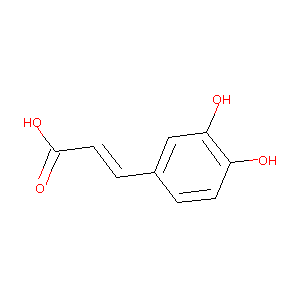
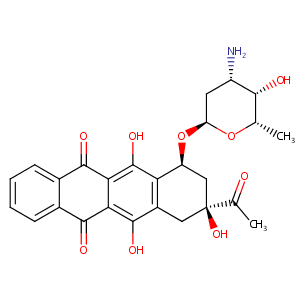
General Information of Drug Combination (ID: DCTQVJP)

Drug Combination Name
3,4-Dihydroxycinnamic Acid Idarubicin
Indication
Disease Entry Status REF
Glioblastoma? Investigative [1]
Component Drugs 3,4-Dihydroxycinnamic Acid   DMVZL26 Idarubicin   DMM0XGL
Small molecular drug Small molecular drug
2D MOL 2D MOL
3D MOL 3D MOL
High-throughput Screening Result Testing Cell Line: T98G
Zero Interaction Potency (ZIP) Score: 9.96
Bliss Independence Score: 9.96
Loewe Additivity Score: 8.2
LHighest Single Agent (HSA) Score: 8.2

Molecular Interaction Atlas of This Drug Combination

Molecular Interaction Atlas (MIA)
Indication(s) of 3,4-Dihydroxycinnamic Acid
Disease Entry ICD 11 Status REF
Thrombocytopenia 3B64 Phase 4 [2]
3,4-Dihydroxycinnamic Acid Interacts with 2 DTT Molecule(s)
DTT Name DTT ID UniProt ID Mode of Action REF
Arachidonate 5-lipoxygenase (5-LOX) TT2J34L LOX5_HUMAN Inhibitor [7]
Macrophage migration inhibitory factor (MIF) TT2AST1 MIF_HUMAN Inhibitor [8]
------------------------------------------------------------------------------------
3,4-Dihydroxycinnamic Acid Interacts with 5 DOT Molecule(s)
DOT Name DOT ID UniProt ID Mode of Action REF
Norrin (NDP) OTGDJ4US NDP_HUMAN Increases Expression [9]
Glutaminase kidney isoform, mitochondrial (GLS) OTGOZG2M GLSK_HUMAN Increases Expression [10]
Solute carrier family 2, facilitated glucose transporter member 2 (SLC2A2) OTBL2W7R GTR2_HUMAN Increases Expression [11]
Biotin--protein ligase (HLCS) OTPDUX30 BPL1_HUMAN Decreases Activity [12]
6-phosphogluconate dehydrogenase, decarboxylating (PGD) OTVG296F 6PGD_HUMAN Decreases Activity [13]
------------------------------------------------------------------------------------
Indication(s) of Idarubicin
Disease Entry ICD 11 Status REF
Acute myelogenous leukaemia 2A41 Approved [3]
Acute myeloid leukaemia 2A60 Approved [4]
Adult acute monocytic leukemia N.A. Approved [3]
Childhood acute megakaryoblastic leukemia N.A. Approved [3]
Leukemia N.A. Approved [3]
Idarubicin Interacts with 1 DTT Molecule(s)
DTT Name DTT ID UniProt ID Mode of Action REF
DNA topoisomerase II (TOP2) TT0IHXV TOP2A_HUMAN; TOP2B_HUMAN Modulator [15]
------------------------------------------------------------------------------------
Idarubicin Interacts with 3 DTP Molecule(s)
DTP Name DTP ID UniProt ID Mode of Action REF
Multidrug resistance-associated protein 1 (ABCC1) DTSYQGK MRP1_HUMAN Substrate [16]
P-glycoprotein 1 (ABCB1) DTUGYRD MDR1_HUMAN Substrate [17]
Breast cancer resistance protein (ABCG2) DTI7UX6 ABCG2_HUMAN Substrate [17]
------------------------------------------------------------------------------------
Idarubicin Interacts with 2 DME Molecule(s)
DME Name DME ID UniProt ID Mode of Action REF
Cytochrome P450 2D6 (CYP2D6) DECB0K3 CP2D6_HUMAN Metabolism [18]
Cytochrome P450 2C9 (CYP2C9) DE5IED8 CP2C9_HUMAN Metabolism [18]
------------------------------------------------------------------------------------
Idarubicin Interacts with 2 DOT Molecule(s)
DOT Name DOT ID UniProt ID Mode of Action REF
Natriuretic peptides B (NPPB) OTSN2IPY ANFB_HUMAN Increases Expression [19]
Bile acid receptor (NR1H4) OTWZLPTB NR1H4_HUMAN Decreases Activity [14]
------------------------------------------------------------------------------------

References

1 CheMBL Affinity Phenotypic Cellular Interaction Assay ID: CHEMBL1125966
2 ClinicalTrials.gov (NCT02556814) Caffeic Acid Combining High-dose Dexamethasone in Management of ITP. U.S. National Institutes of Health.
3 Idarubicin FDA Label
4 URL: http://www.guidetopharmacology.org Nucleic Acids Res. 2015 Oct 12. pii: gkv1037. The IUPHAR/BPS Guide to PHARMACOLOGY in 2016: towards curated quantitative interactions between 1300 protein targets and 6000 ligands. (Ligand id: 7083).
5 Phloretin exhibits potential food-drug interactions by inhibiting human UDP-glucuronosyltransferases in vitro. Toxicol In Vitro. 2022 Oct;84:105447. doi: 10.1016/j.tiv.2022.105447. Epub 2022 Jul 19.
6 Biochemical mechanism of caffeic acid phenylethyl ester (CAPE) selective toxicity towards melanoma cell lines. Chem Biol Interact. 2010 Oct 6;188(1):1-14. doi: 10.1016/j.cbi.2010.05.018. Epub 2010 Jun 4.
7 Phenidone protects the nigral dopaminergic neurons from LPS-induced neurotoxicity. Neurosci Lett. 2008 Nov 7;445(1):1-6.
8 How many drug targets are there Nat Rev Drug Discov. 2006 Dec;5(12):993-6.
9 The genome-wide expression profile of Scrophularia ningpoensis-treated thapsigargin-stimulated U-87MG cells. Neurotoxicology. 2009 May;30(3):368-76.
10 Metformin and caffeic acid regulate metabolic reprogramming in human cervical carcinoma SiHa/HTB-35ells and augment anticancer activity of Cisplatin via cell cycle regulation. Food Chem Toxicol. 2017 Aug;106(Pt A):260-272.
11 Glucose absorption regulation and mechanism of the compounds in Lilium lancifolium Thunb on Caco-2?cells. Food Chem Toxicol. 2021 Mar;149:112010. doi: 10.1016/j.fct.2021.112010. Epub 2021 Jan 22.
12 Resveratrol compounds inhibit human holocarboxylase synthetase and cause a lean phenotype in Drosophila melanogaster. J Nutr Biochem. 2015 Nov;26(11):1379-84. doi: 10.1016/j.jnutbio.2015.07.004. Epub 2015 Jul 26.
13 Investigation of the effects of some phenolic compounds on the activities of glucose-6-phosphate dehydrogenase and 6-phosphogluconate dehydrogenase from human erythrocytes. J Biochem Mol Toxicol. 2014 Nov;28(11):510-4. doi: 10.1002/jbt.21592. Epub 2014 Aug 6.
14 Quantitative high-throughput profiling of environmental chemicals and drugs that modulate farnesoid X receptor. Sci Rep. 2014 Sep 26;4:6437. doi: 10.1038/srep06437.
15 Drugs@FDA. U.S. Food and Drug Administration. U.S. Department of Health & Human Services.
16 Human intestinal transporter database: QSAR modeling and virtual profiling of drug uptake, efflux and interactions. Pharm Res. 2013 Apr;30(4):996-1007.
17 Amonafide L-malate is not a substrate for multidrug resistance proteins in secondary acute myeloid leukemia. Leukemia. 2008 Nov;22(11):2110-5.
18 In vitro evaluation of cytochrome P450-mediated drug interactions between cytarabine, idarubicin, itraconazole and caspofungin. Hematology. 2004 Jun;9(3):217-21.
19 The use of biochemical markers in cardiotoxicity monitoring in patients treated for leukemia. Neoplasma. 2005;52(5):430-4.